
Whisky and Shortbread: a Merry Match Made in Scotland
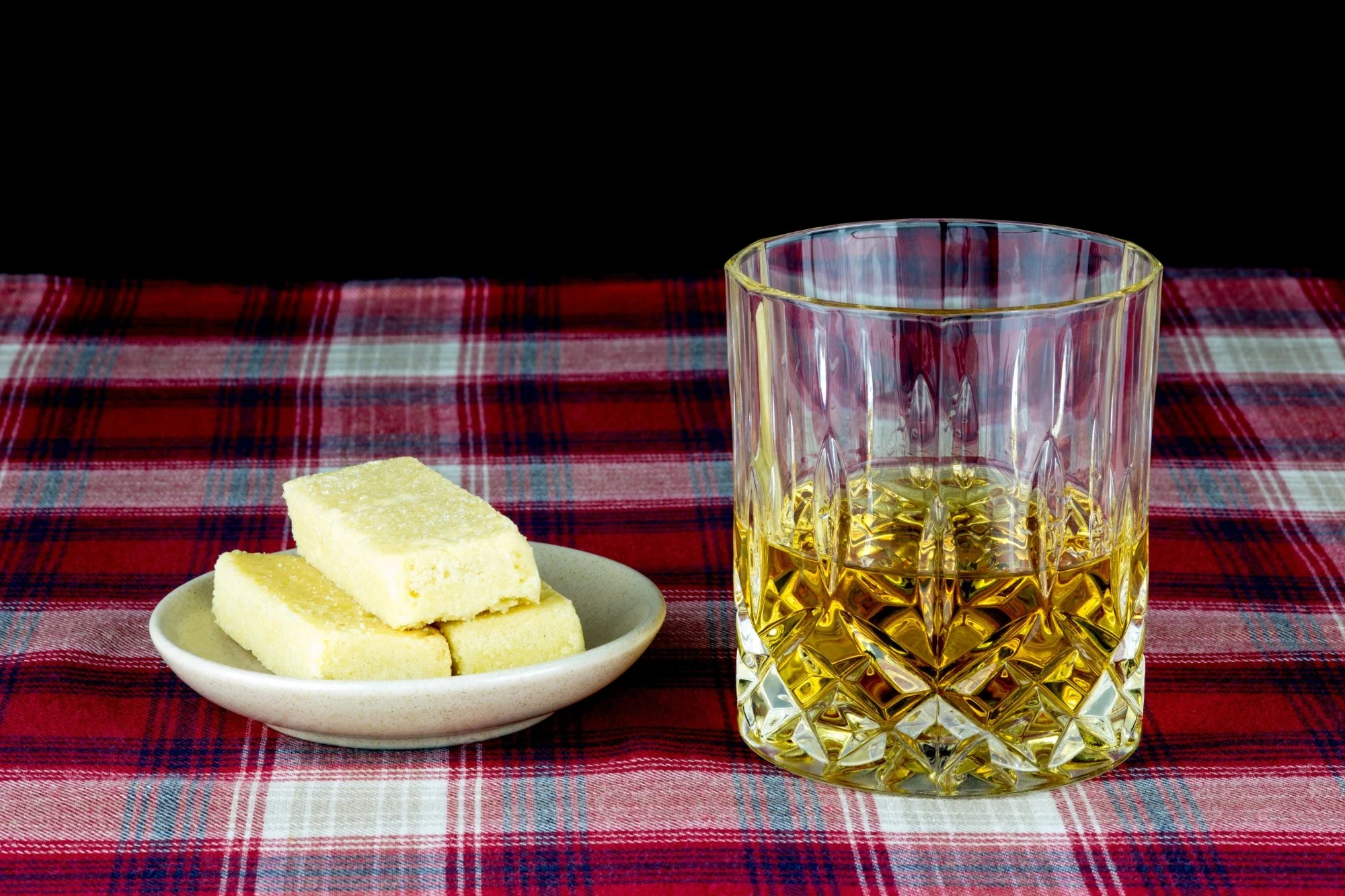
Shortbread and Scotch: centuries of history
Few combinations feel as classic as Scotch whisky and shortbread. But while Scotland’s whisky scene has entire libraries of tasting notes and bottle guides backing it, the biscuit that's so often served alongside it doesn’t usually get as much attention.
The pairing has centuries of history behind it, and there's more to it than simply serving a biscuit alongside a dram. From Scottish traditions to complementary flavor profiles, different styles of shortbread can bring out very different qualities in a whisky.
The Scottish origins of Shortbread
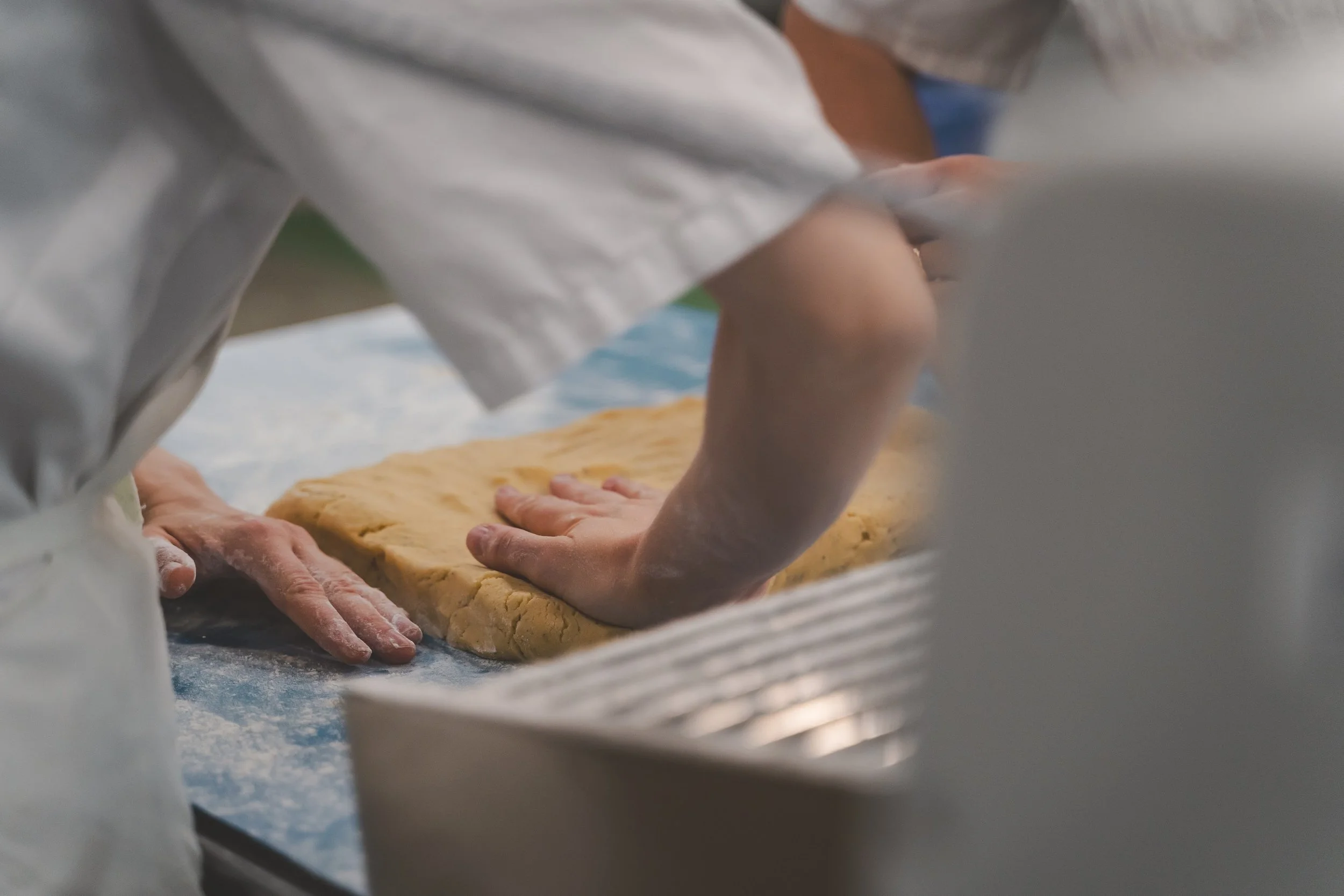
Making shortbread
Shortbread's origins trace back to medieval Scotland, where leftover bread dough was enriched with butter and dried twice, resulting in a twice-baked “biscuit bread.” By the 16th century, the yeast had been dropped entirely in favor of butter, an expensive luxury at that time. The result was something richer, more crumbly, and distinctly Scottish. Mary, Queen of Scots is said to have been particularly fond of “Petticoat Tails,” a fan-shaped biscuit that remains one of shortbread's classic forms today.
For hundreds of years, shortbread was a luxury reserved for special occasions, served at Christmas, Hogmanay (New Year's Eve), weddings, and housewarmings. For everyday life, it was considered too rich and indulgent. The same was true of good whisky. Both were celebration foods and popular gifts for special occasions. Their pairing wasn't engineered in any obvious way by any single chef, distiller, or tradition. It seems to have just happened, as both are such an essential part of Scottish life.
This overlap was most visible in Scotland’s seasonal traditions. At Hogmanay, the ritual of “first-footing,” or being the first to cross a neighbor’s threshold after midnight, often includes symbolic gifts like coal, black bun (a fruity spiced cake), shortbread, and a bottle of whisky. A similar pattern appeared later in winter during Burns Night on January 25, an annual celebration honoring the poet Robert Burns. Haggis and whisky still dominate the evening, but many celebrations end with shortbread and a final dram.
Beyond these rituals, the connection between whisky and shortbread has been reinforced by geography. Whisky-producing regions often overlap with areas known for shortbread production. That means it makes both cultural and economic sense to pair the two together.
Why the Combo Works So Well
Understanding why whisky and shortbread work together helps explain which biscuits pair best with different drams.
The simplest shortbread recipes are made with little more than flour, butter, and sugar. That combination creates the biscuit's signature crumbly texture, but it also makes it an ideal companion to whisky. A sip of whisky after a bite of shortbread tastes a lot gentler than the same whisky neat, on a clean palate. Shortbread's sweetness is just enough to amplify the vanilla, honey, and caramel notes often found in the spirit.
In a more practical sense, shortbread works at a whisky tasting the same way bread works at a cheese tasting: It gives the palate a reset between drams. It’s neutral and starchy, and helps prepare for the next glass without carrying over the previous sip’s flavors. For serious tastings, a plain, unflavored shortbread finger is ideal. When pairing the two more intentionally, a flavored shortbread can bring out notes in a whisky that may not be detected otherwise.
Shortbread and Scotch: Perfect Pairings
Differences in butter content, texture, sweetness, and added flavors can change the way a whisky presents itself. These pairings are a starting point, designed to highlight the flavors of both without overpowering either.
Butter Shortbread + Speyside Single Malts
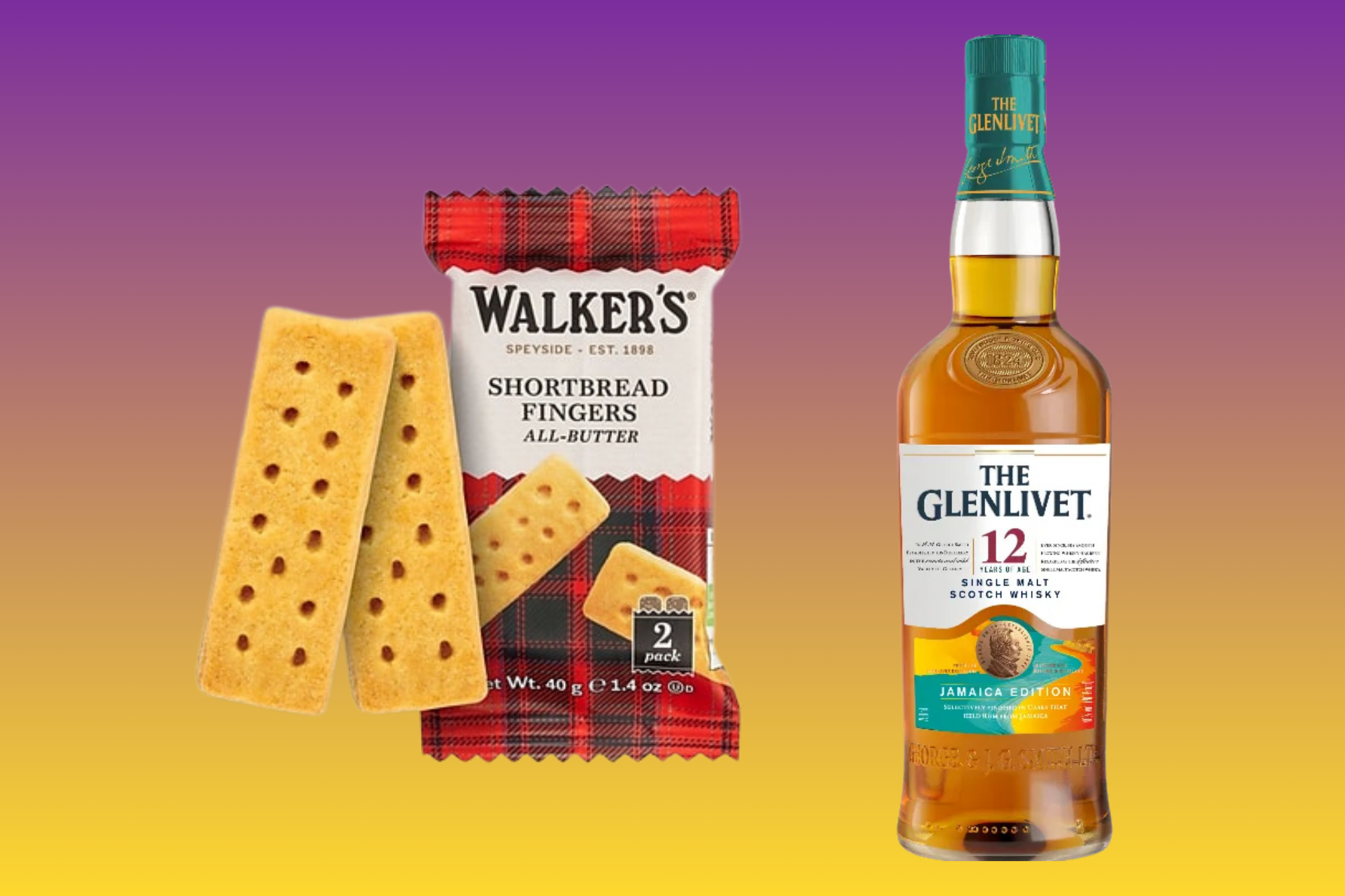
Walker’s Shortbread Fingers and Glenlivet 12, a Speyside single malt
Classic butter shortbread is the traditional biscuit, made of two parts flour, one part butter, and half a part sugar. It’s typically shaped into rectangles, fork-pricked, and kept pale to complement any cookie plate. Although they’re not the classic finger shape, Walker's Shortbread Rounds, made in Aberlour in the heart of Speyside, are the most recognized example. Duchy Organic shortbread is a reliable alternative available worldwide.
The simplicity of classic shortbread makes it a nice option for lighter, fruit-forward Scotch. Pair these with a Glenlivet 12, a whisky with orchard fruit and honey notes, or Glenfarclas 10, with notes of dried fruit and light toffee. Either combination is a good starting point for biscuit and whisky pairings.
Petticoat Tails + Rich Highland Malts
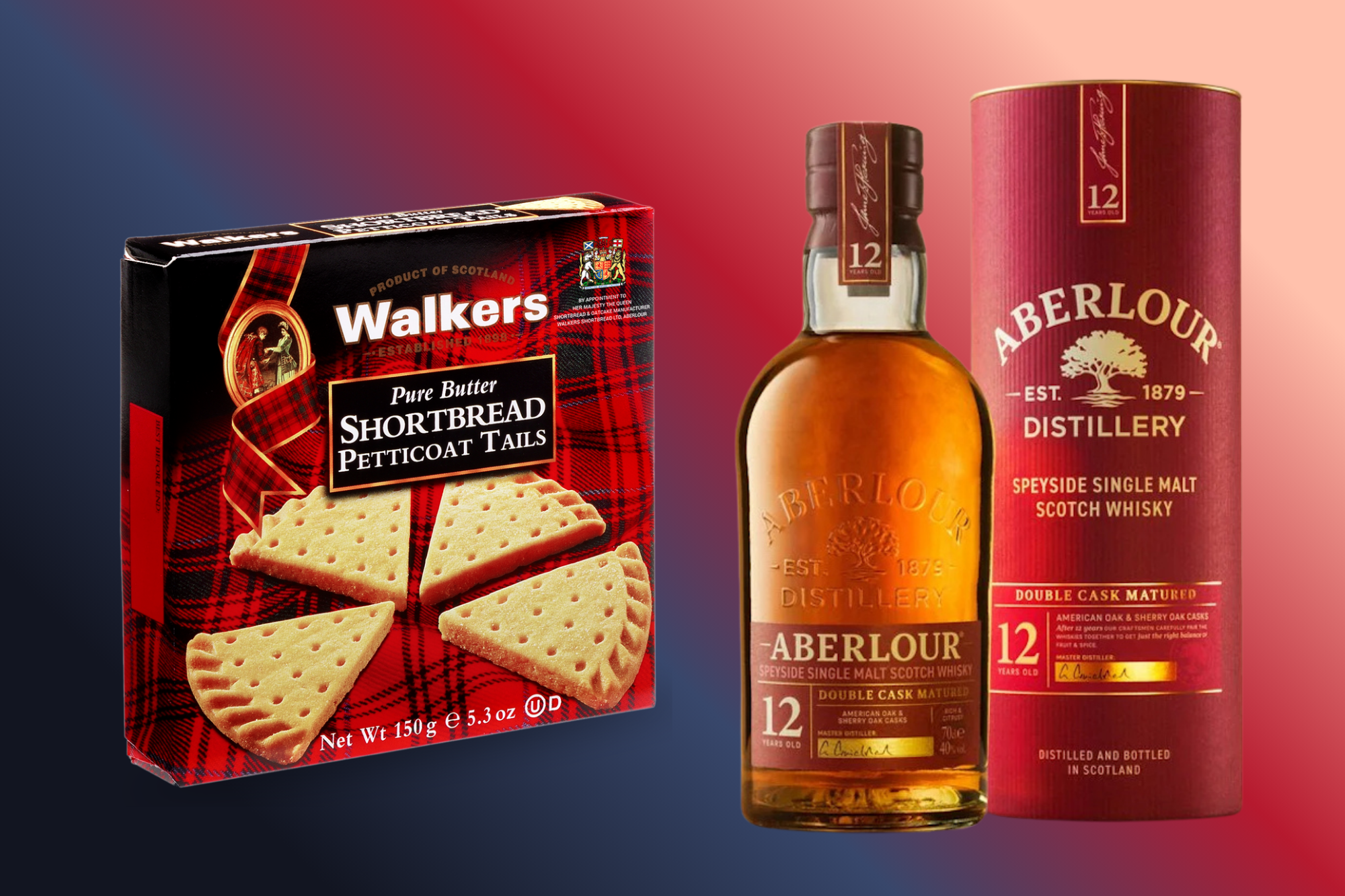
Petticoat tails and Aberlour 12, a Highland malt
Petticoat tails, cut into fan-shaped wedges from a circular disc made for sharing, deliver more butter in every bite. Some traditional versions were lightly flavored with caraway seed, an aromatic note that adds an extra layer of warmth against richer Highland malts. That added richness pairs well with whiskies that have more structure, like an Aberlour 12, matured in bourbon and sherry casks. Glenmorangie The Original works well here, too, with a honeyed, floral character that complements the shortbread's richness.
Oat Shortbread + Coastal and Lightly Peated Whiskies
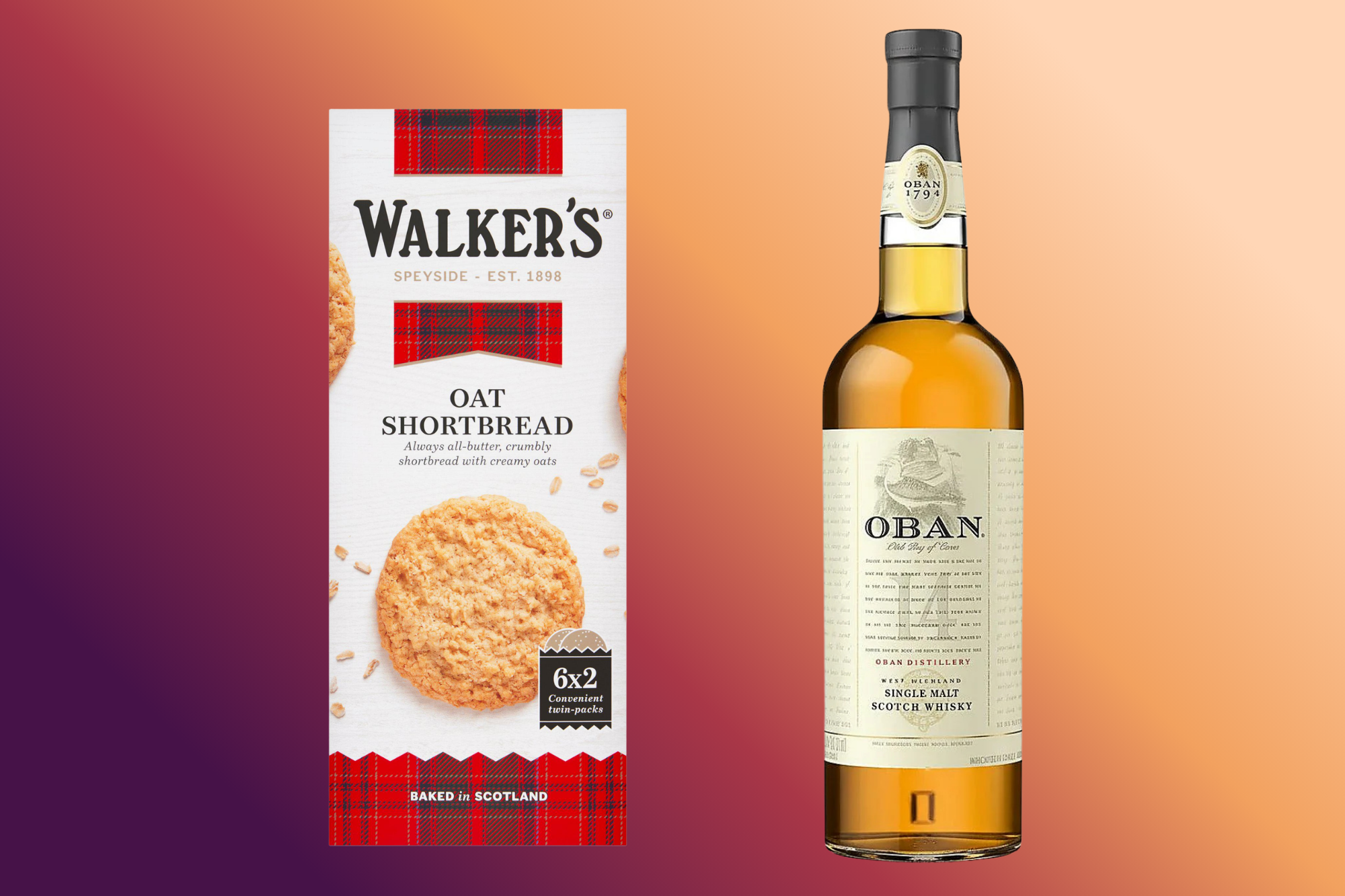
Walker’s Oat Shortbread and the lightly peated Oban 14
Oat shortbread, made by replacing a portion of the flour with rolled oats or oatmeal, is a little more savory with a coarser crumb. Its earthier flavor profile handles coastal and lightly peated whiskies best. Oban 14 offers dried fruit and sea salt over hints of vanilla, while Highland Park 12 combines honey with a subtle smoke on the finish. Both whiskies stand up against a heartier oat shortbread.
Nut Shortbread + Sherried Scotch
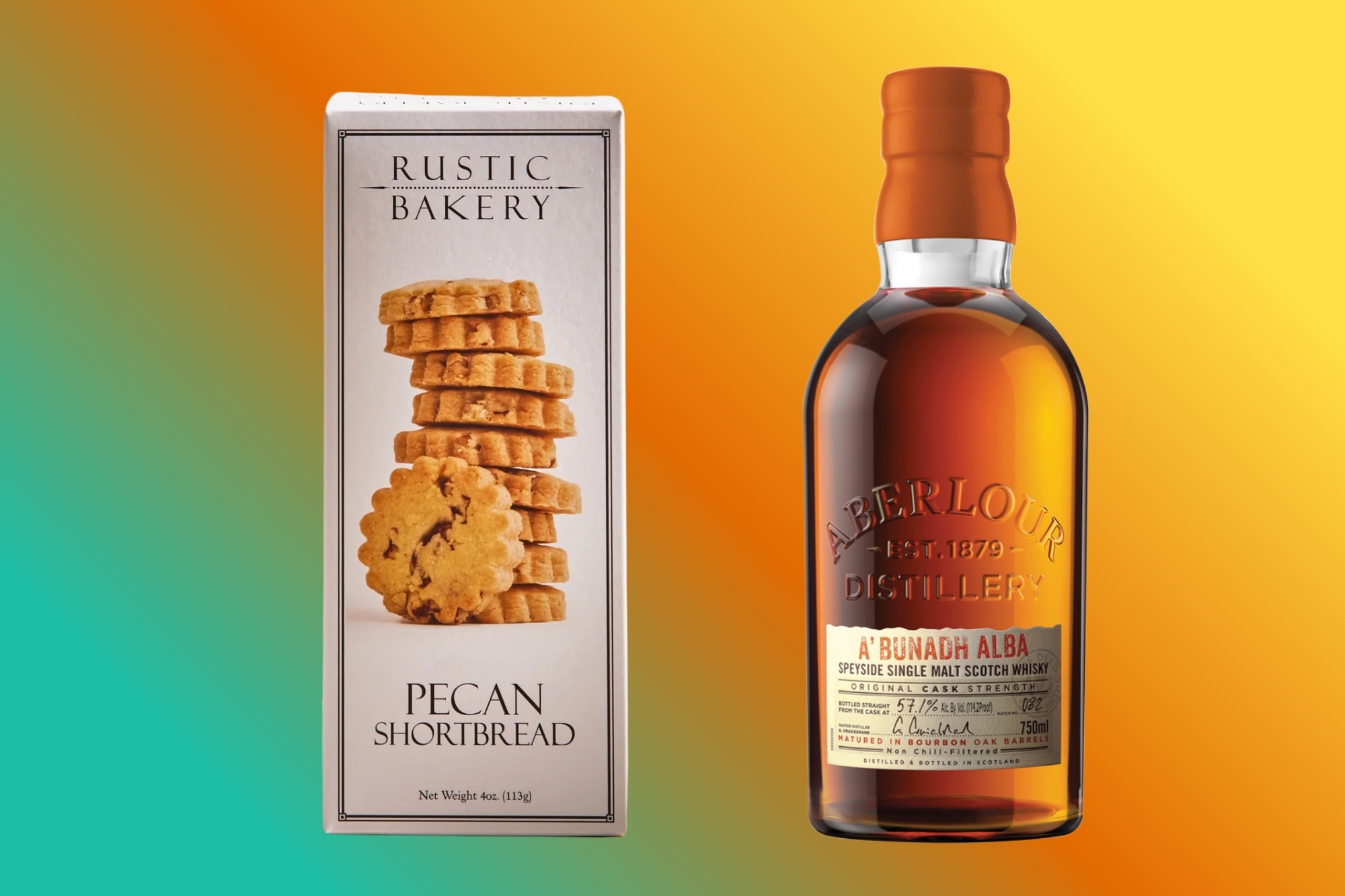
Pecan shortbread rounds and Aberlour A’bunadh
Shortbreads with nuts like pecans or almonds are denser and richer, making them a natural partner for sherried Scotch. Aberlour A'bunadh, matured in former sherry casks, is an obvious pairing. Expect notes of dark cherry, Christmas cake, and warming spices. Add a few drops of water and serve it with almond shortbread, particularly in the winter months. Glenfarclas 15 is a mature sherried whisky with an earthier profile of dried fruit, hazelnut, and dark chocolate.
Lemon or Lavender Shortbread + Lowland Malts
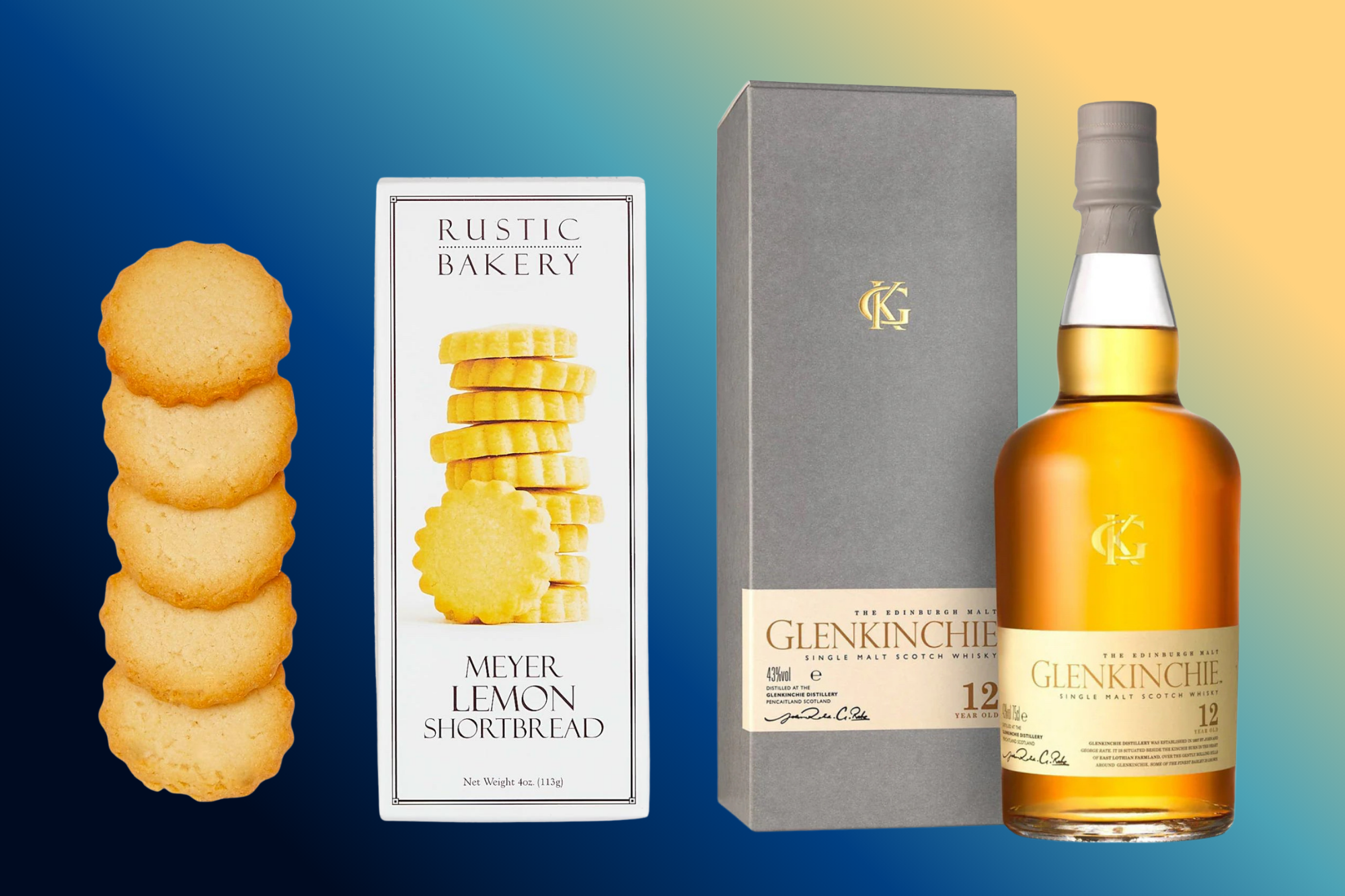
Lemon shortbread and Glenkinchie 12, a Lowland Single Malt Scotch
Lemon- or lavender-flavored shortbread, brightened with citrus zest or herbaceous flavors, pairs well with the lighter end of the whisky spectrum. Glenkinchie 12, often called the "Edinburgh Malt," is a Lowland Scotch that’s grassy, subtly sweet, and almost springlike. Paired with citrus or herbal shortbreads, it’s almost mild enough for an afternoon tea, if that tea involved whisky tastings. Triple-distilled Auchentoshan 12 is another light-bodied option with citrus and almond notes.
Brown Butter Shortbread + Toasted Oak Whiskies
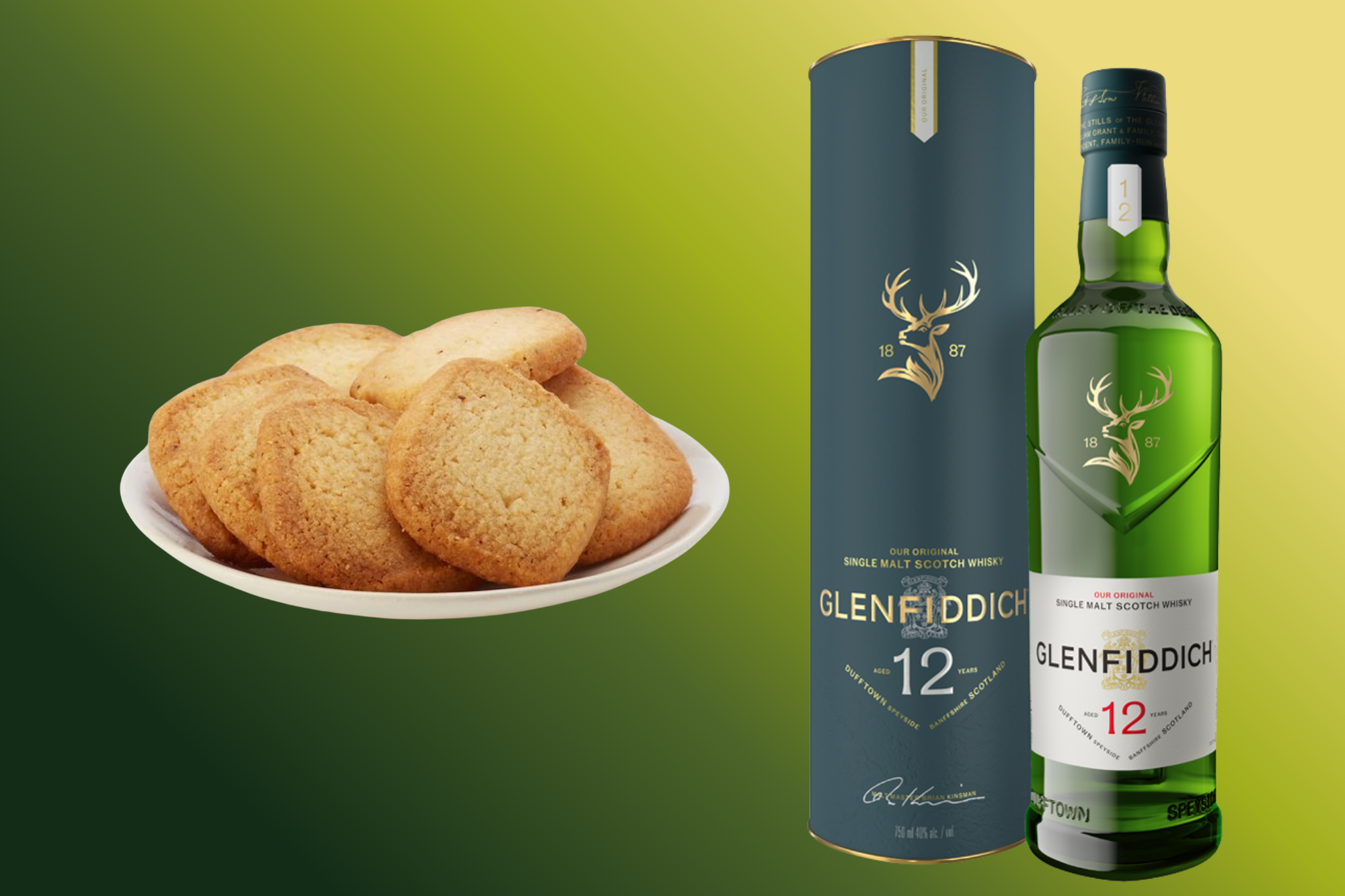
Brown butter shortbread and Glenfiddich 12
Brown butter shortbread takes the classic recipe and adds another layer of depth by toasting the butter before it’s folded into the dough. The result is still crumbly and delicate, but with bonus notes of caramel, toasted hazelnut, and warm toffee.
That added depth works well with whiskies that lean into similar flavors. Speyside malts like Glenfiddich 12 bring vanilla, orchard fruit, and soft oak that work well with those caramelized notes in the biscuit. For those looking beyond Scotch, this style also works particularly well with American rye whiskey like Bulleit Rye, where peppery warmth won’t overwhelm this shortbread’s caramelized notes.
Millionaire's Shortbread + Peated Scotch or Bourbon
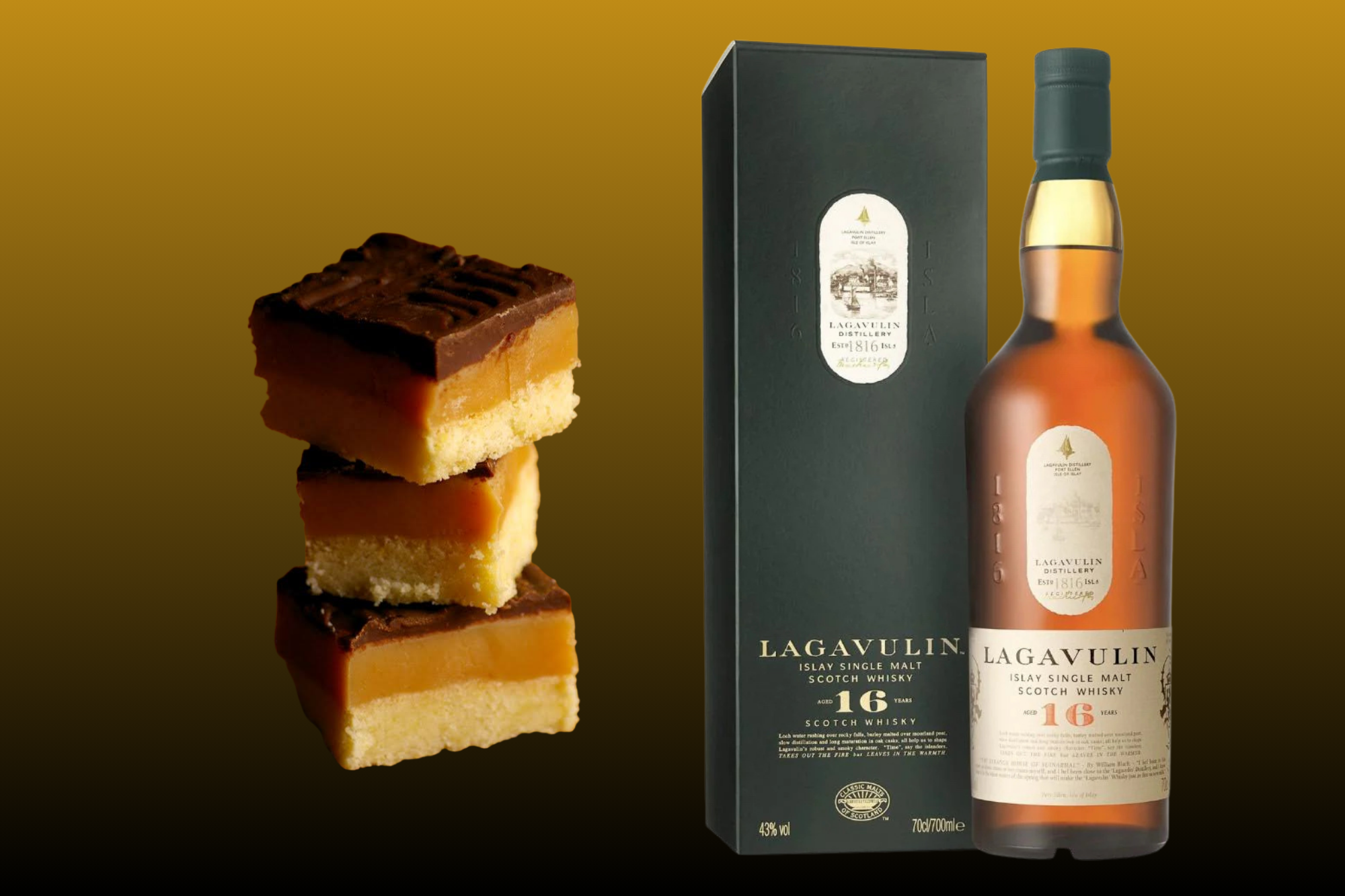
Millionaire’s shortbread and Lagavulin 16, a peated Scotch
If classic shortbread and Speyside whisky are Scotland's most traditional pairing, millionaire's shortbread and peated whisky may be its most decadent. This biscuit features layers of buttery shortbread, thick caramel, and dark chocolate. Lagavulin 16’s aftertaste of peat smoke and the salty sea is tamed quite a bit by the sweet shortbread, eventually allowing for its own notes of dried fruit and chocolate. For those who like bourbon, Maker's Mark 46 offers vanilla and baking spice that play with the sweet caramel layer of the shortbread.
When and How to Serve Whisky and Shortbread
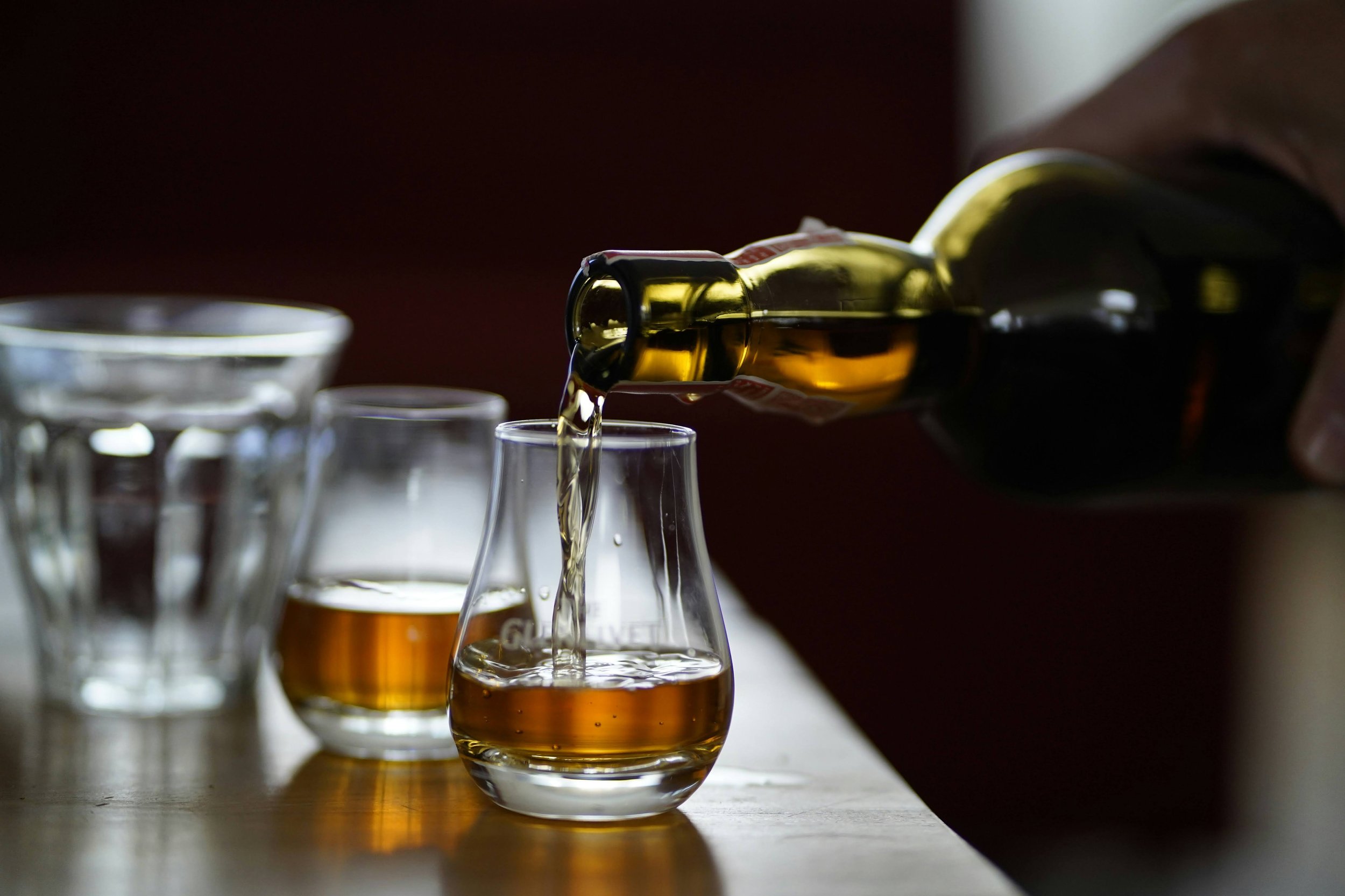
Lagavulin 16 being poured into a Glencairn glass
Whisky and shortbread are at their best when they’re treated as part of a gathering instead of a formal pairing. In Scotland, Hogmanay and Burns Night are two celebrations where they can come together in a natural way.
Outside of tradition, the pairing works well as a simple after-dinner ritual. A finger or two of shortbread with a small pour of whisky is enough. For a more communal approach, a small tasting board of a few shortbread styles matched with modest pours of whisky makes for a fun evening. A glass of water and a plain cracker or neutral biscuit help reset the palate between pairings.
Whisky and shortbread also make a great gift. A bottle of Scotch paired with a tin of good shortbread, whether it’s from a well-known producer or a small bakery, is always appreciated. A brief note explaining the pairing makes the gift even more thoughtful.
At its core, this isn’t a pairing that demands too much explanation, but it does invite everyone taking part in it to pause, pour, and share.
Classic Shortbread Recipe
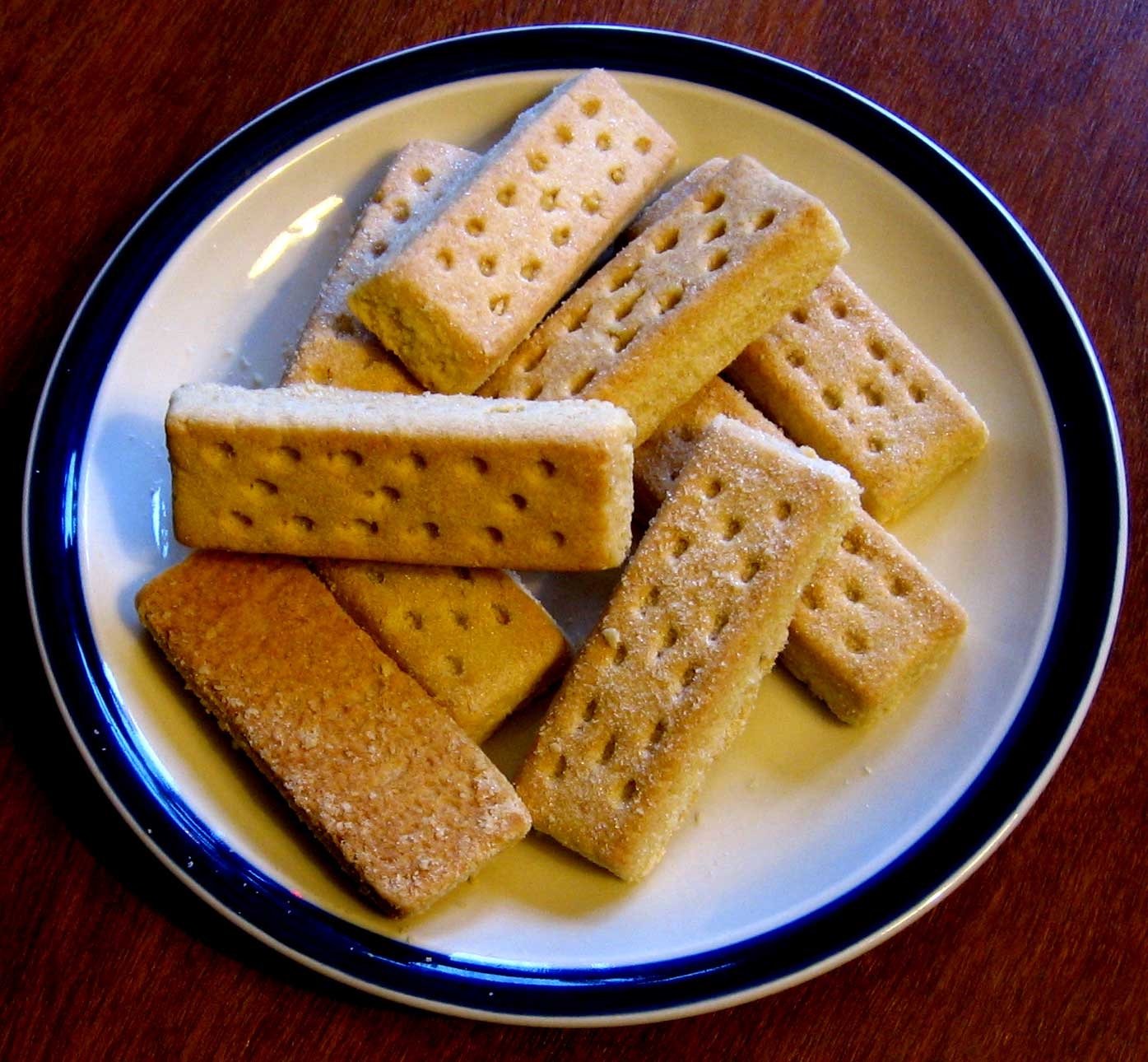
Homemade Shortbread Fingers
This simple base works well with nearly any whisky. It follows the traditional Scottish ratio for a rich, crumbly biscuit.
Ingredients
1 cup unsalted butter, softened
1/2 cup granulated sugar
2 cups all-purpose flour
Pinch of fine sea salt
Sparkling sugar, for sprinkling (optional)
Instructions
Preheat the oven to 325°F (160°C). Line an 8x8-inch pan with parchment paper.
Mix the butter and sugar until they’re thoroughly combined, but don’t overmix. (Creaming the butter and sugar would be too much!)
Add the flour and salt. Mix gently until a stiff dough forms.
Press the dough into the pan at a thickness of about ¾ inch. Alternatively, you can form the dough into a ball and roll it out with a rolling pin on a floured countertop into the shape of your tin.
Cut the dough into fingers or squares. You should get at least 18 fingers, depending on the shape. For the classic look, prick your dough with a fork about halfway through in the pattern of your choice.
Bake for about 20 minutes, or until pale golden at the edges and set in the center.
While still warm, lightly dust with sparkling sugar if desired. Allow to cool completely before enjoying.
Note: This base recipe can be modified with additions such as oats, nuts, citrus zest, or browned butter. For wedges, shape the dough into a ball and roll it out into a round. Score the dough into triangles and prick a pattern with a fork. Add baking time with a thicker dough.