
The 5 Best Kirkland Spirits at Costco
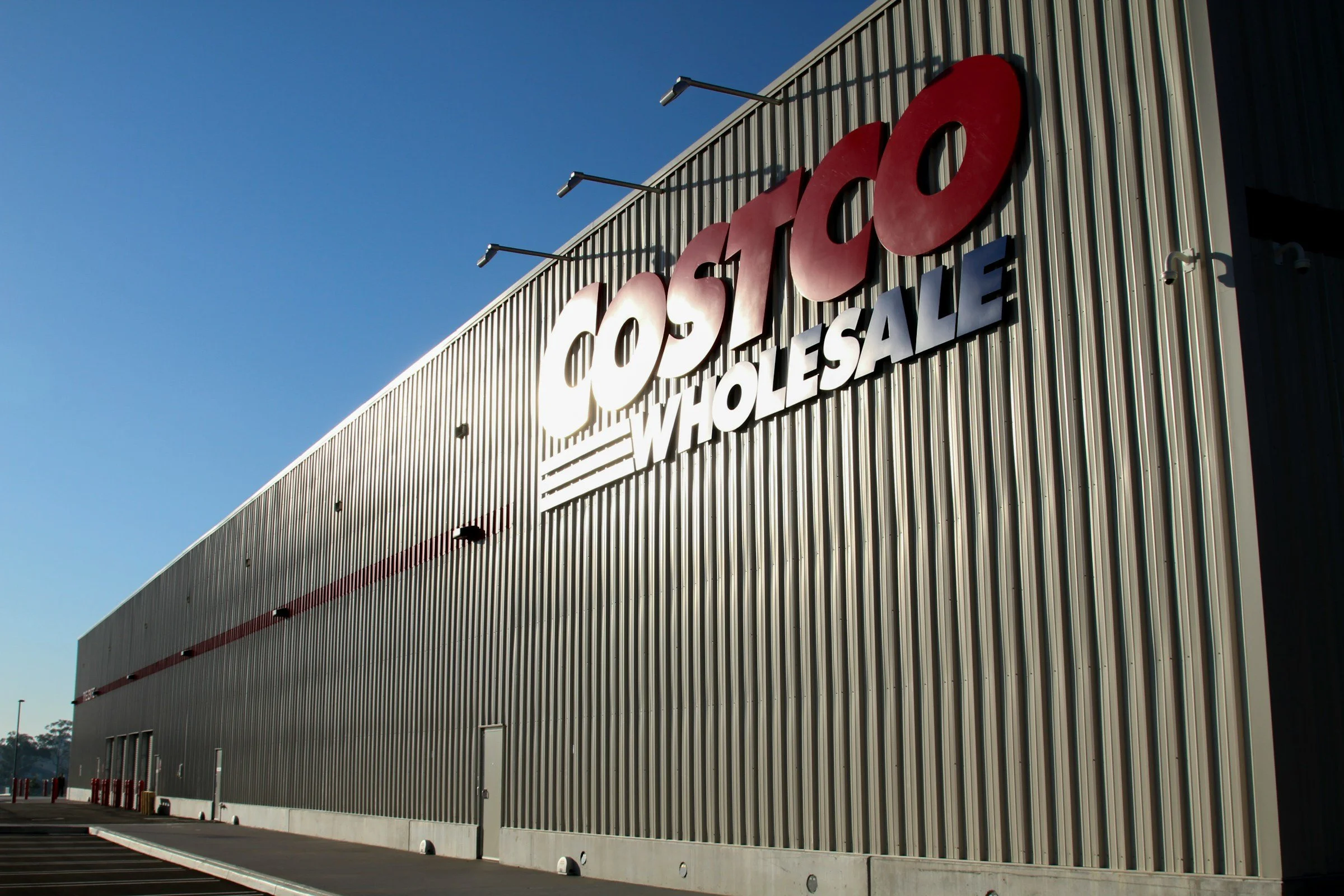
There's a reason spirits enthusiasts go for small-batch and single-barrel spirits with such reverence. The attention to detail, the limited production runs, the care a distiller puts into a mash that will carry their name—it all shows up in the glass. But exceptional spirits at premium prices aren't always an option. That is, unless you have a Costco membership. In that case, you might find that you have access to a surprisingly deep bench of some pretty distinctive pours. And in 14 states (AZ, CA, CO, CT, DE, HI, IN, KY, MA, MI, MN, NY, TX, VT) Costco is legally required to sell alcohol to the general public regardless of membership.
What makes the Kirkland lineup worth paying attention to isn't just the price—it's that some of these bottles have verifiable origins. Barton 1792 puts their name right on the bourbon label. The French vodka draws water from the same Cognac region as Grey Goose. These aren't mystery bottles from a bulk warehouse operation. Someone made intentional decisions here that matter.
We’ve sampled several Kirkland spirits and put them to the test in blind tastings. If you're heading to Costco for your next liquor run, here are our top five bottles worth adding to your cart.
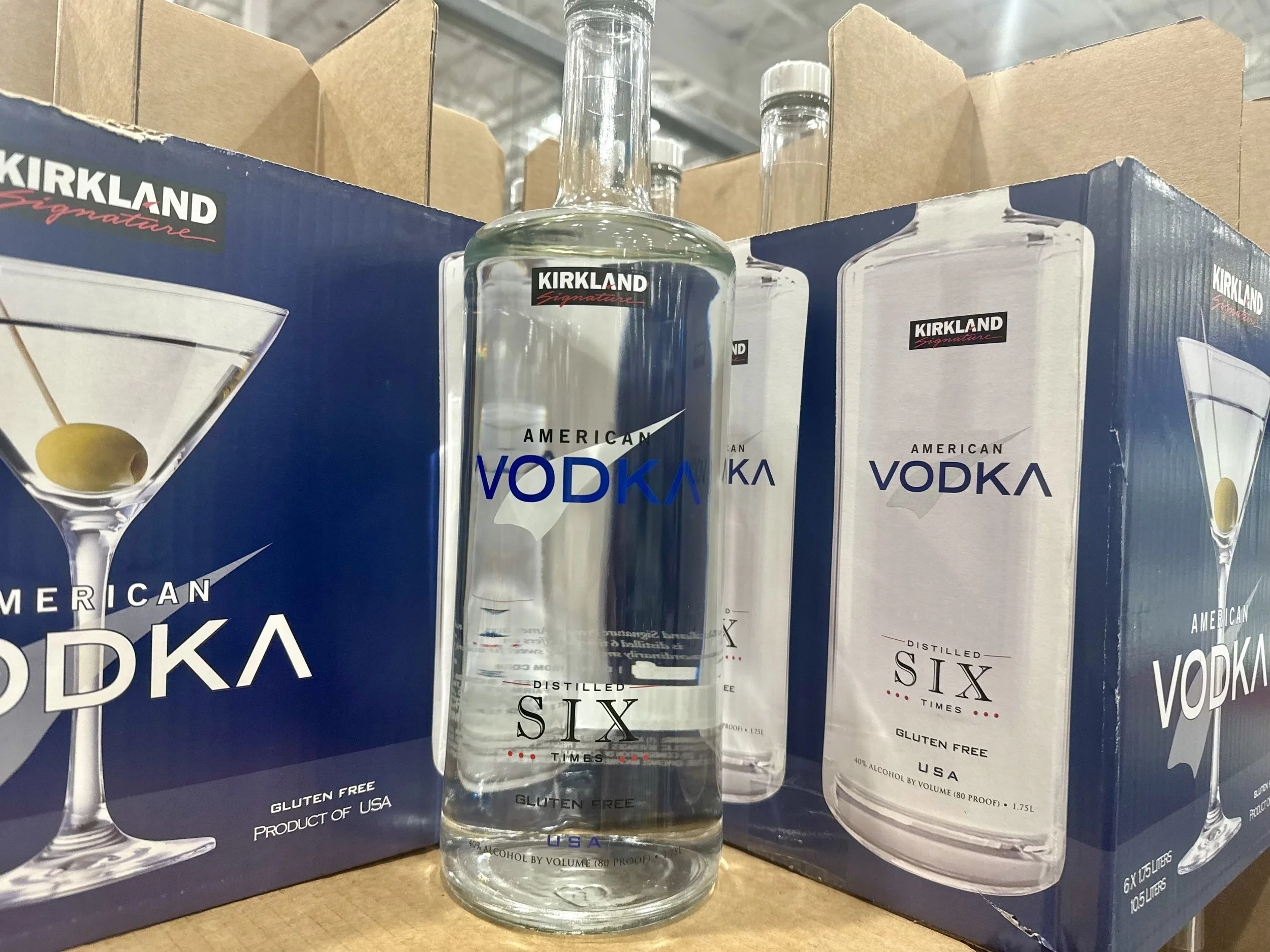
Kirkland American Vodka
Price/Size: $16 / 1.75L
Proof: 80
Comparable to: Tito's Handmade Vodka
If you're a Tito's drinker, this is one to check out. Produced by the LeVecke Corporation out of Mira Loma, California, it's distilled six times from American-grown corn—the same foundation that gives the best corn-based vodkas their clean, slightly sweet character. It's bottled at 80 proof and labeled gluten-free.
Tasting notes lean neutral with a gentle sweetness that rounds out the finish. It sips smoothly when chilled, without the sharp grain bite you get from lesser bottles, and it disappears cleanly into a vodka soda, a Moscow Mule, or a simple martini. At around $16 for a 1.75L bottle, the value for this level of quality is hard to beat.
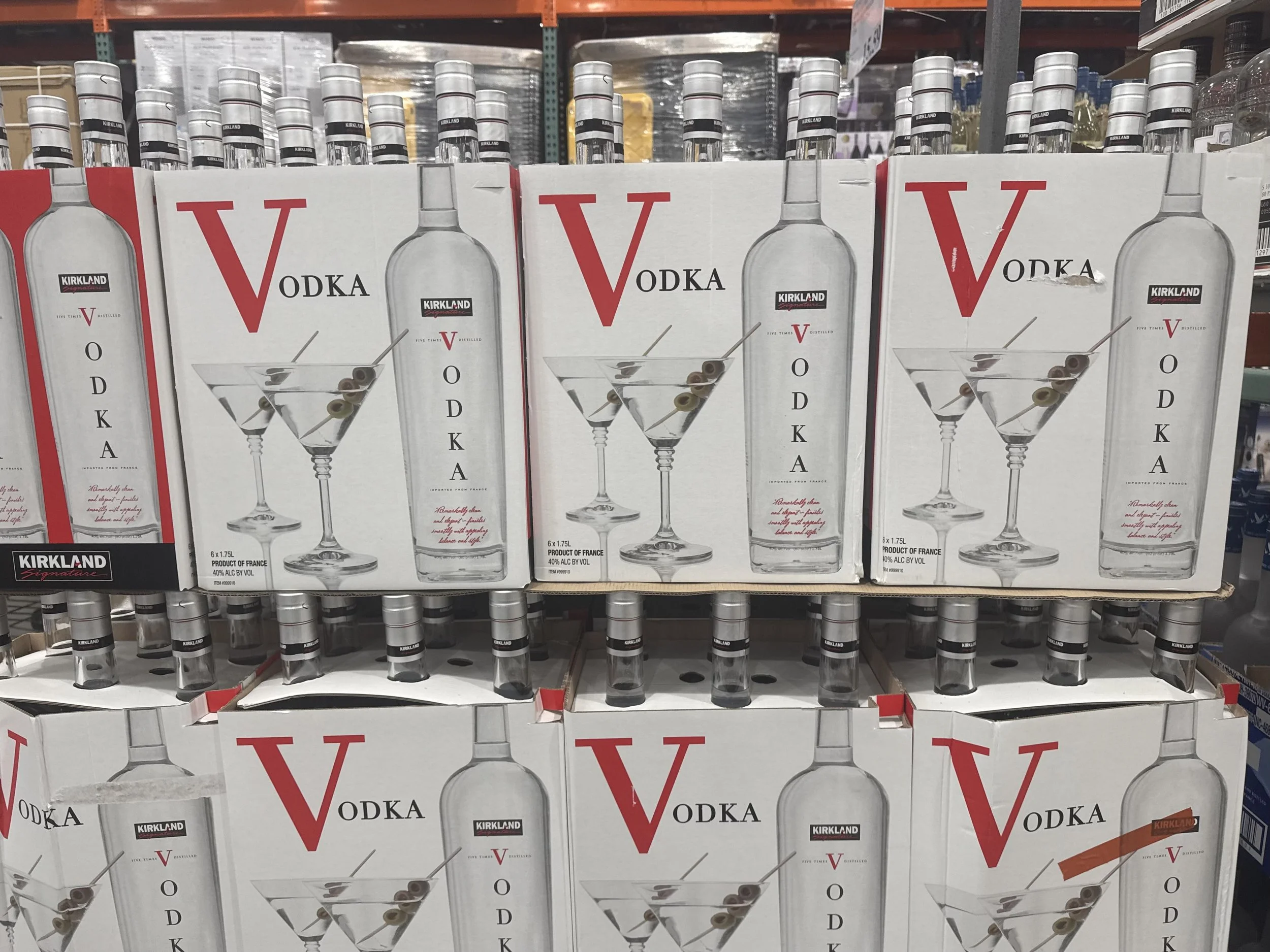
Kirkland French Vodka
Price/Size: $21 / 1.75L
Proof: 80
Comparable to: Grey Goose
For years, the rumor was that Kirkland Vodka was simply Grey Goose in a different bottle. The distiller has denied it, and the producer—Gayant Distillery in Douai, France, a 19th-century operation running five-column stills—is a legitimate house in its own right. That said, the water comes from the same Cognac region that supplies Grey Goose, which likely explains why the two share a similar character.
The result is crisp and polished: subtle citrus and light grain on the nose, with a silky finish that holds up well when chilled or served neat. Whether or not it's Grey Goose is almost beside the point. At just a few dollars more than the American version, it's still well under $30 for a 1.75L bottle. While both vodkas are comparable in quality, if we had to choose, we would lean toward the American expression, simply because it is slightly smoother and more approachable.
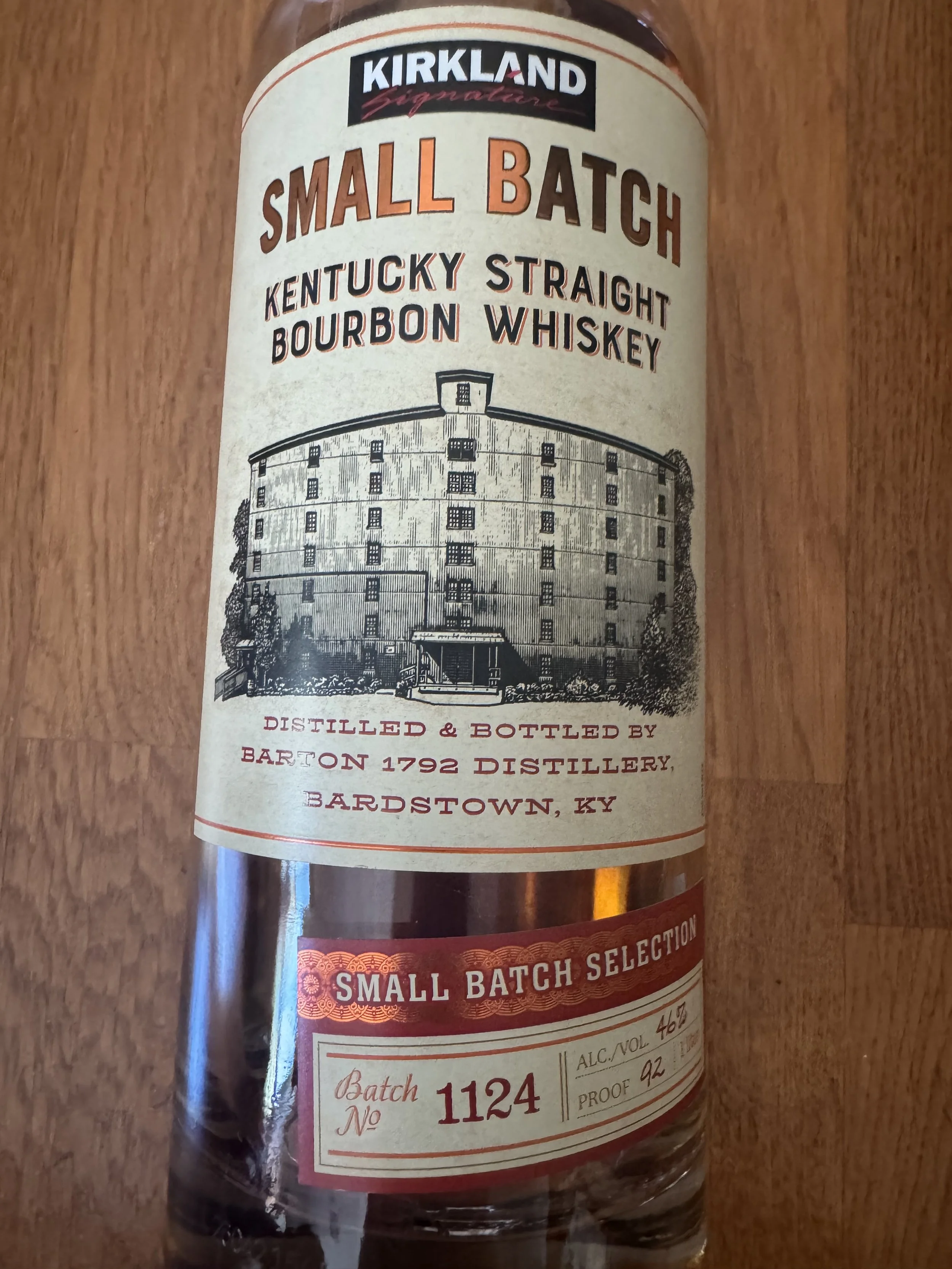
Kirkland Small Batch Straight Bourbon Whiskey
Price/Size: $22 / 1L
Proof: 92
Comparable to: 1792 Small Batch
The source distillery is printed right on the bottle: Barton 1792, the legendary Bardstown, Kentucky operation that has been producing whiskey since 1879. That kind of transparency is rare in private-label spirits, and it says something. The mashbill—74% corn, 18% rye, 8% barley—is spicier and drier than sweeter, wheat-forward bourbons.
It's a young bourbon, and that youth shows a little on the nose with some heat upfront. But the palate smooths into something genuinely enjoyable: warm baking spice, light caramel, and a dry rye finish. At around $22 for a liter, it works both neat and in a bourbon cocktail. Sip it in an Old Fashioned or a Bourbon Sour.
Kirkland Signature Bottled-in-Bond Bourbon
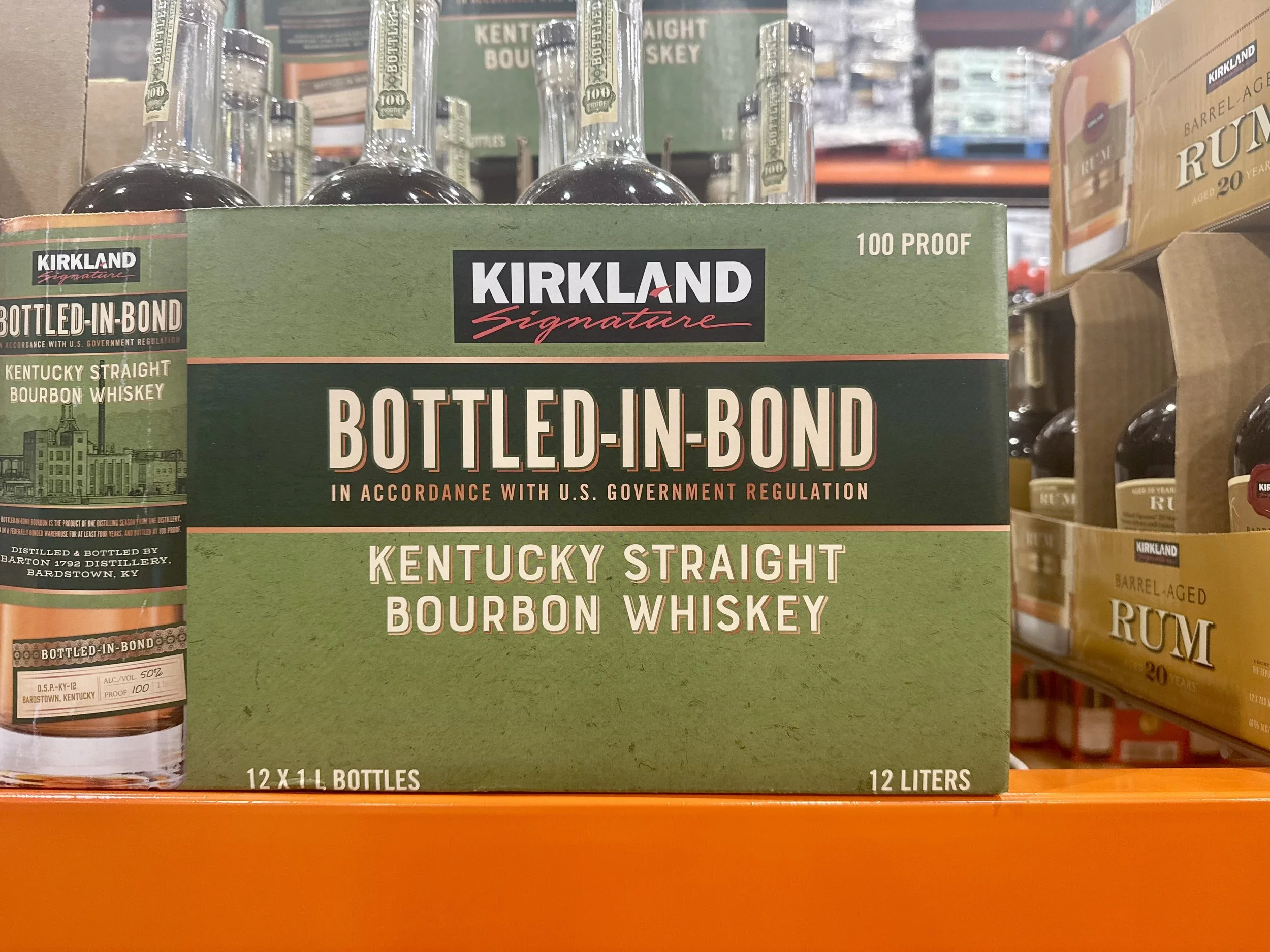
Kirkland Bottled-in-bond Bourbon
Price/Size: $20 / 1 L
Proof: 100
Comparable to: 1792 Bottled in Bond
"Bottled-in-Bond" isn't a marketing term—under U.S. law, it requires a single distilling season, a single distiller, at least four years in a federally bonded warehouse, and bottling at exactly 100 proof. It's one of the most rigorous quality standards in American whiskey.
Also from Barton 1792, this expression shows what a few extra years and a higher proof can do. The palate is fuller and more integrated—rich vanilla and caramel up front, rye spice through the middle, and warm, lingering oak on the finish. It earned 91 points from Tastings.com, which puts it in the same conversation as bottles costing twice as much. It has enough complexity to sip neat, enough character to elevate a cocktail, and is priced well enough to justify keeping one on hand as a bar staple.
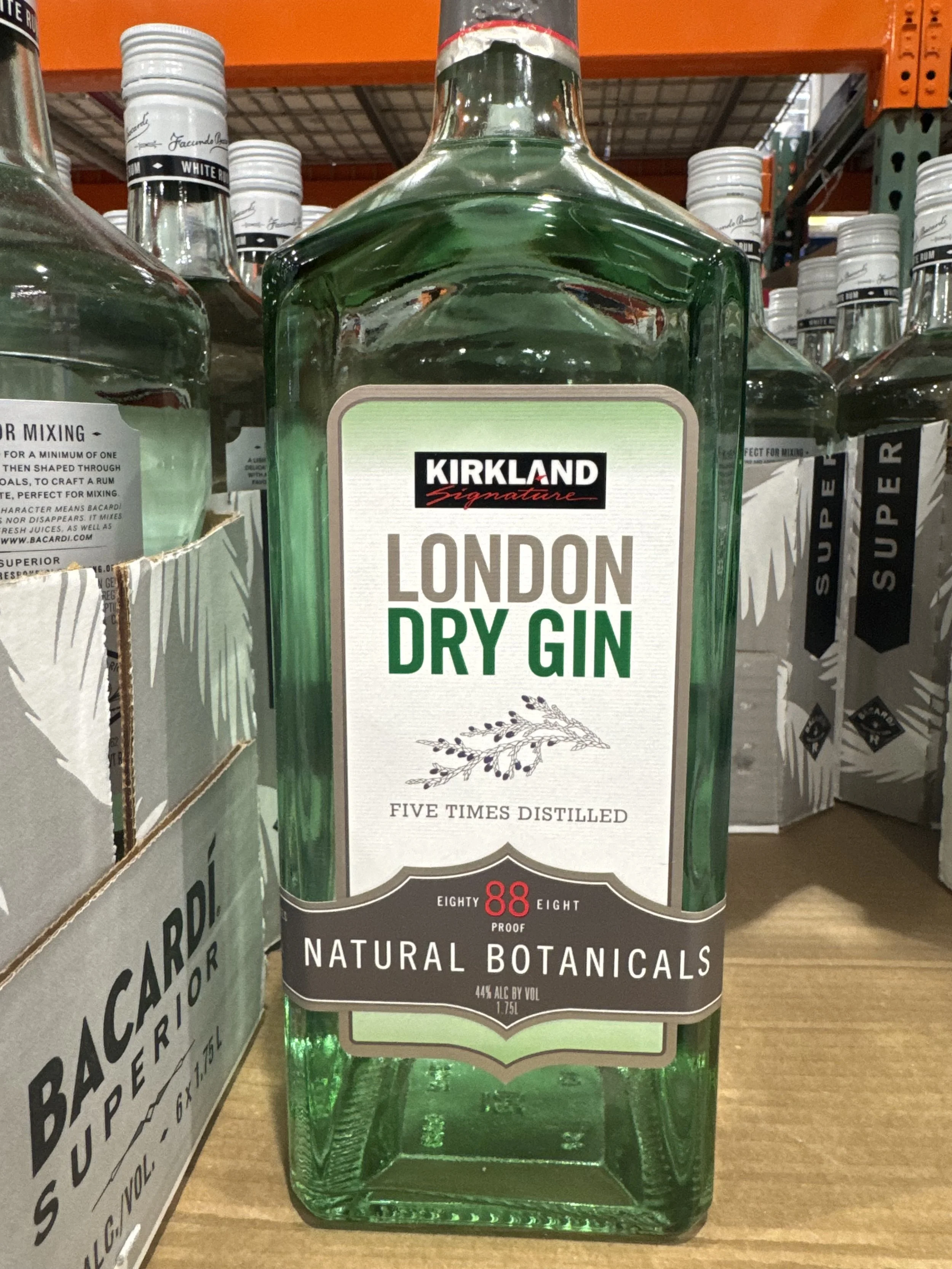
Kirkland London Dry Gin
Price/Size: $19 / 1.75L
Proof: 88
Comparable to: Tanqueray
Yes, it's made in Tennessee. Whiskey country. Don't hold it against the gin. Tennessee Distilling in Columbia produces it, and the result—distilled five times and built on juniper berries, coriander, orange peel, cassia bark, and orris root—is a smooth, balanced London Dry with clean pine and citrus notes.
If you go for Tanqueray because you want a classic, assertive gin without paying for something fussier, this will feel familiar. The juniper is a touch softer than Tanqueray's signature profile, leaning a little more into the citrus. But it's well-structured and works across a wide range: a Negroni, a Tom Collins, or a gin and tonic made with decent tonic water. At around $19 for a 1.75L bottle, it's one of the best arguments for a Costco membership a gin drinker can make.
Buyer Beware: A Note on Kirkland Tequila
For years, the Kirkland Añejo (sourced from NOM 1173) was known as a reliable agave spirit at a hard-to-beat price. However, we disagreed with the enthusiastic hype. After tasting the Reposado, Blanco, and the more sought-after Añejo straight and mixed in cocktails, we found the entire lineup to be bland.
Despite the brand's loyal following, a class action lawsuit filed against Costco alleges that Kirkland tequilas are adulterated with cane sugar-derived alcohol, rather than being distilled exclusively from 100% blue agave. The plaintiff commissioned nuclear magnetic resonance testing to analyze the carbon composition of the ethanol; those tests reportedly found that blue agave-specific carbon isotopes were significantly lower than expected, with the Kirkland Blanco allegedly containing up to 40% non-agave alcohol.
This is consistent with a broader issue in the industry: Mexican law permits producers to include small amounts of additives—glycerin, oak extract, sugar syrup, and caramel coloring—without disclosing them on the label, even on bottles marked "100% agave." Many reviewers of the Kirkland Añejo have noted an unusual sweetness and texture that suggest as much.
As of 2026, the lawsuit is ongoing and the Kirkland tequilas have been difficult to find on the Costco website. Our suggestion? Skip the Kirkland tequila, for now.