
St. Buena Vida's Secret to Great NA Wine
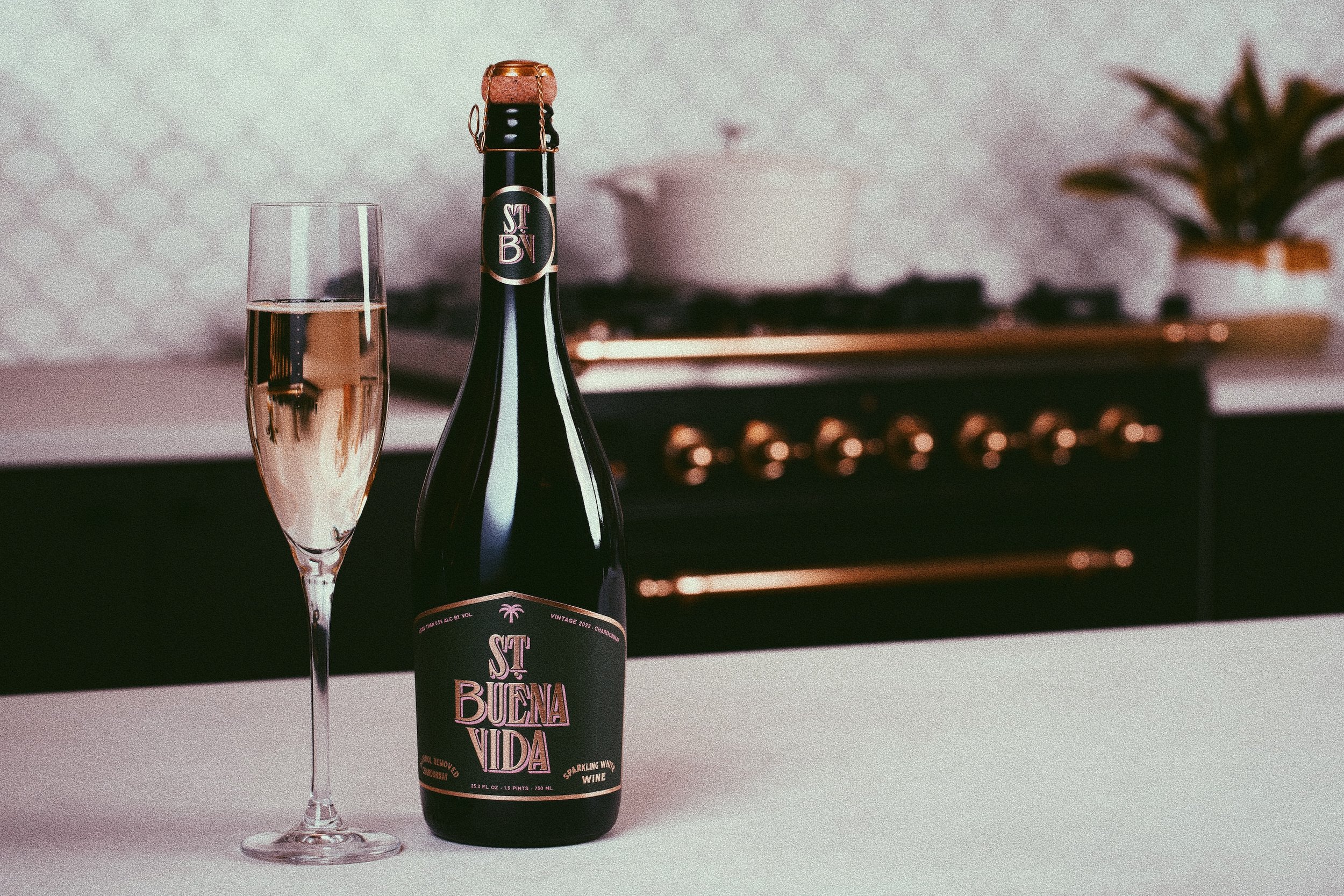
St.Buena Vida glass and bottle
My first sip was a surprise. Though I was sitting in my kitchen on a chilly fall day in the Northeast, the bubbles and bright flavors of green apple and citrus immediately transported me to a carefree sunny summer day, one in which I was wearing a fabulous tomato girl dress and sitting on a patio somewhere in Europe overlooking an azure blue ocean, a crisp glass of wine in hand. There’s a reason the pale gold non-alcoholic (NA) elixir I was quaffing is named St. Buena Vida, which, in Spanish, means the good life.
This was my first foray into non-alcoholic wine. It won’t be my last. Admittedly a tad skeptical, I was impressed by how much this sparkling chardonnay tasted like wine and how it made me feel – lighthearted, not lightheaded, as a few sips of actual wine might.
Aroma Capture Technology
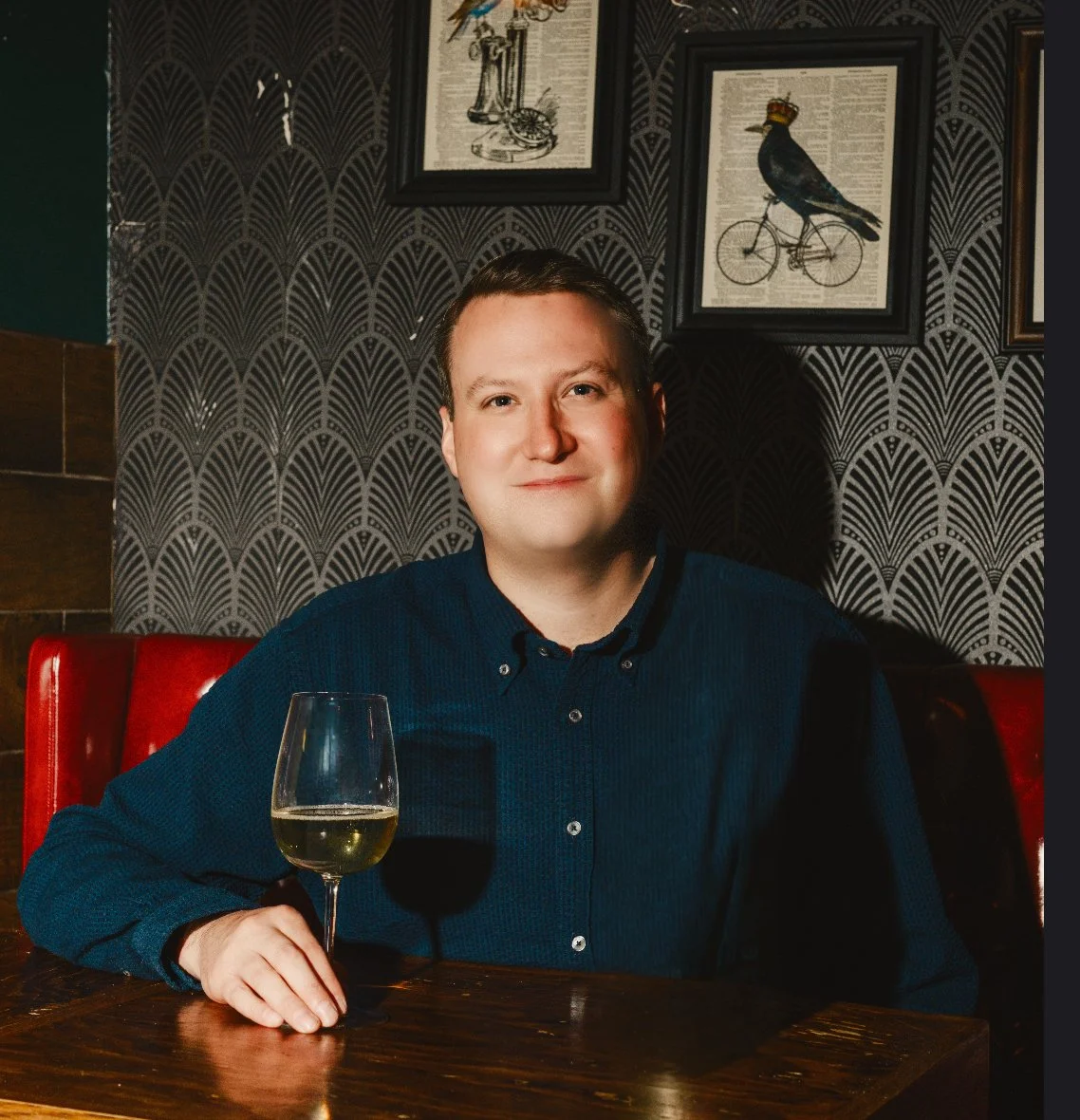
Lawrence Bremer, founder of St. Buena Vida
Non-alcoholic wines are produced using one of three methods: spinning cone, vacuum distillation, and reverse osmosis (a type of membrane filtration).
St. Buena Vida differs from all other US NA wines because it is produced using Solos, a patented aroma capture technology that is the most advanced on the market today.
“Solos is designed to keep the soul of the wine intact,” says Lawrence Bremer, founder of St. Buena Vida, which he launched this past spring. “During alcohol removal, many of the critical aroma compounds are also stripped out. Solos identifies those aromas in the distillate after dealcoholization, separates them from the ethyl alcohol, and adds them back into the wine,” he explains. This helps preserve the structure, flavor, and varietal character that drinkers expect from real wine.
Aromas are key to enjoying wine because smell is one way drinkers perceive flavor. Solos builds on vacuum distillation, adding a key step after the dealcoholization process that captures and protects the aroma compounds normally lost during that phase.
Other dealcoholization methods recover some aroma, but they generally capture only the most volatile compounds, which represent a small share of a wine’s full aromatic profile. Which means that after dealcoholization, the wine needs to essentially be reconstructed, which often happens via the addition of juices or concentrates. That may make for a tasty beverage but one that is less like wine.
In contrast, the result after dealcoholization employing Solos’ technology is “almost entirely just wine,” says Bremer. That’s why he chose to work with the company rather than one in the US, though he would have gone to market a year earlier, given the logistics of testing, transporting the wine from Spain to Germany, where Solos is based (a plant is scheduled to open in Hopland, CA, in 2026) for processing, and then to the United States for distribution.
People have asked about his formulation process. “There’s no formulation,” he says. “It’s just wine and we adjust it with sugar (grape must, which acts like sugar, for body) and acid (citric acid). That’s it.”
A Worthy Champagne Alternative
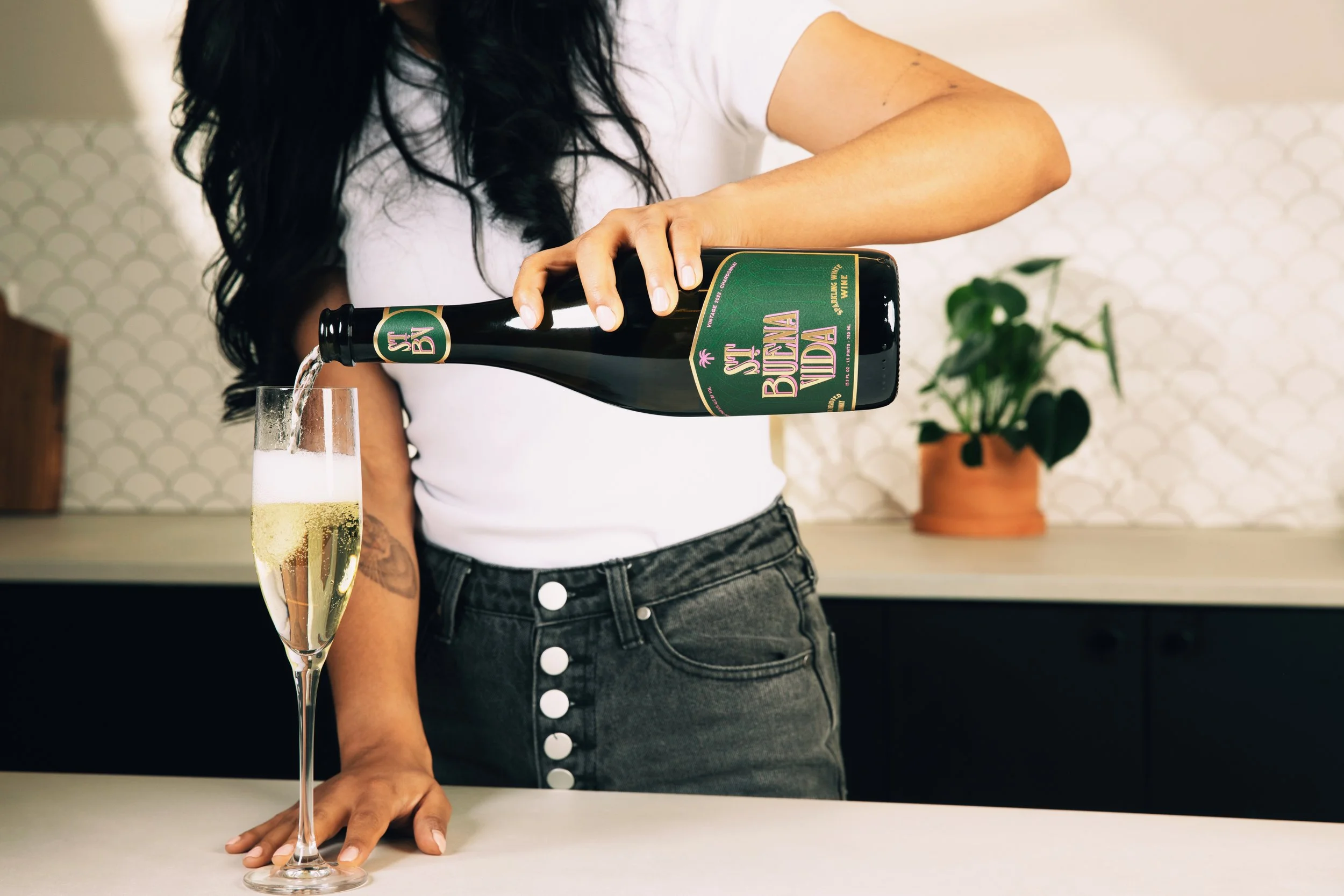
Pouring St. Buena Vida NA wine
Bremer set out to produce a Champagne alternative to capture a moment of celebration with big groups when all are not drinking. Research also uncovered that vacationers enjoyed an unencumbered drinking vibe but did not want to imbibe alcohol all day. With the benefit of bubbles and adding a touch of sugar (most sparkling wine contains some amount of sugar), it seemed a thoughtful entry into the category.
Interestingly, Germany has a long history of producing non-alcoholic wine and there’s broad adoption in the country. Bremer was undaunted by the prospect of working internationally as he has a background in global supply chain logistics.
Tired of the corporate world, Bremer wanted to build a brand and to work in wine, though he had been unsure in what capacity or of the timing to break into the industry. He’d become captivated by wine while working in a local restaurant during college and spent the next 15 years nurturing that interest, drinking and collecting wine and earning his WSET Level 3.
Bremer’s “on ramp” to the NA category came when his wife was pregnant. “It forced me to buy those products and got me thinking about them in a more serious way,” he says.
He began researching the world of non-alcoholic wine. “It’s still so small today,” Bremer says, “but was much smaller even four years ago. But that got me excited about it.”
Attending ProWein, the industry’s largest conference for wine and spirits, in 2024 in Dusseldorf was a turning point. There, Bremer decided to work with the Solos team and found his base wine, an organic chardonnay from a small, family-owned winery in Campo de Calatrava, Spain, after meeting with producers and tasting over 100 wines.
He had wanted an organic wine with aromatics, some acid, a little bit of weight, and one that offered good value in terms of a price to quality ratio. Bremer says his cost to produce his wine is about 50% higher than actual wine because of the cost of the dealcoholization process and because 15% of the wine is lost during that process.
Demand for NA Wine
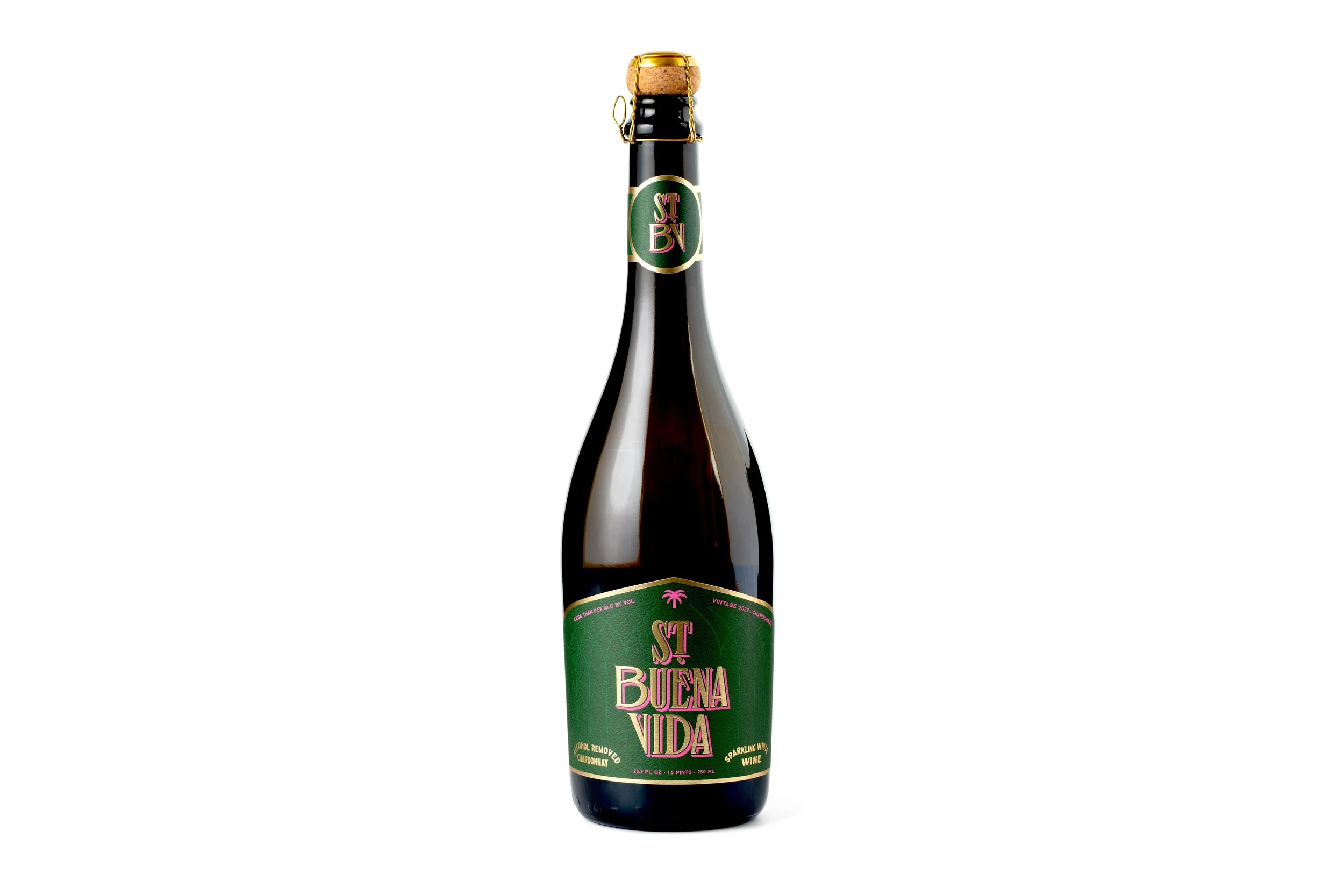
St. Buena Vida bottle
The global non-alcoholic wine market is projected to grow from $2.84 billion in 2025 to $7.64 billion by 2035. “I think it’s very sensible and very clear that this is not a fad, that there is real demand for it,” says Bremer. Though quality NA wine has been really difficult to produce he says, he sees that changing, citing investment and innovation, like the Solos technology, and new learning by winemakers beginning to focus on how to organize or pick from vineyards to optimize grapes to become non-alcoholic wine.
Bremer aims to grow St Buena Vida’s on-premise footprint in 2026, buoyed by three new distributors, and placement in restaurants like The Brennan Group in New Orleans. He will also release a sparkling rose and both wines in a 375 ml format.
By Bremer’s measure, NA wine consumers, primarily health-conscious millennial women, have been disappointed to this point. “That’s all about to change over the next few years, as consumers see that you can actually have and a really great glass of wine and actually enjoy it,” he says.
“They’ll only buy, consume, and enjoy if they feel like they’re not compromising. People don’t want to settle,” says Bremer. “So it’s really important that that experience feels just as good or on par with drinking a traditional glass. That’s where I think the market is really exciting.”