
The New Legal Moonshine & 5 Great Brands
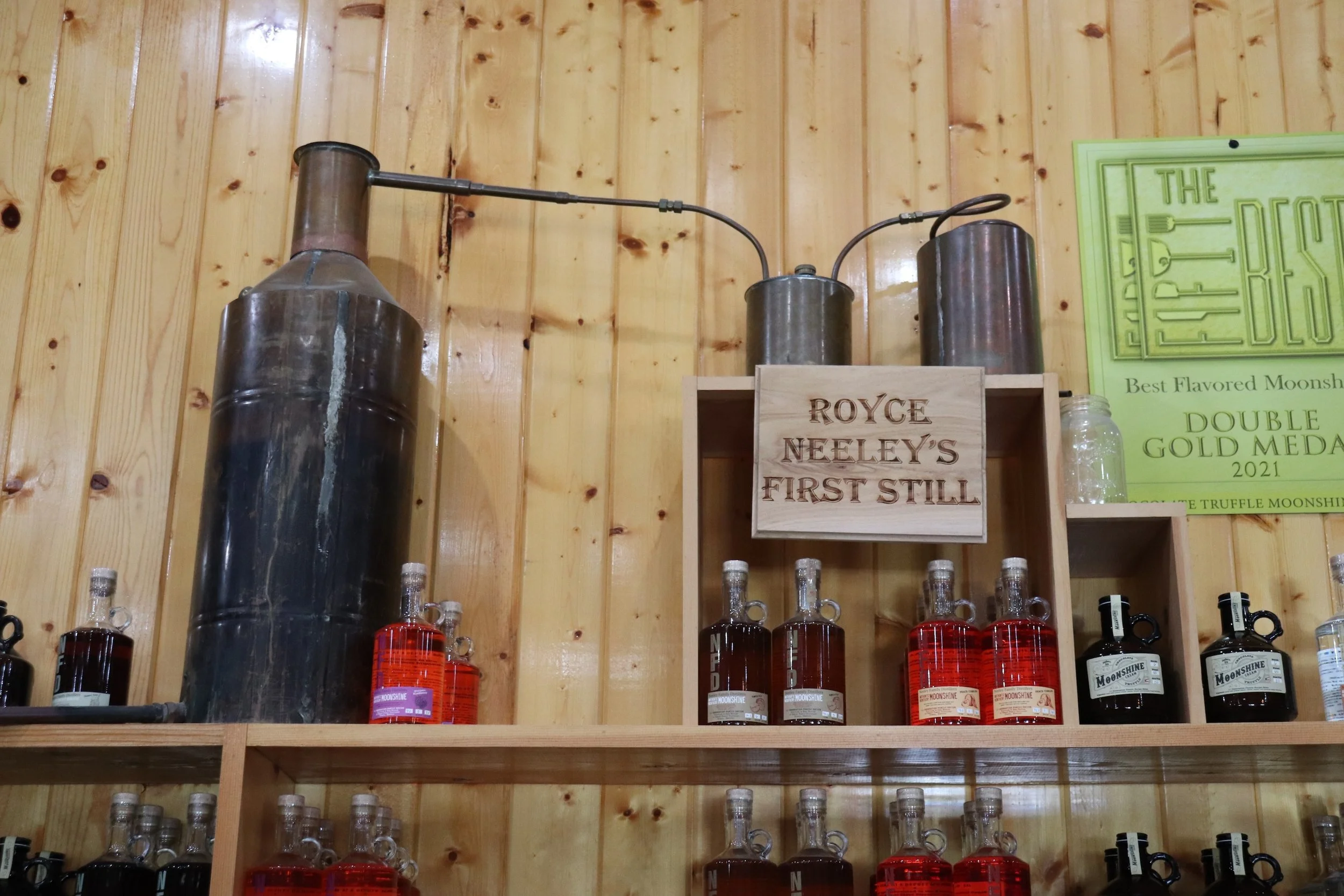
Royce Neeley's first still
Traditional Moonshine is alcohol that has been illicitly distilled and sold, generally for poorer families to make ends meet. But about a decade ago a new “legal moonshine” came on the scene, much to the chagrin of illicit moonshiners and their clientele. The argument was that if beverage alcohol was made legally, it could not in good faith be called “Moonshine.” But the real story, as it turns out, is a little more complicated than that.
The Original Moonshine
“Well, I guess let's start off with what moonshine originally was, which is any illicitly distilled spirit,” says Neeley Family Distillery Founder Royce Neeley. “Predominantly it was made in the south and made with corn and cane sugar. But you could use anything in it. Bourbon originally was moonshine before it was aged in barrels. At that time, they were using a mixture of 100% corn, half of it being malted, that way it could convert over and make the sugar. My family started using cane sugar in the early 1900s when it became readily available. And that's pretty much what everybody's been using ever since. It's a mixture of predominantly corn, they might add some rye in if they could get it, and then cane sugar.”
Traditionally, Neeley explains, cane sugar became a popular ingredient in Moonshine because it was much easier to transport into the woods along with your illicit distilling equipment.
Poor Quality Legal Moonshine
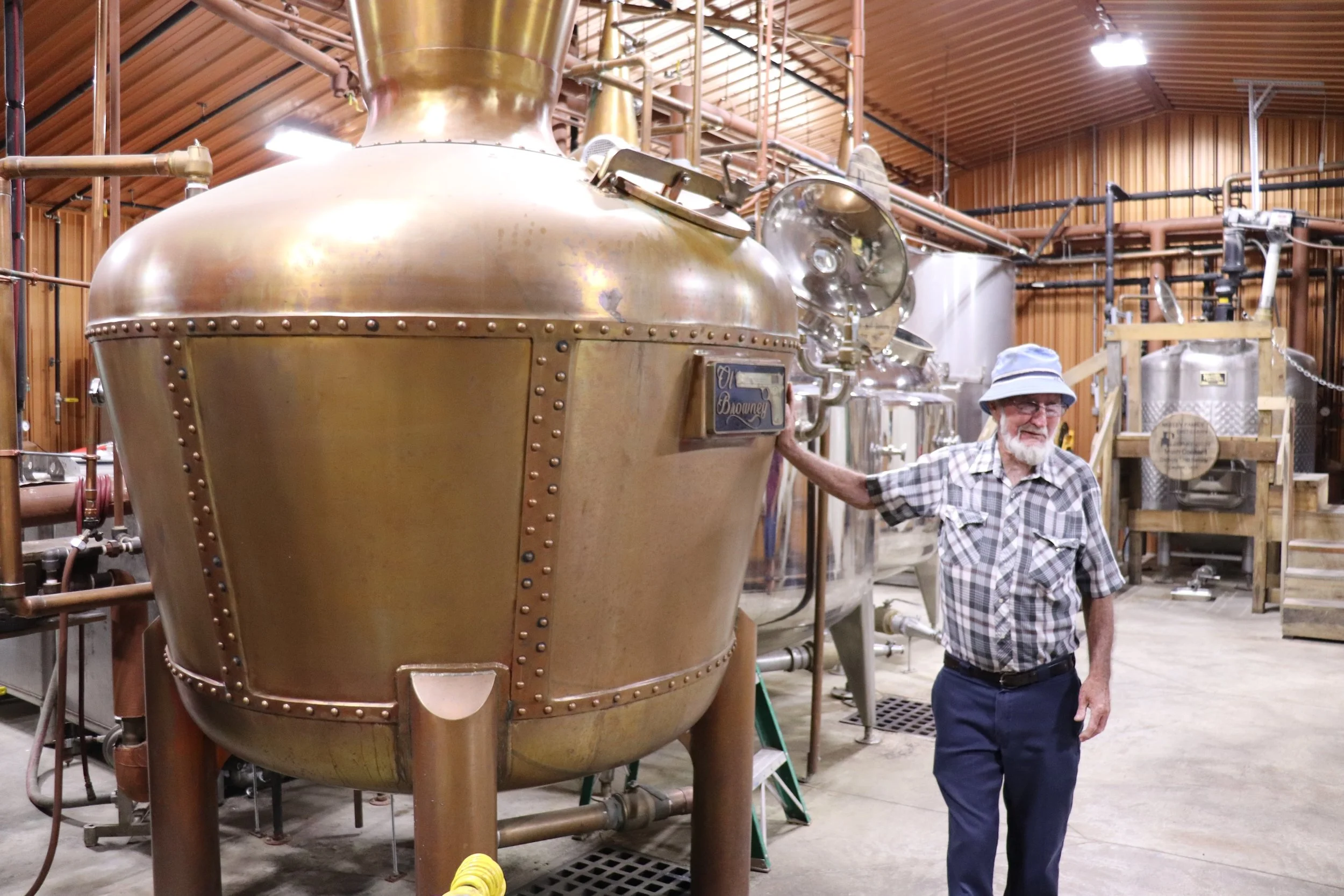
Royce Neeley's late Pappaw in the distillery
“There's a lot of this heritage stuff you get with this contemporary moonshine today,” Neeley says. “I will tell you, my family, I've got some relatives that are in their 80s and 90s that still make it illegally. For them, it's about making money. To me, the legal moonshine business has only really helped to push the illegal moonshine business even more than what it was because so much of the legal stuff is made so poorly. And what I mean by that is I'm not going to name names, but the big moonshine producers in Tennessee, they buy ethanol, they own tankers. They don't make any of it. They flavor it with artificial flavorings or put fruit in it and then try to sell it off to people. So that has only helped to push guys like me. I mean, I've never had anybody come in my place and say, ‘Oh, this ain't real moonshine,’ ever.”
The Rise of Moonshine
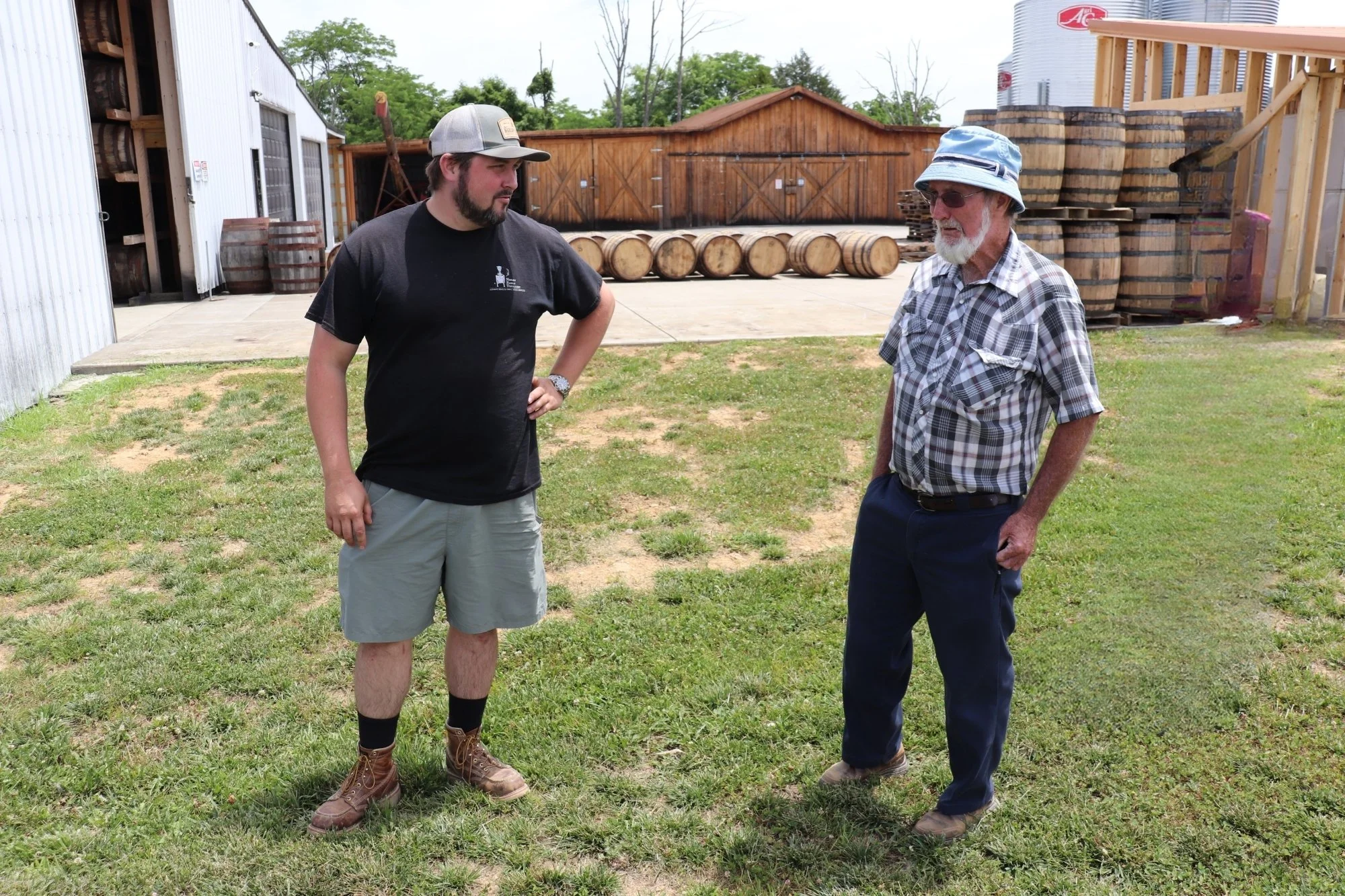
Royce Neeley, left, and his late Pappaw, right
Prohibition, Neeley says, is another thing that pushed Moonshine to prominence. After Prohibition ended, the distilleries and warehouse businesses that were left were literally drained of any aged whiskey they could sell to meet the demand of a thirsty nation.
“Back in the day, moonshine was known as being a higher quality spirit,” Neeley explains. “I'm talking the '40s, '50s, and '60s. Moonshine was known as being better than bourbon was. At the time, bourbon had a bad rep, especially the blended stuff. I mean, you know all the history of this, you know what went on with Four Roses. My grandpa would tell me that he drank Four Roses because it was easy to get, but when he could get ahold of moonshine, that's what he really wanted. It was like Kessler whiskey, just as cheap as it could be made, essentially. That's really what we're seeing today with not all, but I'm going to say 60% to 70% of the legal moonshine market is just some sourced crap that they throw together to try to make some money with.
Distilling Craft Moonshine
"The guys that are doing it right, you know actually distilling it, there's very few of us. Because for me, it costs me more to make moonshine than it costs us to make bourbon. I still use and buy Domino cane sugar today. Cane sugar is almost a dollar a pound, and corn's much cheaper than that. I'm not going to say how much we're using, but for every 60 gallons of moonshine, I'm using at least $400 to $600 worth of sugar in it," says Neeley.
There has been a perception in the aged whiskey industry that the purpose of using cane sugar was to make the spirit cheaper, but Neeley explains that is not the case at all, it was more about portability. Corn that was dragged out into the woods with distilling equipment and cane sugar was often used over and over again as a flavoring grain for the moonshine.
“They're reusing the corn over and over again, corn is there for flavoring, sugar is there to give it the kick,” Neeley explains. “Steve Beam was doing this. He would run his four, five, six times, even at his legal distillery. I know guys that have run it up to 10 times. And what I mean by that is the grain is not going into the pot to be distilled. So you're going to wait till the cap drops, sinks all the way to the bottom, and then you're going to dip the liquid off the top of it, leaving all the corn at the bottom of it. And then these guys will just add sugar, water, and yeast and let it restart back up again. That's called a generation. I know guys that have run up to 10 generations. And a lot of times, they say it gets better the more you run it through and do that.”
What Else Makes Craft Moonshine?
Aging
Distilling
Heritage
Unfortunately, Neeley explains, the legal moonshines that were made with bulk whiskey for a quick buck have ruined the reputation of the craft moonshine distillers, and this is at least part of the reason why many of the more craft moonshiners are moving toward making straight whiskeys instead of or on top of their moonshine offerings.
“They're moving towards what the demand is,” Neeley says. “When I was getting going in 2014, 2015, everybody told me, ‘Oh, you're not going to make it, don't sell moonshine.’ For us, we still sell a ton of moonshine, but it's all out of our gift shop. I hardly do any distribution of moonshine. I am, in the future, planning on selling a lot of aged moonshine. When I started selling my bourbon I had used oak, and I started refilling it with moonshine and letting it age. It was available in my gift shop about two years ago. We put out the world's first ever Bottled-in-Bond moonshine. It was a big seller for us. I've got a lot more of it aging out there, but I'm in no rush to push it out early, so I'm going to wait till it gets bonded as well. And then we'll keep kind of selling it that way. I had these casks that had held my Bourbon in them, and I didn't want to sell them off, I wanted to reuse them. It had our flavor in them. It made more sense than I mean, frankly, it makes more sense to me today than American Single Malt or even aging Rum, because I think there could be a good demand for aged shine. It's all about quality.”
Like most things, the folks who are chasing quality are always going to rise to the top, while those who are chasing what everybody else is doing are going to struggle to gain a foothold.
“I put my moonshine through the still three times, so it's all triple pot distilled,” Neeley says. “Just like with bourbon or anything else, the more quality, the more care that you put into it, the better product you can make, hopefully, the more people will want it. If you make it cheaper, I mean, look at what bourbon's doing. If you make the same thing everybody else is making, you know if you want to build the same damn distillery that everybody else has been building, you're probably going to go under.”
Neeley was distilling moonshine in his dorm room when he was in college until his mother found out and showed up and took his still away. So what does his family, with the long moonshining heritage, think about his foray into legal spirits these days?
“A big thing I always get asked when I talk about moonshine is, 'What's your family think about it?' almost like people asking, 'Do they think you're a sellout?' And I'm like, 'Absolutely not.' They're proud as can be that we're on the Kentucky Bourbon Trail, one, and two, that we're doing it the right way. If I was out here buying vodka and flavoring it, then they wouldn't be proud of it. But I make it the same way that my family's still making it illegally today.”
Five moonshine Brands To Try
Belmont Farms Distillers
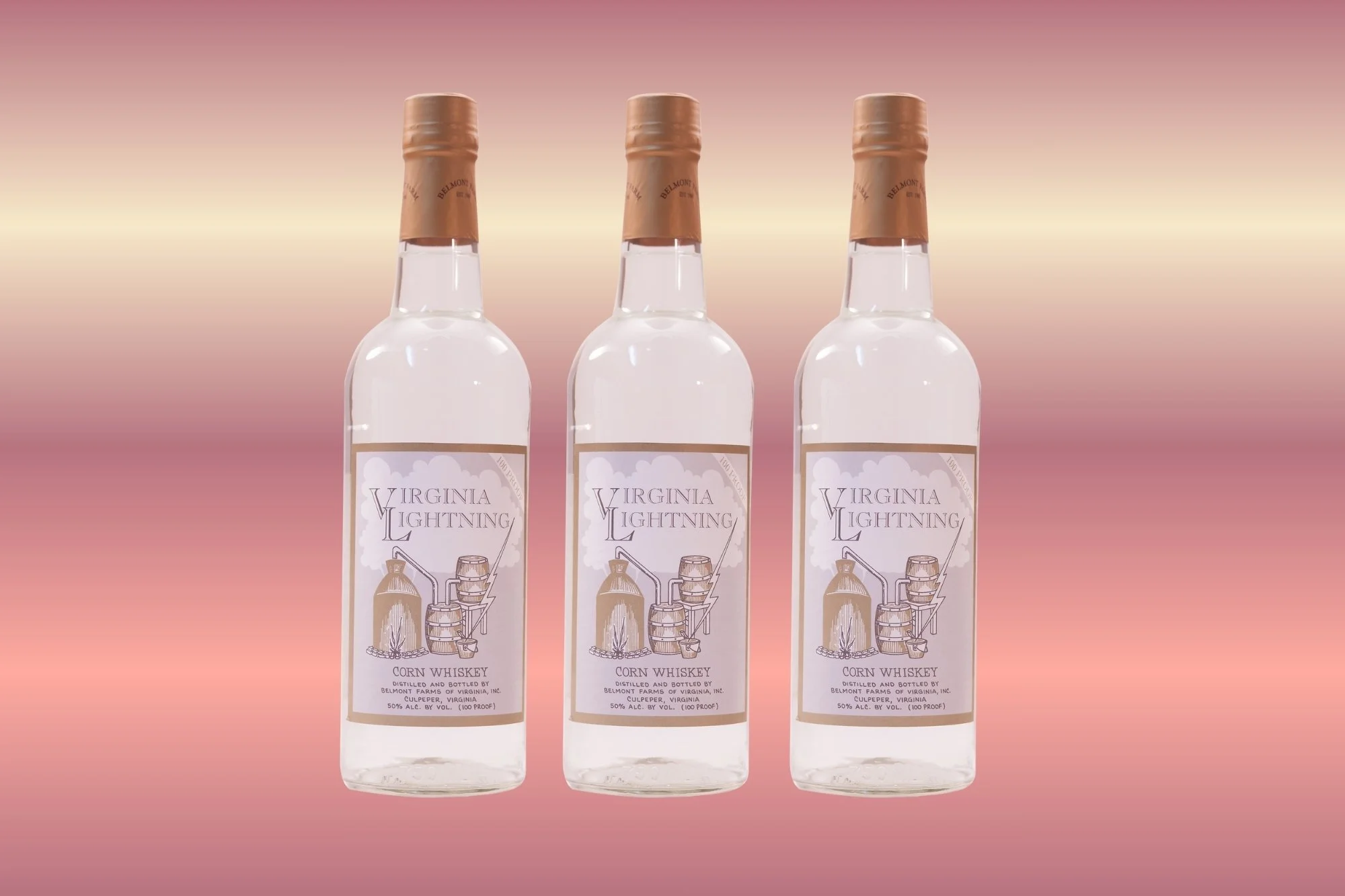
Belmont Farms Distillers’ Virginia Lightning
Founder Chuck Miller took his family moonshine background and his own farming background and started distilling corn whiskey legally in Virginia back in 1988. Try the corn whiskey Virginia Lightning! 100 proof. They also offer a 90 proof option that is designed for use in cocktails.
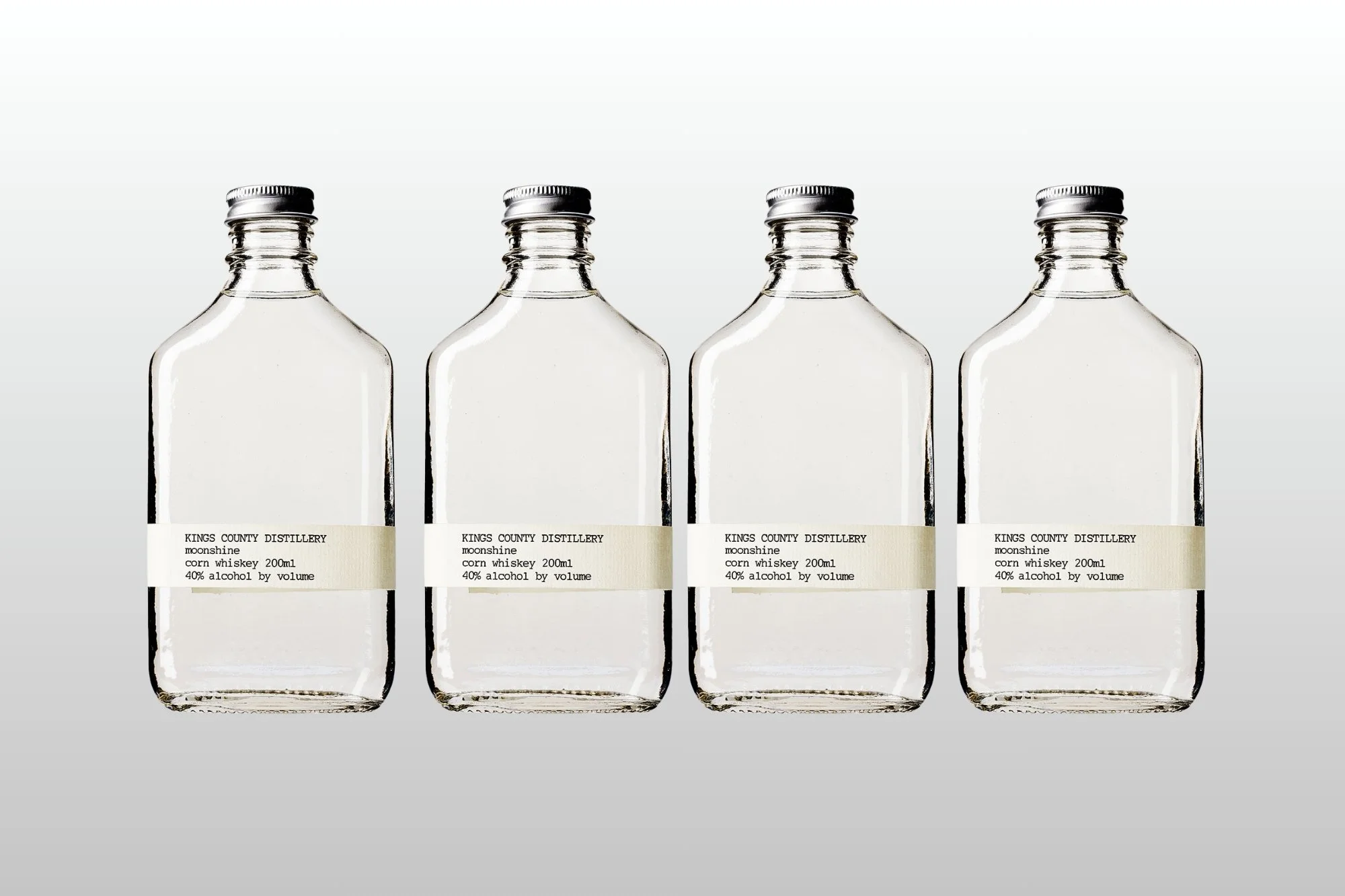
Kings County Distillery Moonshine
Founder Colin Spoelman, a Harlan County, Kentucky native who went to Yale, was making moonshine in his Brooklyn apartment before deciding to go legal. The moonshine is corn whiskey made from 80% New York State organic corn and 20% malted barley. In addition, they offer Distillers Proof Moonshine. At 140 proof, it is designed for further intervention by the user, as an infusion, a tincture, or to be aged.
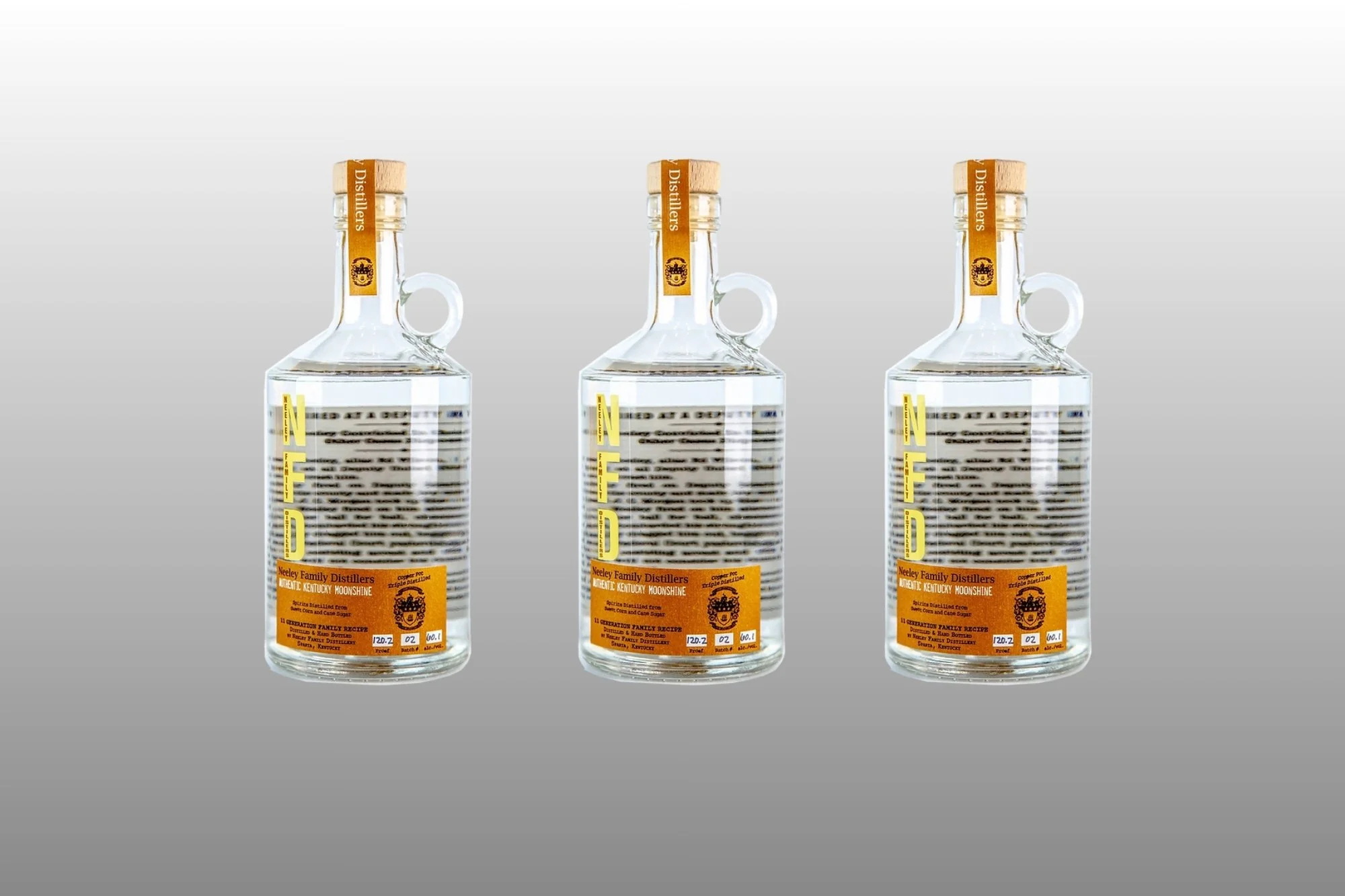
Neeley Family Distillery Moonshine
While you can only get their moonshine at the distillery, it’s definitely worth picking up their award-winning absinthe if you ever see it!
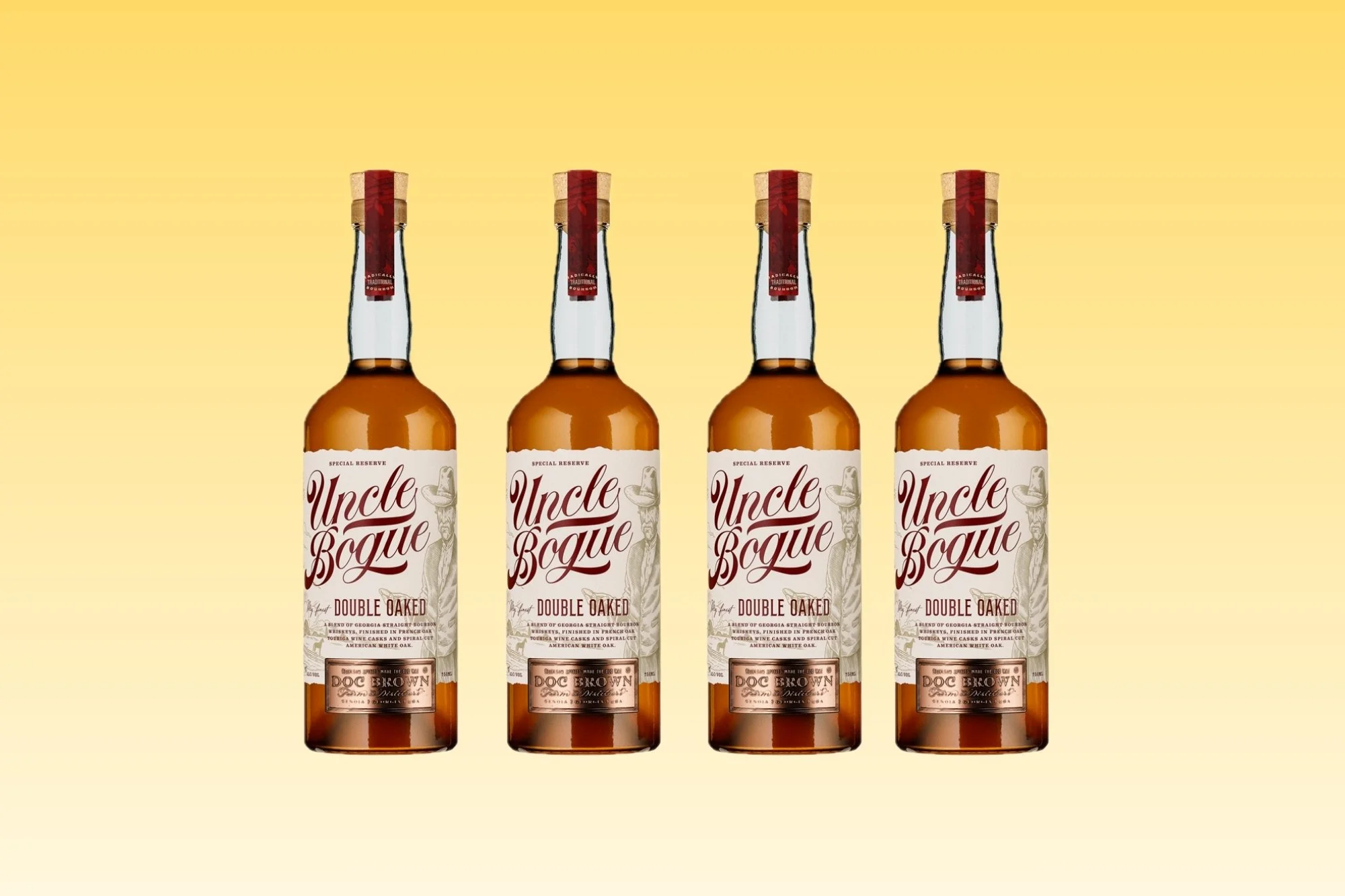
Doc Brown’s Farm and Distillers Double Oaked
Founders Amy Brown, Paige Dockweiler, and Daniel Williams had a collective family moonshining past, and while they themselves never created illicit liquor, they were always farmers, and now they’ve become farmer-distillers with a family lore. Try Uncle Bogue’s Bourbon, named for one of the moonshining ancestors.
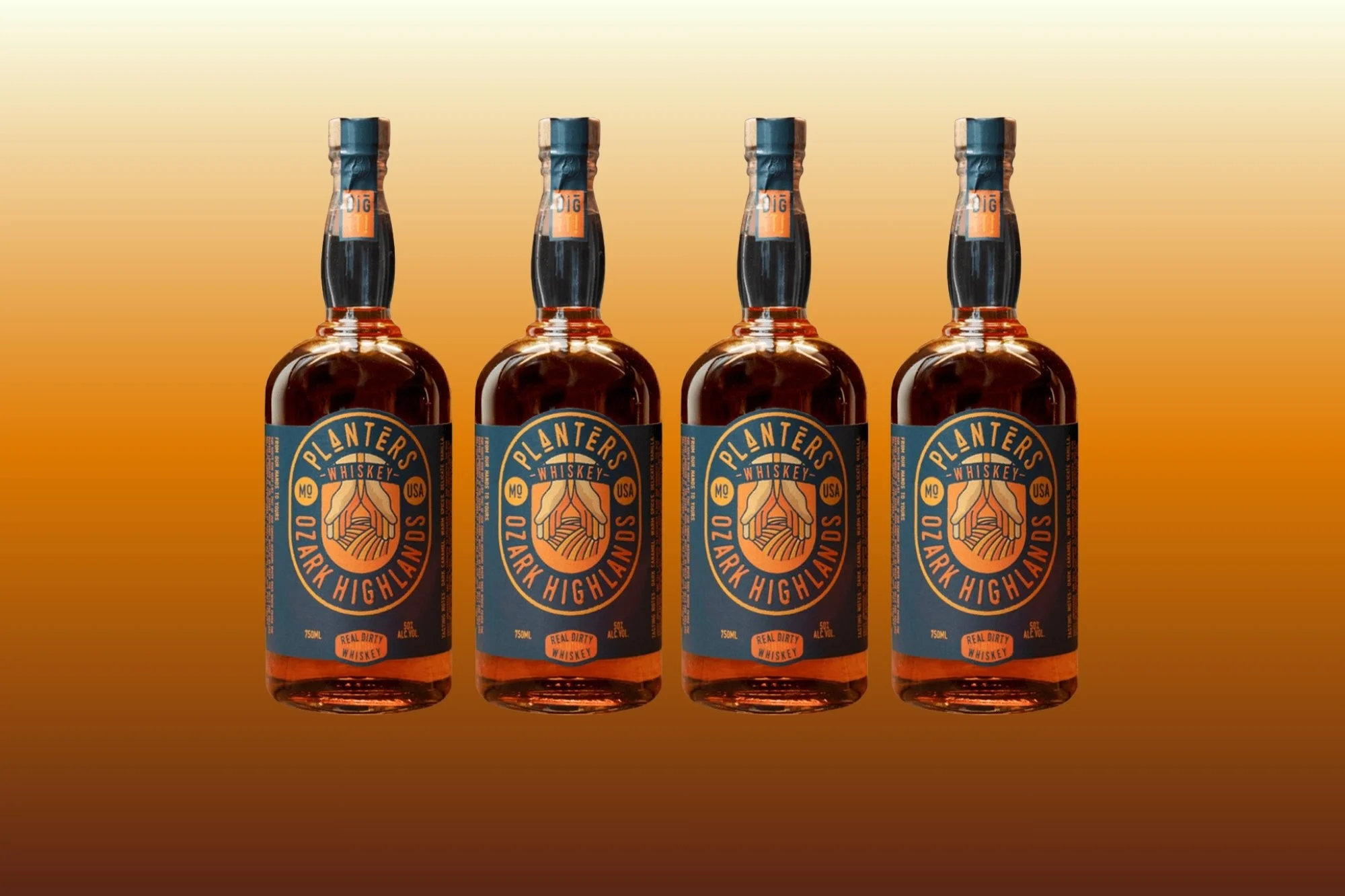
Planters Ozark Highlands Whiskey
This farmer-distiller family goes back nine generations, making whiskey both legally and illegally at times. Today this Missouri distillery makes some of the best straight whiskeys around — try the Planters Ozark Highlands Whiskey.