
When is a Martini, Not a Martini?
Ray’s Bar in Brooklyn posted a silly video in which a customer asks for a Manhattan, and the bartender responds, “You mean a Boy Martini?” The sketch has racked up over 100,000 views. Reenactment videos from other bars followed.
Inspired by this and a Punch story about the trend, the public relations company that represents Bulleit Bourbon and Johnnie Walker scotch sent out a pitch to cocktail writers like me titled, “The Rise of the Boy Martini” with included recipes for Manhattans made with the two whiskies.
While none of this is very serious, it did inspire two thoughts. The first is that the Martini has become a preferred cocktail of women: specifically (but not exclusively) the Dirty Vodka Martini with as many olives as the bartender will spare. This is not a brand new trend, but still one I find interesting.
My second observation is that we’re back to calling everything served in a cocktail glass a Martini, yet again.
Martinis and “Martinis” on the Menu
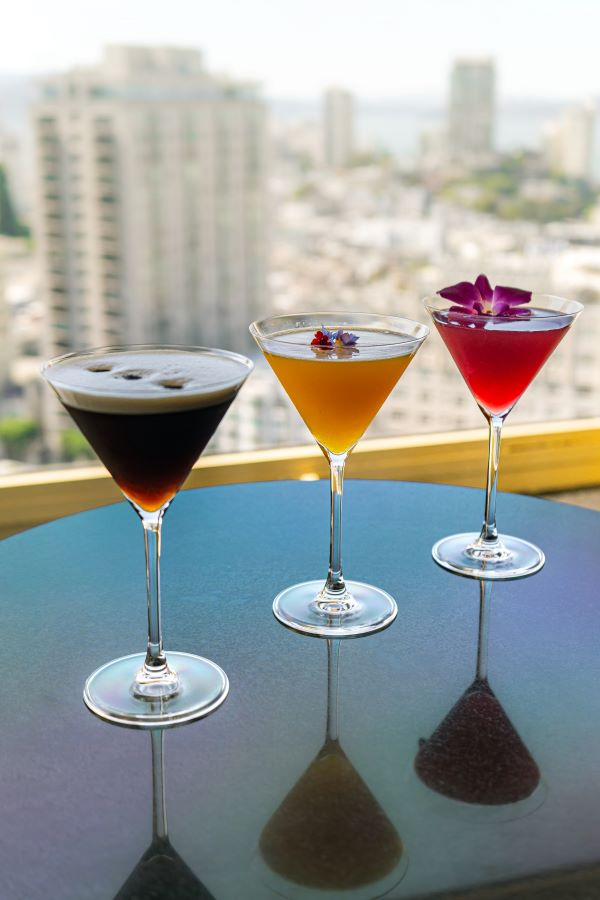
Martinis photo courtesy of InterContinental Mark Hopkins Hotel
The day before receiving the PR pitch about the Boy Martini, I got a press release from the Top of the Mark hotel bar in San Francisco announcing the return of their “100 Martini Menu” to celebrate the hotel’s 100th anniversary.
But very few of those 100 Martinis are actually martinis — they include Margaritas, Mai Tais, and even Chocolate Martinis. This is a hotel bar with amazing top-floor views, which caters mostly to tourists, so there is no need for it to reflect the leading trends in mixology — but If I recall correctly, it was only within the last decade that they stopped calling all their cocktails martinis. Everything old is new again.

Robert Simonson, drinks writer and founder of The Martini Expo
Drink writer and co-founder of The Martini Expo, Robert Simonson, recently wrote in his newsletter about how he has spotted several bars listing Cosmopolitans in the Martini section of cocktail menus. The word “martini” is starting to be used as it was before the craft cocktail renaissance. Are we backsliding?
When the glassware defined the drink
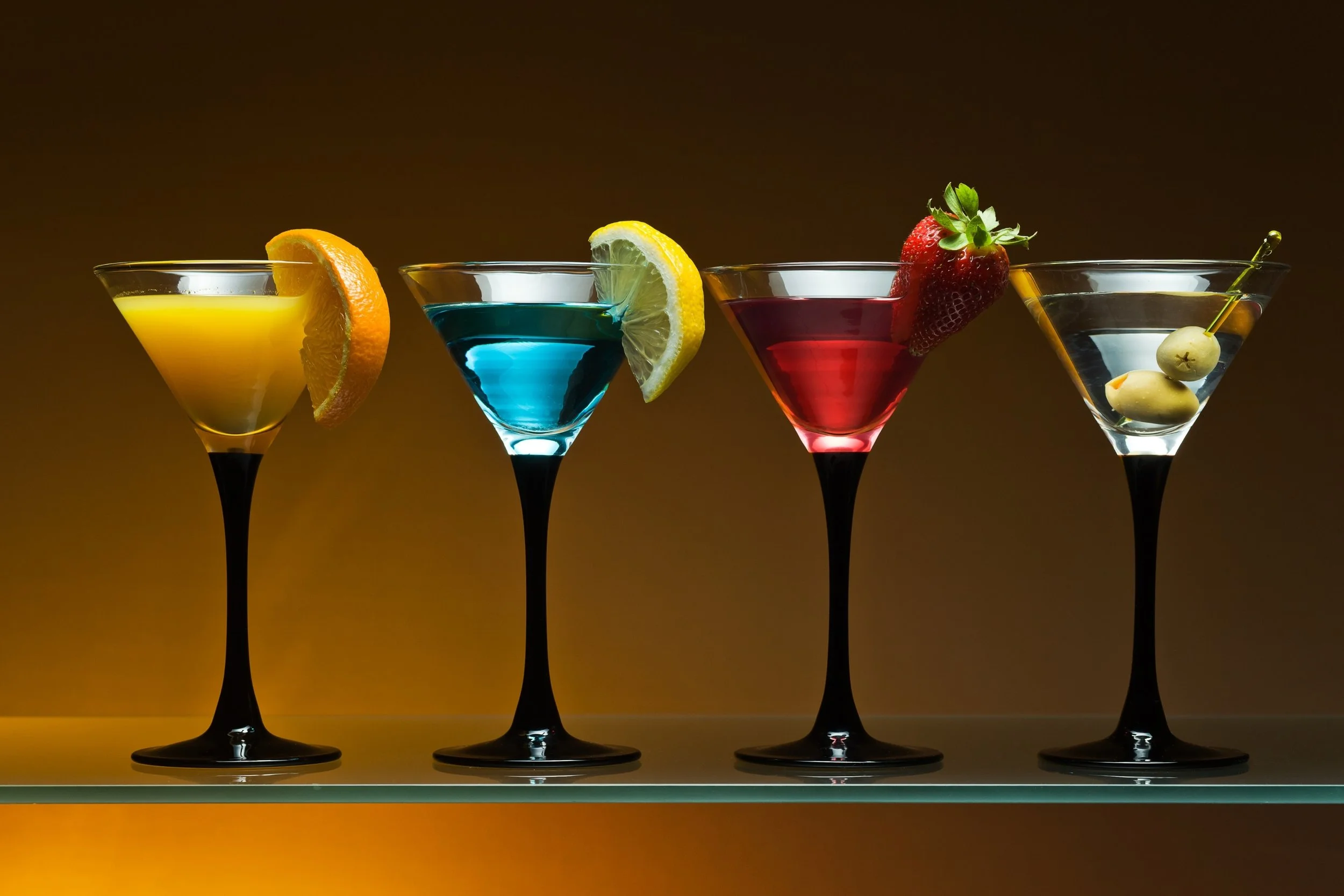
Colorful martinis
I think the current popularity of both the Dirty Martini and the Espresso Martini has inspired people to start thinking of everything as a form of martini. But in the past (as in the 1990s and early 2000s) everything was also called a Martini: Espresso Martini, French Martini, Lychee Martini, Chocolate Martini, Appletini, and the like.
However, in the 1990s, drinks were called martinis for a different reason. The 1970s and early 1980s popular disco drinks like the Midori Sour, Harvey Wallbanger, and Amaretto Sour, and then the 1980s preppy drinks like the Cape Cod, Greyhound, and Gin & Tonic were all served on the rocks rather than in a stemmed glass. (Blender drinks like Frozen Margaritas and Strawberry Daiquiris were served in their own styles of glasses.) Even the Manhattan was often served over ice.
In the 1990s, many popular drinks were still on the rocks - but it was also the era of the shooter: Slippery Nipple, Butterball, and cinnamon schnapps. Some of those shots evolved into “up” drinks: The Kamikaze became the Cosmopolitan, the old B52 shot became the Espresso Martini, the Lemon Drop shot became the Lemon Drop Martini.
As few cocktails other than the Martini were served in a “martini glass” at that point in time, these new drinks became known as Martinis. (This is much like how people call any cocktail with a drink umbrella a Mai Tai.) In other words, it was the glassware that defined the drink, rather than the drink’s ingredients.
A Martini, As Defined in 1994
In The Bartender’s Black Book, author Stephen Kittredge Cunningham has a section of well over 100 “martinis.” (I have the 2008 edition of the book, but the first edition dates to 1994.) The author takes the time to explain why everything took on this name: It was due to “the Martini (straight up drink) explosion of the 90’s.”
He cites three rules for what makes a Martini:
“If you serve it in a Martini glass and there is no whiskey in it you can call it a Martini.”
“They can be any color of the rainbow.”
“They can be very potent, or have their strength dramatically cut with low-octane liqueurs and mixers.”
Simple times!
What Makes a Martini, Today?
The craft cocktail renaissance of the late aughts was a massive correction to 1990s drinks. The first speakeasy-themed bars like Milk and Honey posted rules of proper behavior at the door. Bartenders had to educate customers that not all bars are college party bars, and not all bars make the same cocktails. Bar managers chose not to carry mass-market brands like Jack Daniels or Grey Goose (or sometimes any vodka at all), to force customers to try something new. Some refused to carry cranberry juice so that they “couldn’t” make any Cosmopolitans, the most popular drink of the era.
Bartenders also made a point of reclaiming the word “martini.”
“A Vodka Martini? That’s not a Martini; a Martini is made with gin. You must mean a Kangaroo,” they would say.
“Appletini? We don’t carry artificially colored products at this bar!”
Eventually bartenders were able to get the point across: some bars are like fine dining while others are like fast food. Different bars serve different drinks according to their themes, much like different restaurants serve different meals. A Martini is made with gin and vermouth by default.
But by around 2018, both bartenders and many consumers grew a little tired of cocktail bars being so precious, and bartenders grew weary of their own seriousness. Wasn’t drinking supposed to be fun?
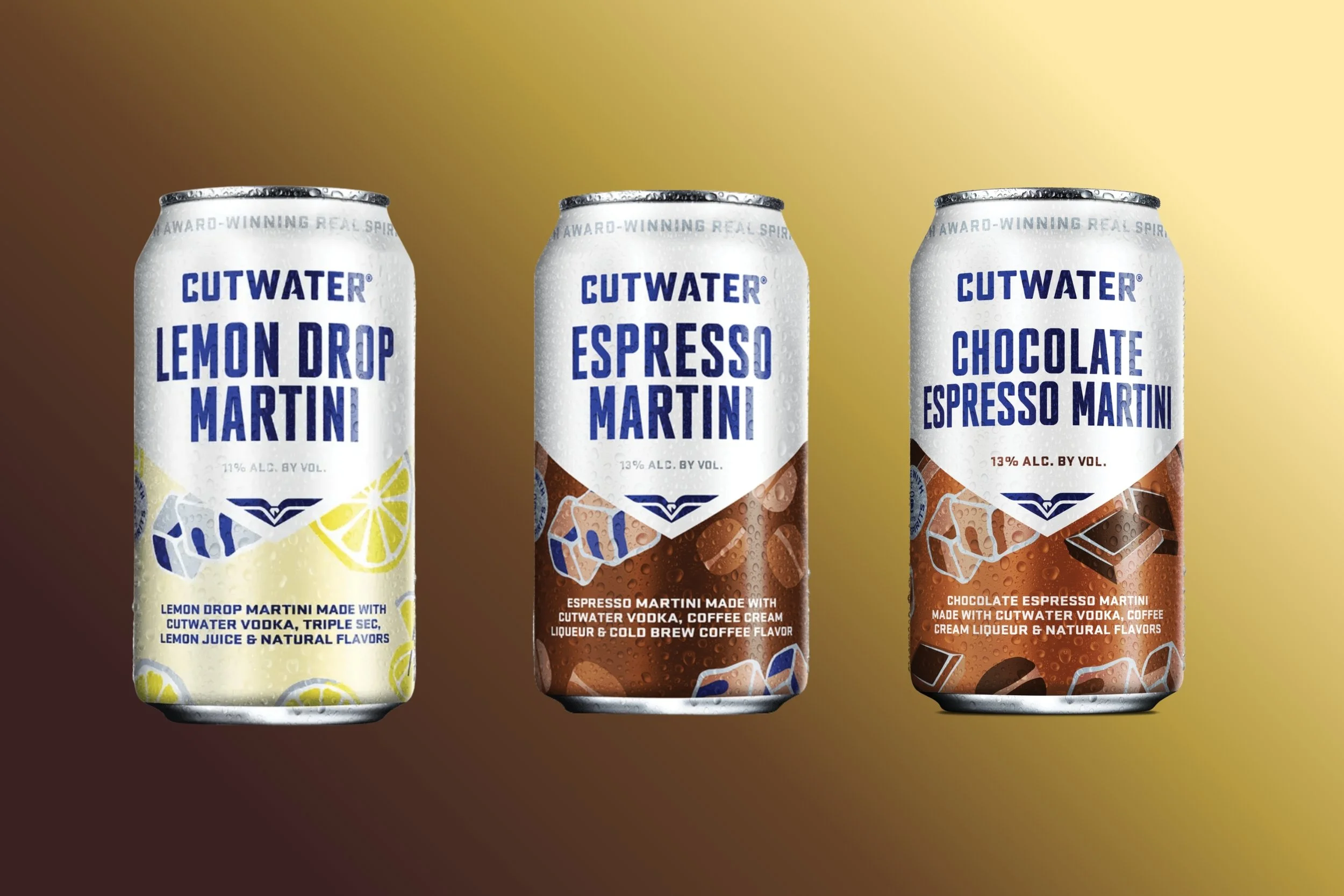
Cutwater canned martinis
The COVID pandemic helped correct the (over?)correction of the previous twenty years. At nearly 20 dollars apiece in modern times, many drinkers want a safe bet — and more boozy bang for the buck. Many consumers changed drinking habits from fancy tipples at temples of mixology toward buying portable canned carbonated cocktails at convenience stores and music festivals. Cocktails were now available in travel-friendly formats, no matter how they were traditionally served.
Silly, fruity, and often caffeinated cocktails like the Espresso Martini, Pornstar Martini, and Lychee Martini came back into style, and the Dirty Vodka Martini too. All the cocktails that used to be popular and called martinis in the 1990s and 2000s were back.
So a martini, once again, is a style of cocktail (simple, safe, familiar, functional) rather than a specific cocktail. At a bar it probably still comes in a stemmed cocktail (sorry, “martini”) glass, but in a store you can also find it in a pouch, bottle, or can.