
How to Make Nonalcoholic Cocktails that Are Actually Good
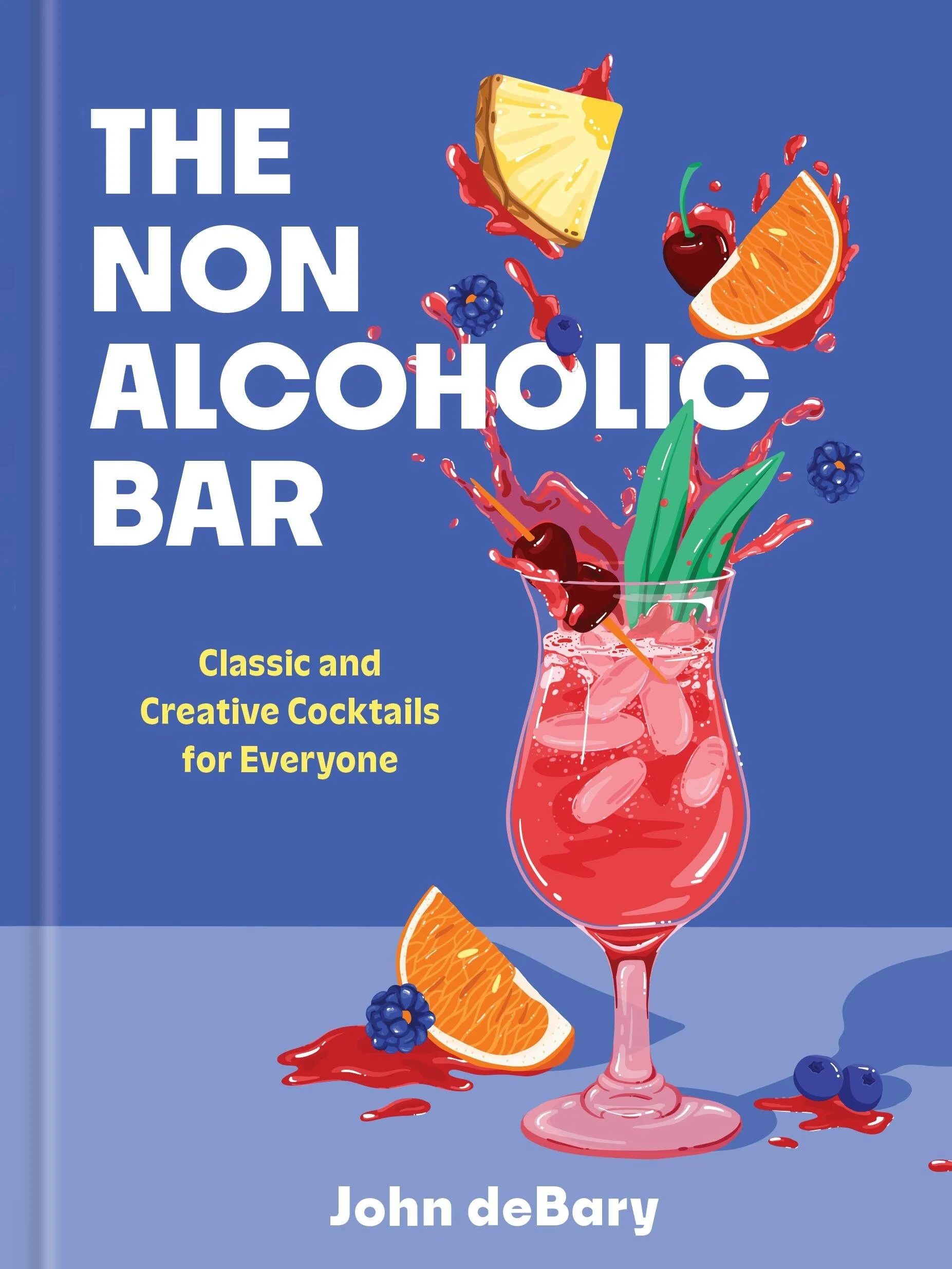
The Non Alcoholic Bar by John deBary
With the ever-widening range of nonalcoholic spirits replacements on the market, you can whip up alcohol-free versions of cocktails easily enough: combine nonalcoholic gin, nonalcoholic aperitif, and nonalcoholic sweet vermouth to make a nonalcoholic Negroni; mix nonalcoholic whiskey, sugar, and nonalcoholic bitters to make a nonalcoholic Old Fashioned; or shake nonalcoholic tequila, nonalcoholic triple sec, and lime juice for a nonalcoholic Margarita.
The problem is that many of these drinks don’t feel like their boozy counterparts. The flavor might be there, but they tend to taste light and watery.
The Problem with (most) Nonalcoholic Spirits
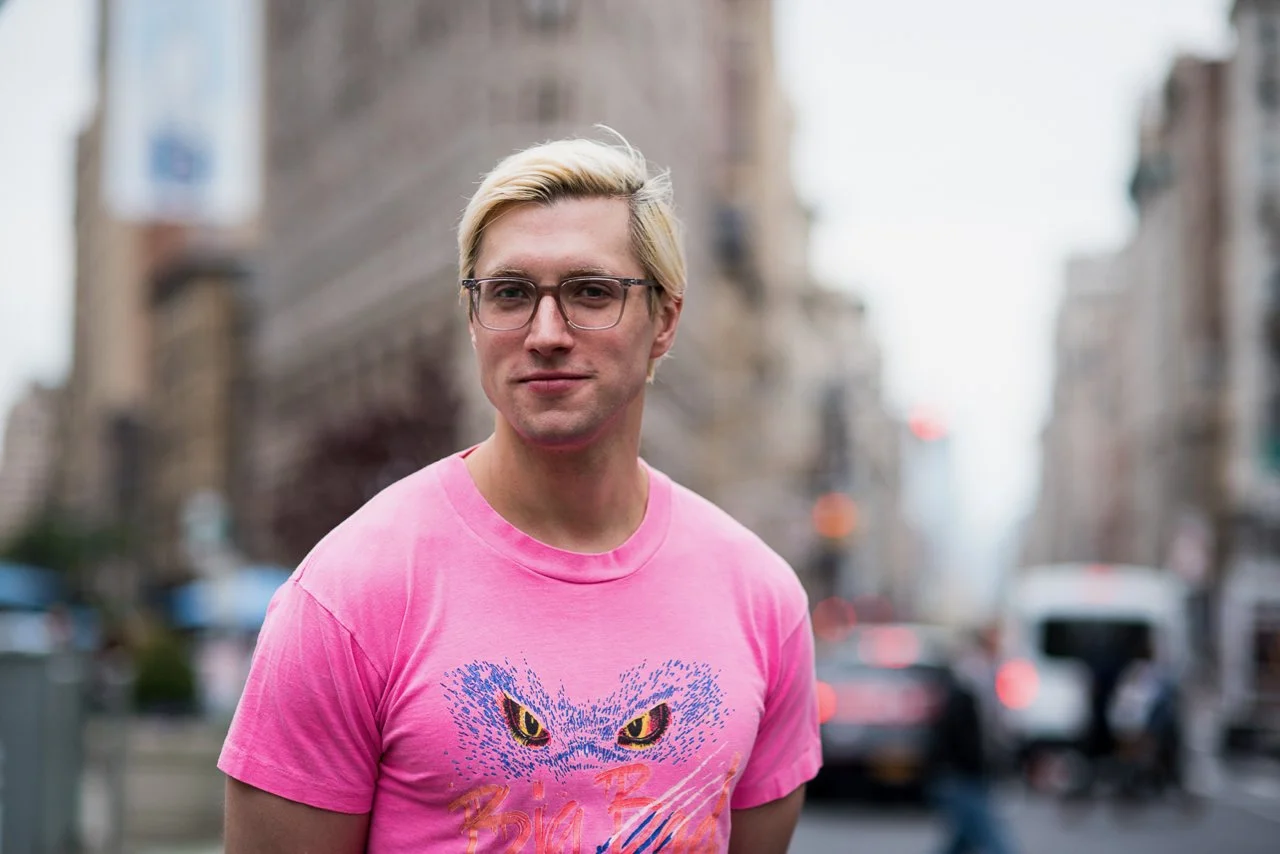
John deBary photo credit © Gabi Porter
The non-alcoholic spirits that perform best compared to their alcoholic analogs are those that contain sugar. Sugar gives body and holds flavor, so ingredients like bitter Campari, Aperol, and other amaro substitutes, along with orange, melon, and other liqueurs, taste and feel most like their boozy counterparts. Dealcoholized wine-based products like vermouths can be pretty good too.
But the nonalcoholic base spirits gin, vodka, whiskey, tequila, rum, and the like without sugar, are mostly too thin in body, and poor substitutes for the real thing. For the most part, they are water-based and sugar-free, with some thickeners and preservatives. They’re better than nothing, to be sure, but surely we can do better.
One person who understands this is New York beverage manager John deBary. The mocktail recipes in his previous book Drink What You Want were standouts, and he developed a nonalcoholic spirit called Proteau that was unlike anything else on the market (but alas is no longer on the market itself).
In his latest book The Nonalcoholic Bar: Classic and Creative Cocktails for Everyone, deBary corrects the texture and flavor problem of nonalcoholic cocktails.
That is, he does this when necessary. Sometimes he creates new concentrates, sometimes he modifies existing products, and sometimes he uses products off the shelf just as they are. The trick is knowing when to do what.
Ingredients
Commercial products
Adapted commercial products
Extracts and flavorings
Tea concentrates
There are recipes in the book that call for commercial brands of elderflower syrup, functional nonalcoholic spirits, nonalcoholic sparkling wine and vermouth, and more. He also calls for commercial nonalcoholic tequila in recipes. But other base spirits are altered to improve them.
To make “Super Whiskey” he starts with commercial nonalcoholic whiskey and adds roasted dandelion root and raw cacao nibs to “add a bit of complexity and bitterness to the base flavors.” To boost his “Ultra Gin” he starts with commercial nonalcoholic gin and adds cardamom pods, coriander seeds, and lavender flowers. While a few other drink books give recipes for homemade n/a spirits, here we start with commercial products and add or boost missing flavors and texture.
deBary notes that these additions will make the spirits cloudy, something that most manufacturers are unwilling to do, but that it’s worth it for the flavor improvement.
For rum, he suggests skipping the bottled products entirely and using rum flavoring extract. This product, like most bitters, contains alcohol but is used in small enough quantities that drinks won’t be boozy enough to get you buzzed. (There are now a few brands of nonalcoholic bitters on the market.)
deBary also adds texture to boost the body of drinks via tea and tisane concentrates. These aren’t syrups, but merely tea and water at greater intensities than one would drink on their own. He offers recipes for green tea, lapsang souchong (a smoky tea that will replicate smoky scotch), barley-based mugicha tea, red hibiscus, and white hibiscus concentrates. These take on the role of alcohol in many drinks, with their tannins adding body along with flavors from earthy green tea to toasty barley to floral honeysuckle notes from white hibiscus.
Unconventional Ingredients
With these and other modified ingredients in the arsenal, deBary builds better drinks. His “Definitive Nonalcoholic Martini” contains his Ultra Gin, a commercial nonalcoholic dry vermouth, olive brine, bitters, and hot sauce for some kick. His Amoxicillin, a spin on the modern classic Penicillin cocktail, calls for his modified whiskey, combined with lapsang concentrate.
One Manhattan approximation contains mugicha concentrate, red hibiscus concentrate, and maple syrup — something grainy, something dry and fruity, and something for subtle sweetness. No need for whiskey or vermouth substitutions.
deBary has always favored unconventional ingredients, and this book features many new ones, like Luxardo cherry syrup, miso, tahini, and even ketchup. The ketchup goes into his variation on a Singapore Sling. The Luxardo cherry syrup is used in a Negroni.
While those ingredients may require advanced skills, you can try your hand at deBary’s other body-boosting techniques: add some tannic tea or tisane for texture, bitters for depth of flavor, or level up your nonalcoholic spirits with additional grounding botanicals.
Or just buy deBary’s book and learn from the best. Here’s one of his cocktails to tempt you.
Honeysuckle 75
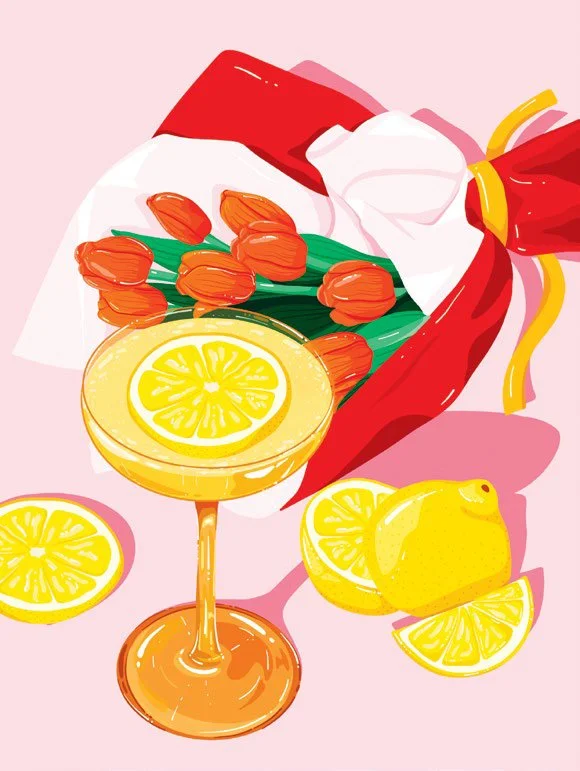
The French 75 is one of my all-time favorite cocktails and, in fact, the first drink I ever put on the menu at PDT was an apple-y riff on the classic. While this version does not contain any actual honeysuckle, the combination of white hibiscus and elderflower gives rise to an emergent honeysuckle-like flavor that I love to drink when I’m in the mood for something elegant, complex, and enlivening.
2 ounces White Hibiscus Concentrate (see page 42)
½ ounce nonalcoholic elderflower liqueur, such as Giffard
½ ounce Lemon Syrup (see page 37)
½ ounce fresh lemon juice
2 ounces chilled nonalcoholic sparkling wine
Garnish: thin lemon wheel
In a shaker, combine the white hibiscus concentrate, elderflower liqueur, lemon syrup, and lemon juice. Fill with ice and shake vigorously for 15 seconds. Strain into a large coupe, top with the sparkling wine, and garnish with the lemon wheel floated on the surface of the drink before serving.
Recipe reprinted with permission from THE NONALCOHOLIC BAR © 2026. Published by Union Square & Co., an imprint of Grand Central Publishing, a division of Hachette Book Group. Illustrations by LOZO Illustration.