
Beer Style Guide: Get to Know Gueuze Fruit Lambic with Em Sauter

Gueuze is the only European beer style that is made up of another beer style completely. You don’t set out to brew a gueuze because that’s impossible. You brew lambics and then blend lambics together to create a gueuze. A gueuze is a blend of one, two and three-year-old lambics. These are taken from various oak barrels and then blended to create the flavor that the master blender is seeking. Some gueuze makers don’t even brew their own beers but rather receive unfermented beer from breweries and then blend that beer to that blendery’s specifications. Tilquin, which is south of Brussels, gets their beer from various lambic brewers in the Senne River Valley and then blends these barrels together to create their own brands of gueuze and lambic. Their beers as well win multiple awards so blending is serious business.
Gueuze also differs from straight lambic in that gueuze is bottle conditioned and then served highly carbonated, unlike lambics which are usually served still to semi-sparkling. Gueuze’s bubbly carbonation is reminiscent of champagne and with its luxury status nowadays, people treat it like the “Champagne of Brussels.” Breweries like Drie Fonteinen in Beersel, Brussels only bottle their beers (no plastic kegs) to make sure they are getting that high carbonation from the conditioning.
Tasting notes
With gueuze, you’ll get a more sparkling flavor of lemon, dried hay, barnyard, leather, and goat. Some of these flavors sound not appetizing but I assure you that they are. A gueuze’s flavor is almost hard to pinpoint but you know it instantly when you taste it.
A fruit lambic is usually a fruited version of gueuze or blended lambics. It is blended, bottle conditioned and highly carbonated. Fruits are added during the fermentation process and anything from unpitted cherries to raspberries to nectarines and beyond can go into a fruit lambic. The most traditional fruit lambics are cherry, known as kriek, and raspberry, known as framboise.
Pairings
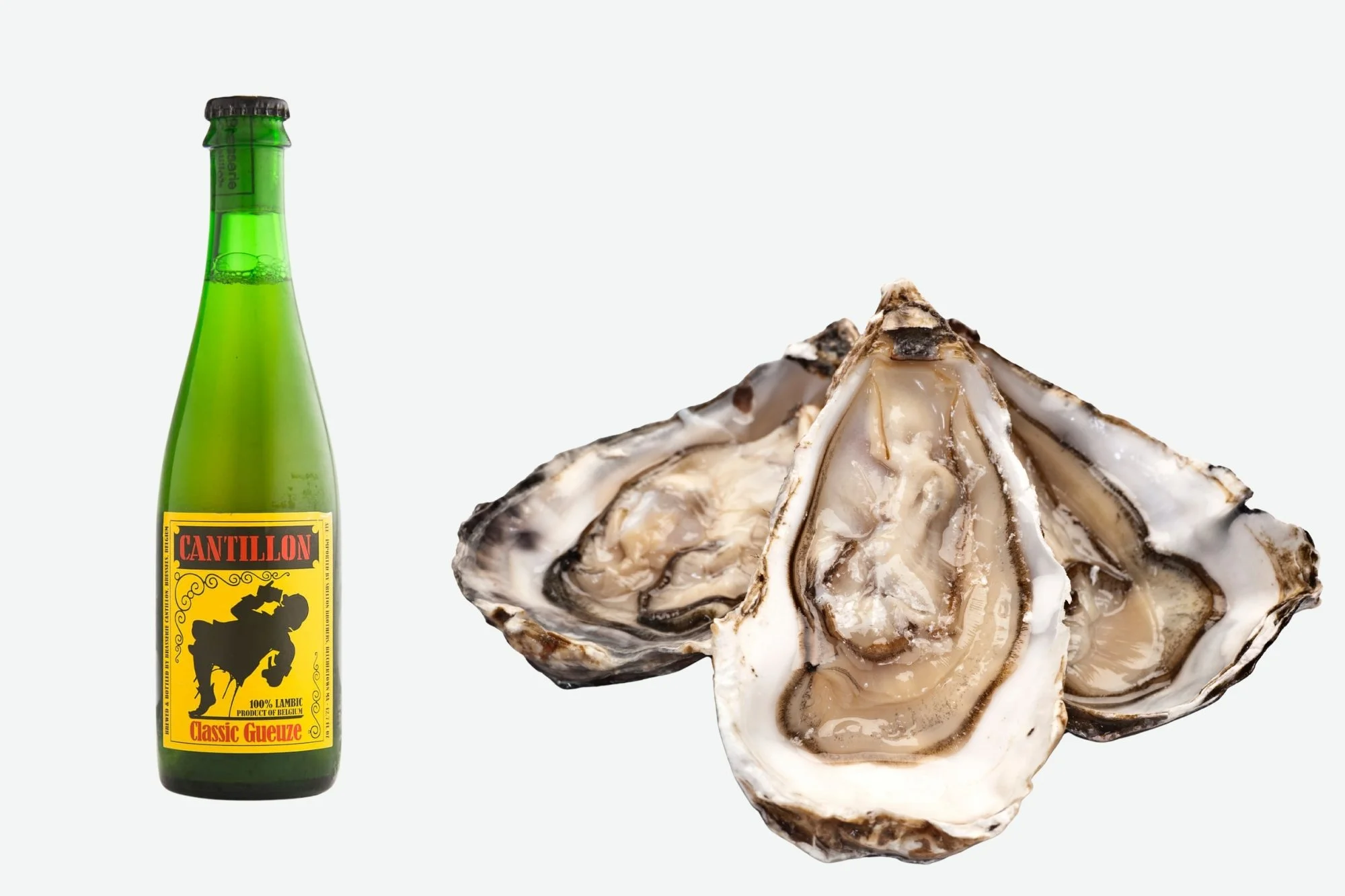
Gueuze and oysters
Gueuze works as an aperitif similar to straight lambic or champagne and is a celebratory drink for good times. Gueuze and oysters is a classic pairing or gueuze and funky cheese like camembert or epoisses; the funkiness will mingle with the funk of the beer while the high carbonation of the beer will clean the high fat content of the cheese off your palate. Fruit lambics are ideal with desserts like cheesecake, brownies or crème brûlée. Krieks can have a lovely almond note that works incredibly well with any vanilla tinged dessert.
Beers to try
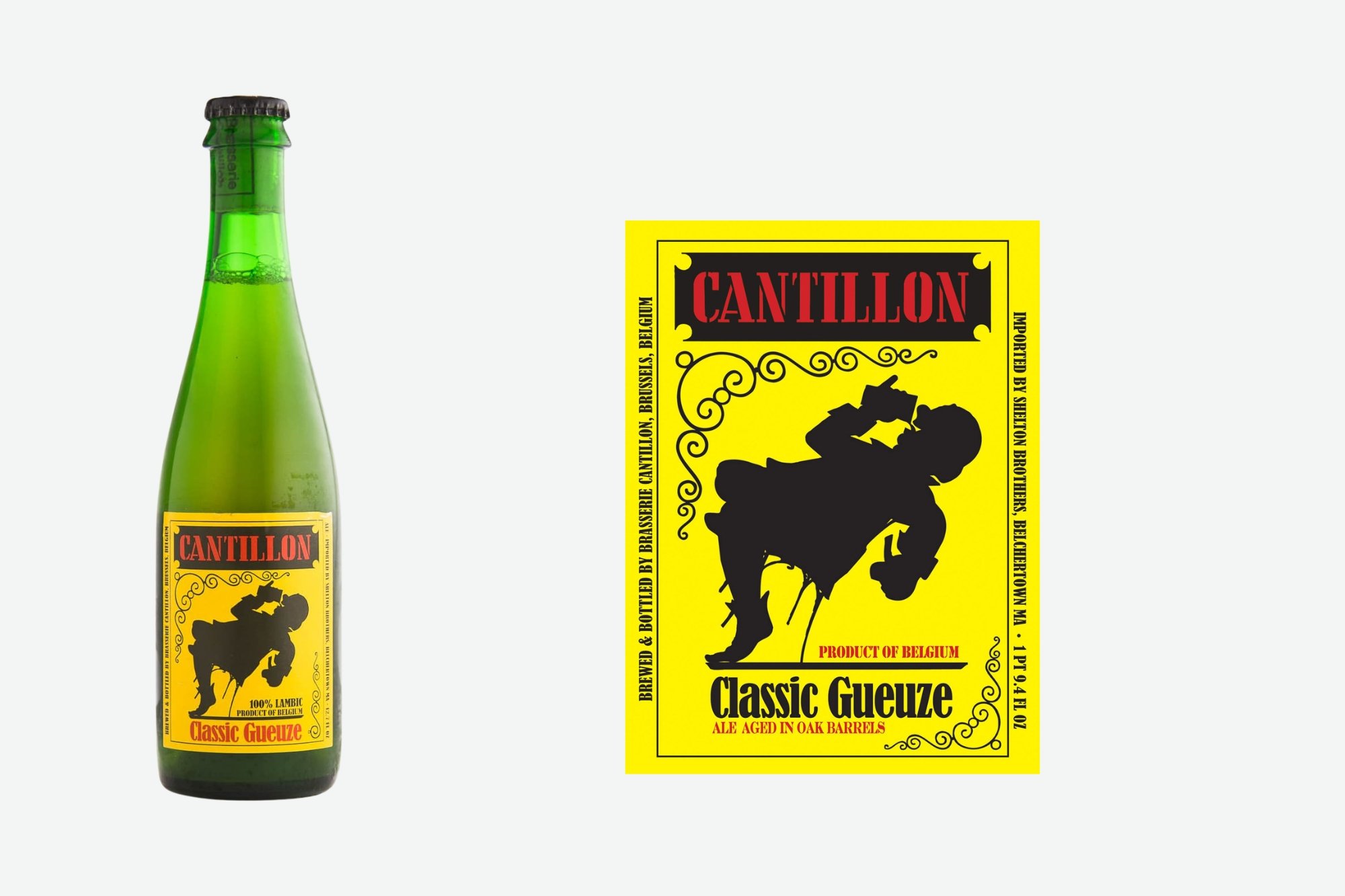
Cantillon Classic Gueuze
Cantillon Classic Gueuze and Rose de Gambrinus
Cantillon, a lambic brewery that is within an easy stroll from the Midi train station in Brussels, makes a variety of gueuze and fruit lambics. Their classic gueuze is the gold medal of the style and one beer geeks should seek out. My favorite fruit lambic of theirs is Rose de Gambrinus, which tastes like tart raspberry jam. https://www.cantillon.be/?lang=en
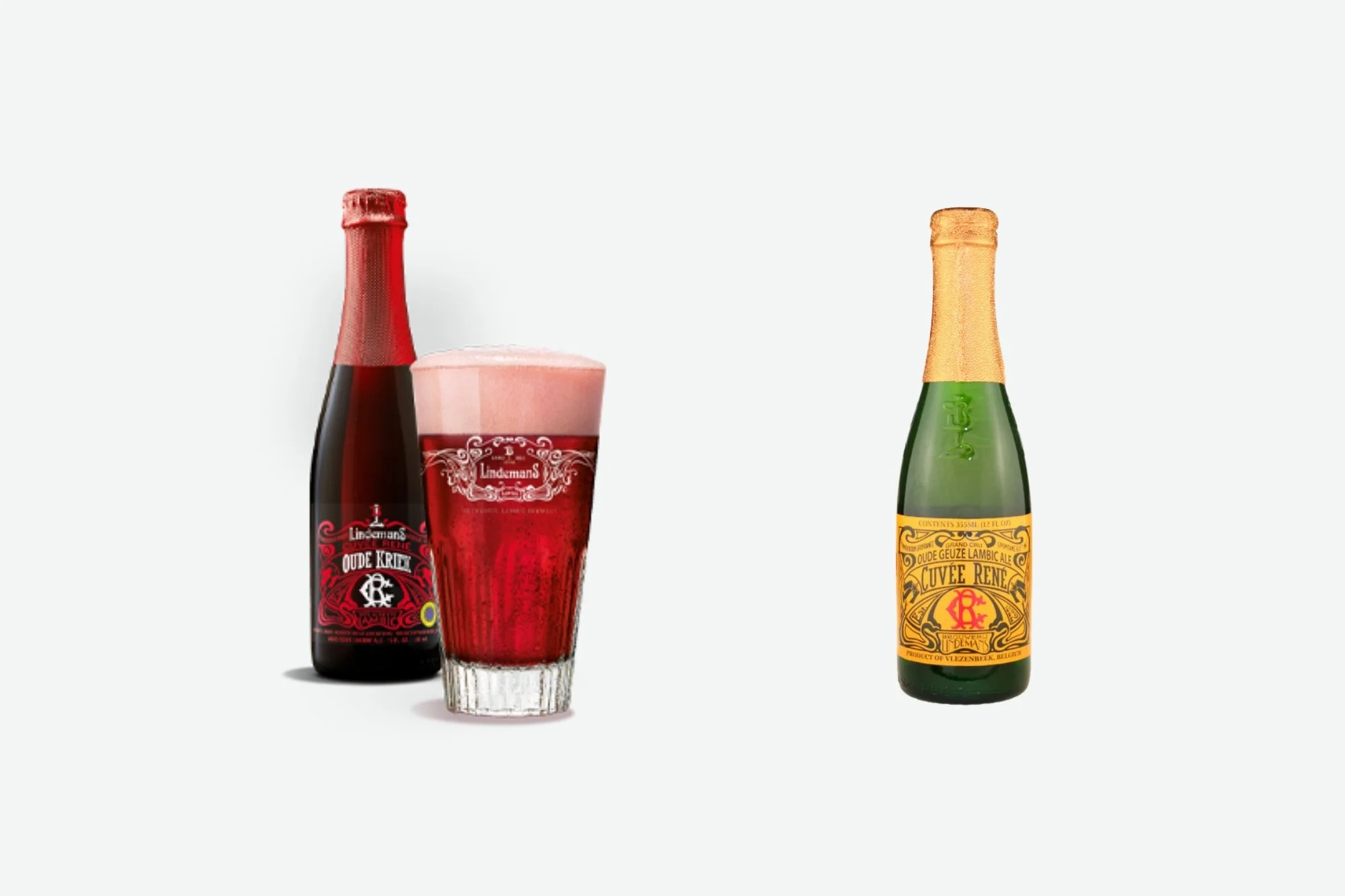
Lindemans Raspberry Oude Kriek and Cuvee Rene Oude Gueuze
Lindemans Cuvee Rene and Raspberry Lambic - For cheaper, easier to find options in America, look for Lindemans gueuze called Cuvee Rene and their variety of fruit lambics. Lindemans fruit lambics are back sweetened so you’ll get more fruit flavor and way less funk. This isn’t necessarily a bad thing as they go incredibly well with chocolate desserts like cake or brownies. The Raspberry lambic and a brownie is a match made in heaven.
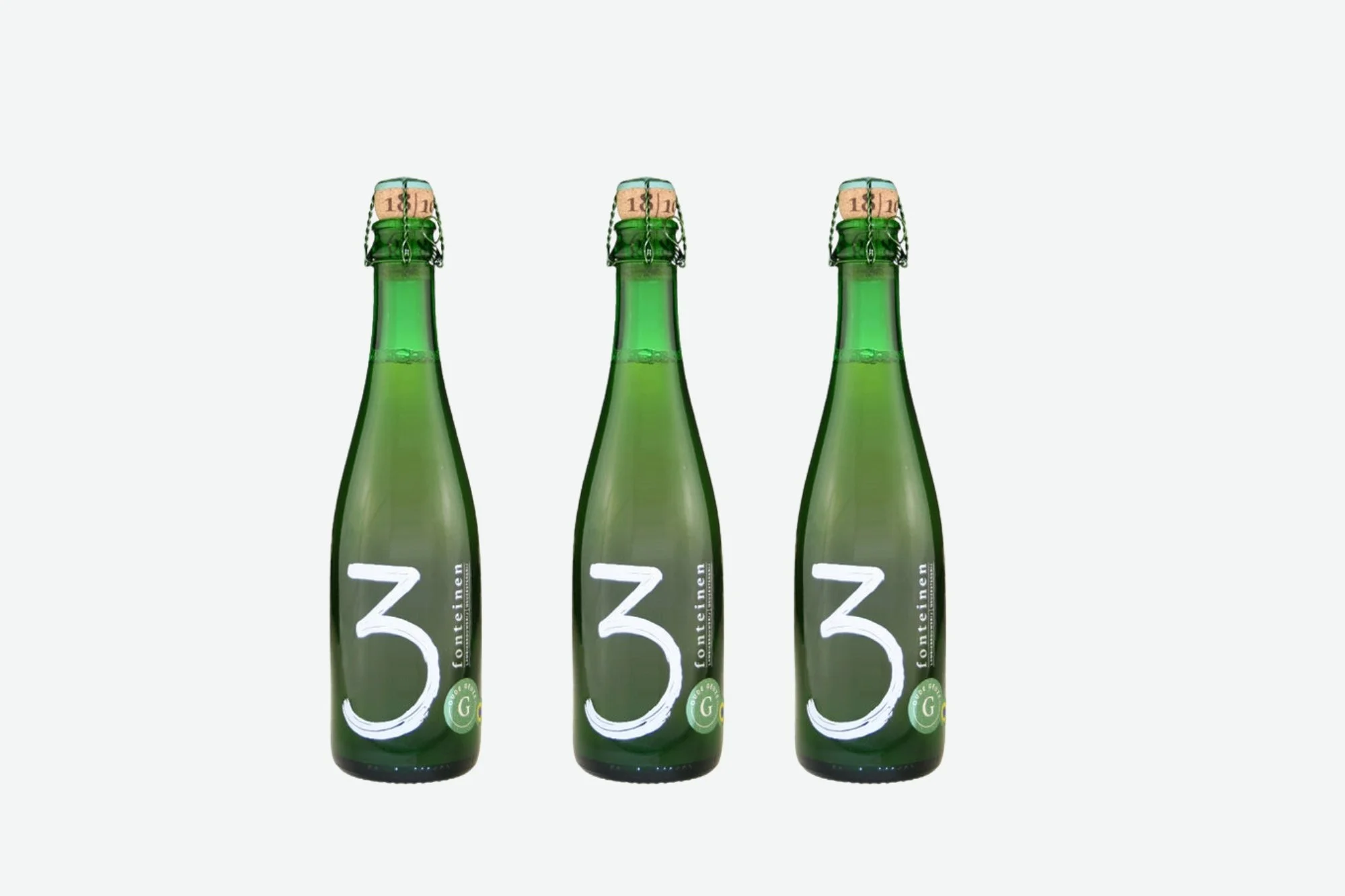
Drie Fonteinen Oude Gueuze and Oude Kriek
Drie Foneinen’s lambic program is one of the world’s best and most respected amongst beer aficionados. Their oude gueuze and oude kriek can usually be found in specialty beer shops in America. But for a real treat, it’s their specialty fruit lambics that utilize different blends of fruit that are worth the trip to Belgian. I once had a 70% strawberry, 30% raspberry lambic blend in Beersel that I still think about to this day.