
Dao Distillery is Making Vietnam's Rice Spirit Rượu đế in America
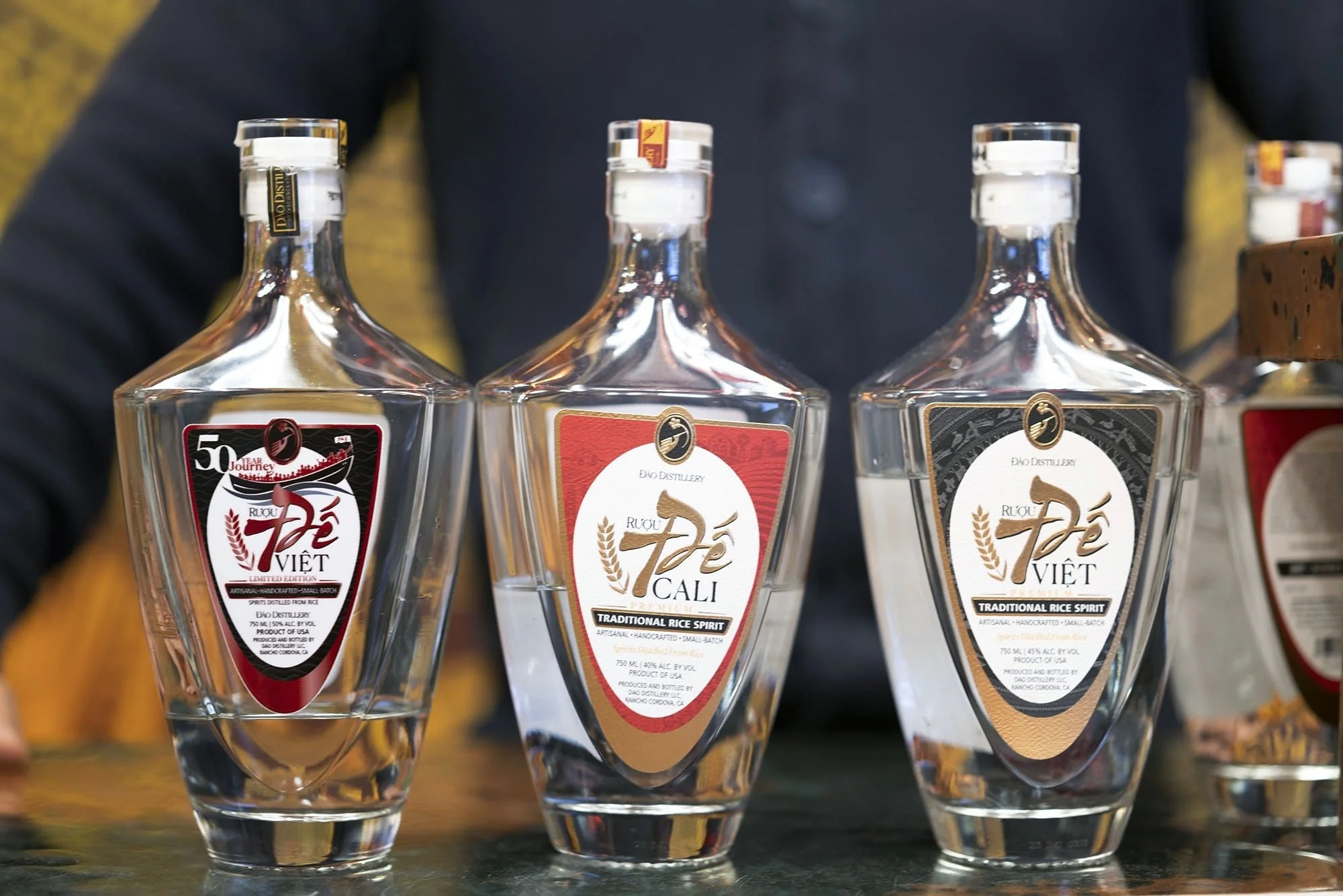
Some of the bottlings on offer at Dao Distillery. Photo credit Dao Distillery
When Binh Dao traveled from the United States back to Vietnam for his brother’s wedding, he packed some high-end spirits to give to his family.
Dao presented his grandfather with a bottle of Hennessy XO, but what happened next surprised him.
“He wouldn’t drink it,” Dao says. “He said, ‘Nope, I stick to my rượu đế.’”
Rượu đế? Dao had never heard of it.
“I asked him, ‘Can I give it a try?’” Dao says. “When I tried it, I was blown away by the quality. I said, ‘Wow! It has a lot of flavor to it.’ This is a special and outstanding product.”
What Is Rượu Đế?
Rượu đế (pronounced “rue day”) is a rice spirit that is essentially Vietnamese moonshine. It is commonly made on rudimentary stills, often fabricated from oil drums, and sold secretively.
A seed was planted that day. Today, Dao is the founder of Dao Distillery in Rancho Cordova, California’s first and America’s second-ever rượu đế distillery.
A Long Journey to the Distillery
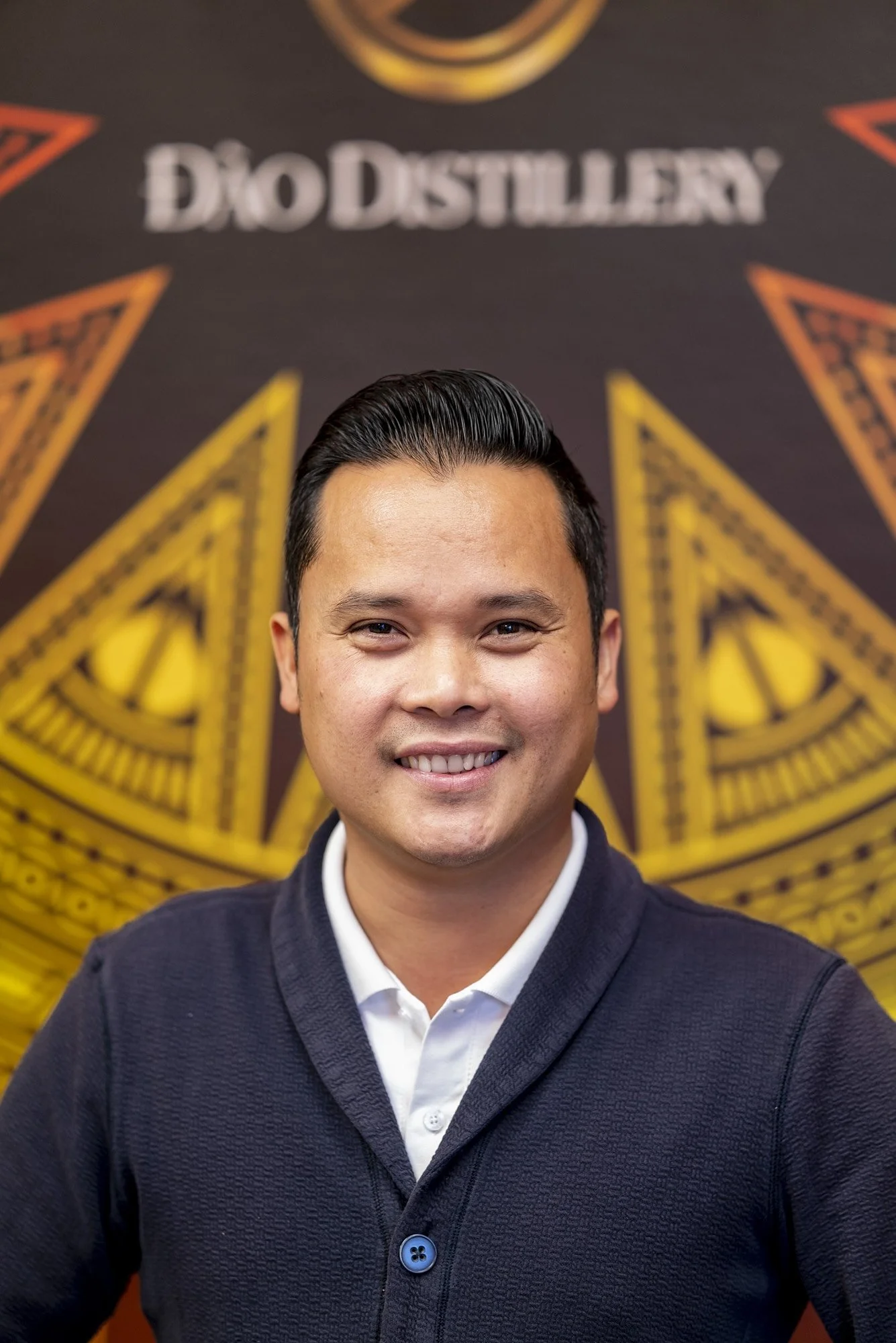
Binh Dao of Dao Distillery. Photo credit Dao Distillery
Understanding distillation came very naturally to Dao: He had taught at Sacramento City College, where he’d been a full-time, tenured college professor teaching chemistry since 2012. It was a striking accomplishment for a refugee who’d entered American schools in the eighth grade speaking no English whatsoever.
When Dao was seven, his family fled Vietnam in a boat piloted by his father, surviving a typhoon during the two-and-a-half-week journey to Hainan Island. It would be another seven years before the family gained refugee status in the United States and eventually settled in Sacramento.
While the term “boat people” may be a pejorative for many, for Dao it is a proud sign of what his family has overcome — a reminder that they arrived in the country with nothing and have built prosperous lives.
For Dao, producing rượu đế was an unexpected but welcome challenge, a sort of mission for him to bring this traditional spirit of his ancestral land to his new home. Just as Dao knew nothing of rượu đế while growing up in the U.S., his generation of Vietnamese-Americans knows little of this liquor that their parents may have enjoyed in Asia decades ago.
“There's a huge Vietnamese population here [in the United States]. And we have an outstanding Vietnamese product called rượu đế that nobody knows about,” he says.
Blending Art, Science, and Tradition
When an operational distillery in nearby Rancho Cordova went up for sale, Dao pounced. The location was perfect, given that the distillery was located within one of the major rice-growing regions in the U.S. California rice, with its reputation for being high-quality, was available in abundance, since the nearby Sacramento River Delta exports about two-thirds of the rice it grows. The distillery could buy broken grains, a by-product of milling, which are perfectly usable for distillation — and available at a fraction of the cost of typical rice grains.
Then another fortuitous event happened: His uncle, Tuong Dao, who had been distilling rượu đế out of his home in Vietnam, moved to California.
The two focused on honing production methods. In Vietnam, Tuong had been making rượu đế on a simple flame-fired pot still, but he learned to use the oil-fired hybrid pot still at the distillery in Rancho Cordova.
The two began working with both traditional fermentation, using a culture brought from Vietnam, and a Western-style fermentation that uses amylase enzymes to convert rice starch into sugar. The methods produce different flavors and timelines: Traditional fermentations can take weeks or months, while enzyme-driven fermentations usually finish in about five days. Under the slogan of “Art, Science, and Tradition,” Dao Distillery began to introduce local drinkers to rượu đế.
Distillery Offerings
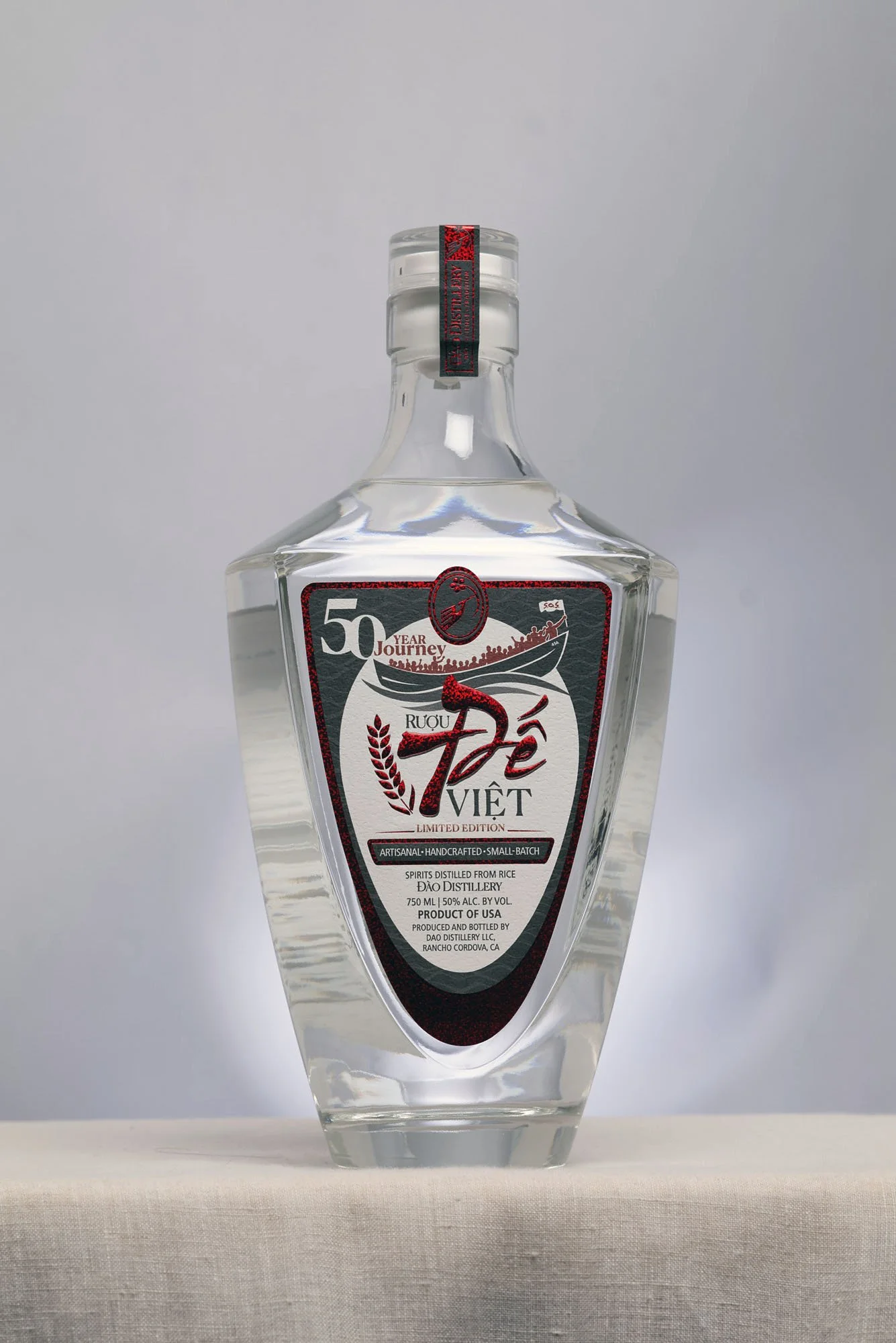
A limited-edition Dao Distillery bottling commemorates Vietnamese migration to the States. Photo credit Dao Distillery
Dao Distillery’s traditional Rượu Đế Viet line begins with organic jasmine rice and undergoes a hybrid fermentation, using half the amount of enzymes and supplementing it with koji to create the traditional flavors. Rượu Đế Viet is released in three expressions: Original, Premium, and Reserved.
To prepare the Original, the distillery bypasses the column in distillation and runs a simple pot still, distilling deeper into the tails to get a thick, umami-rich spirit that’s 45% ABV.
“Our Premium product is a very clean product, and very good, but then there's certain flavors being removed that maybe some people like,” says Dao, explaining that just as some people prefer the funk of high-ester rums over cleaner rums, the Original expression of the line offers a more traditional flavor profile.
The other two expressions of Rượu Đế Viet are distilled through a seven-plate column for more rectification. The Rượu Đế Viet Reserved is run through the still once and bottled at 50% ABV. Rượu Đế Viet Premium sees a stripping run with just the pot and a second distillation using the column and is released at 45% ABV. These spirits have a cleaner flavor, more appealing to people used to more highly rectified spirits.
Then there’s the Rượu Đế Cali. It’s Dao’s homage to his adopted homeland, a California version of rượu đế. It begins with Calrose rice, converting the starches entirely with enzymes in the Western style and fermenting with a wine yeast sourced out of San Diego. It is released in two strengths: Premium (40% ABV) and Reserved (50% ABV).
In addition, Dao Distillery releases four other spirits: vodka, cherry brandy, Rượu Đế Viet Whiskey (rượu đế aged lightly in used barrels), and a very special bottling, a limited-edition 50th Year Journey of Rượu Đế Viet. This limited-edition bottling, which commemorates a half-century of Vietnamese migration to the United States, features a boat on its label. It represents the life-or-death boat journey Dao’s father piloted that ultimately brought the family to the United States.
Rượu Đế: An Ideal Foil for Food
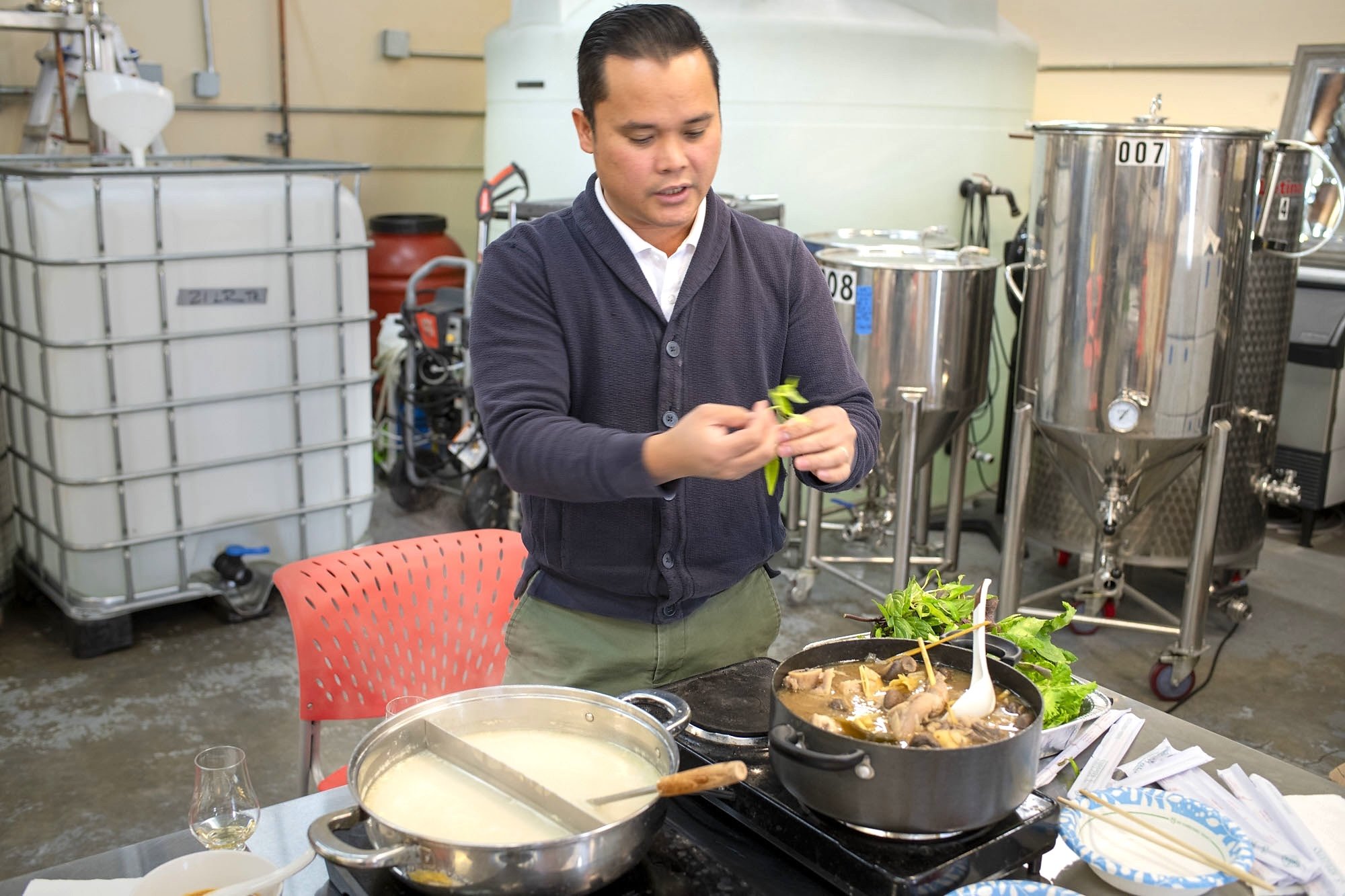
Binh Dao utilizes effluent from the distilling process in hot pot soup for flavor. Photo credit Dao Distillery
Dao is now trying to educate the broader community about how well rượu đế pairs with food.
For those who do not enjoy their spirits neat, Dao has crafted standout cocktails using the spirit. One of the standouts is his Umami Sour, a variation on the classic sour cocktail that’s made from Rượu Đế Cali, lime juice, simple syrup, egg white, ginger liqueur, and fish sauce. Yes, fish sauce. This love-it-or-hate-it ingredient is used so lightly in the recipe that it is barely noticeable at first, but the flavor bumps up gradually with each sip.
In Dao’s quest to also become a zero-waste facility, he has created a recipe to use effluent, which would normally be disposed of, in traditional Asian hot pot. Hot pot, as it turns out, is delicious paired with rượu đế; the stillage imparts a subtle tart flavor to morsels of food cooked in the broth.
The Future of Rượu Đế in America
Dao’s mission now is to show adventurous American drinkers that there’s something new to try.
“I'm very confident that I can create the best rượu đế,” he says, citing his chemistry background and the instrumentation at the new distillery. He’s thrilled to share something so beautiful from his native land with those in his adopted home.
“Along with the really good ingredients that we have here — good rice and everything — we’ll get everything right.”