
How Craft Bitters Became a Force in Cocktails
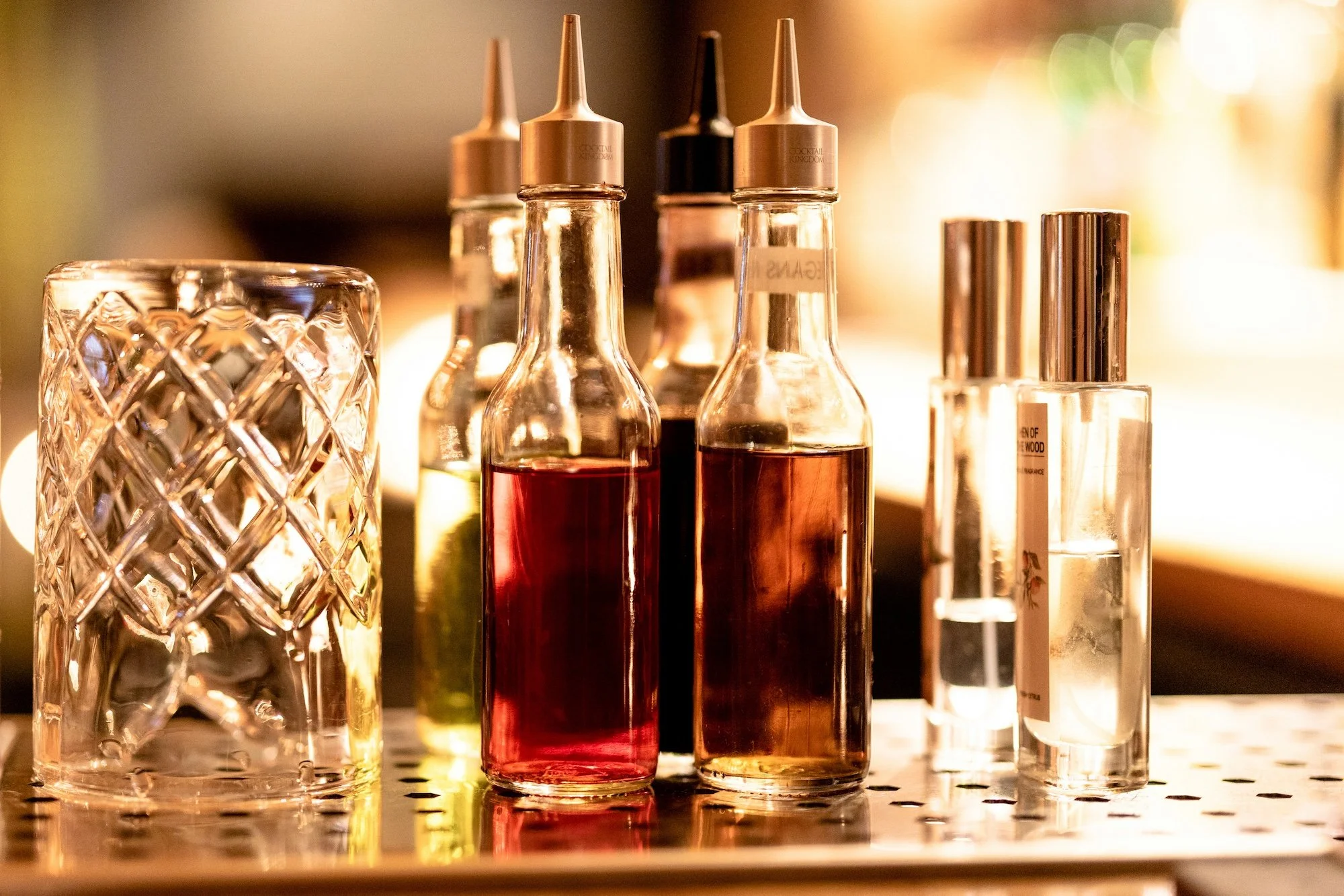
Bitters have become ubiquitous in today’s cocktail culture. Photo credit Oliver Plattner
For today’s cocktail aficionados, bitters are an essential component of both classic and modern cocktails. Whether watching a swift-moving mixologist seamlessly select one of a stream of dainty pipette-topped bottles to season your libation, or squeezing out a few more protracted shakes of your own at your kitchen counter, bitters have become ubiquitous in contemporary cocktail culture.
This has been cemented by the explosive growth of the craft bitters industry over the past couple of decades, and the enormous diversity of bitters flavors now available to both professional and home bartenders. While historic brands such as Angostura and Peychaud’s will always have a home in any bar due to their established flavor profiles and close association with old-school favorites like the Old Fashioned and the Sazerac, a new school of imaginative, experimental and international bitters flavors are shaking up modern mixology, opening doors for bold, innovative creations with distinctive flavor profiles.
Bitters are a type of concentrated flavoring made by infusing botanical ingredients in neutral alcohol or glycerin to create a potent flavor extract. Like many herb-based liqueurs such as amari and alchermes whose roots originated in medicinal preparation, bitters began life as medicinal remedies. There is evidence that ancient Egyptians mixed herbs into jars of wine as curatives, while modern bitters preparations grew out of early pharmaceutical tonics often used for digestive issues. While the exact moment the work of herbalists and apothecaries crossed over into the beverage industry is uncertain, the first reference to bitters as an essential cocktail component came from the 1806 edition of the newspaper Balance and Columbian Repository, in which the editor defined a cocktail as “a stimulating liquor composed of spirits of any kind — sugar, water, and bitters.”
From Medicinal Tonic to Cocktail Essential

The Bon Vivant’s Companion or How to Mix Drinks by Jerry Thomas
While this definition of a cocktail obviously didn’t stick, the use of bitters in mixed drinks did, spearheaded by groundbreaking mixologist Jerry Thomas’s 1862 book How to Mix Drinks or The Bon-Vivant's Companion. The book is considered the foundation of modern American mixology, with Thomas, the former principal bartender at New York’s Metropolitan Hotel, offering more than 400 recipes for mixed drinks as well as recipes for three types of cocktail bitters (which he calls tinctures) — aromatic, cinnamon, and clove.
Cocktail culture grew in the late 19th and early 20th centuries, and homemade preparations were replaced by commercial efforts such as Angostura and Peychaud’s. The advent of Prohibition unsurprisingly drove all but the hardiest bitters manufacturers out of business, leaving the industry stagnant and demand limited as postwar tastes shifted toward sweeter tiki-style cocktails and, later, the appletini excesses of the 1990s and Y2K era. In the mid- to late 2000s, however, a confluence of interest in historic drinks styles, a desire to source locally and sustainably and a backlash against sweet, synthetic flavors heralded in a new era for craft bitters.
The Craft Bitters Revival
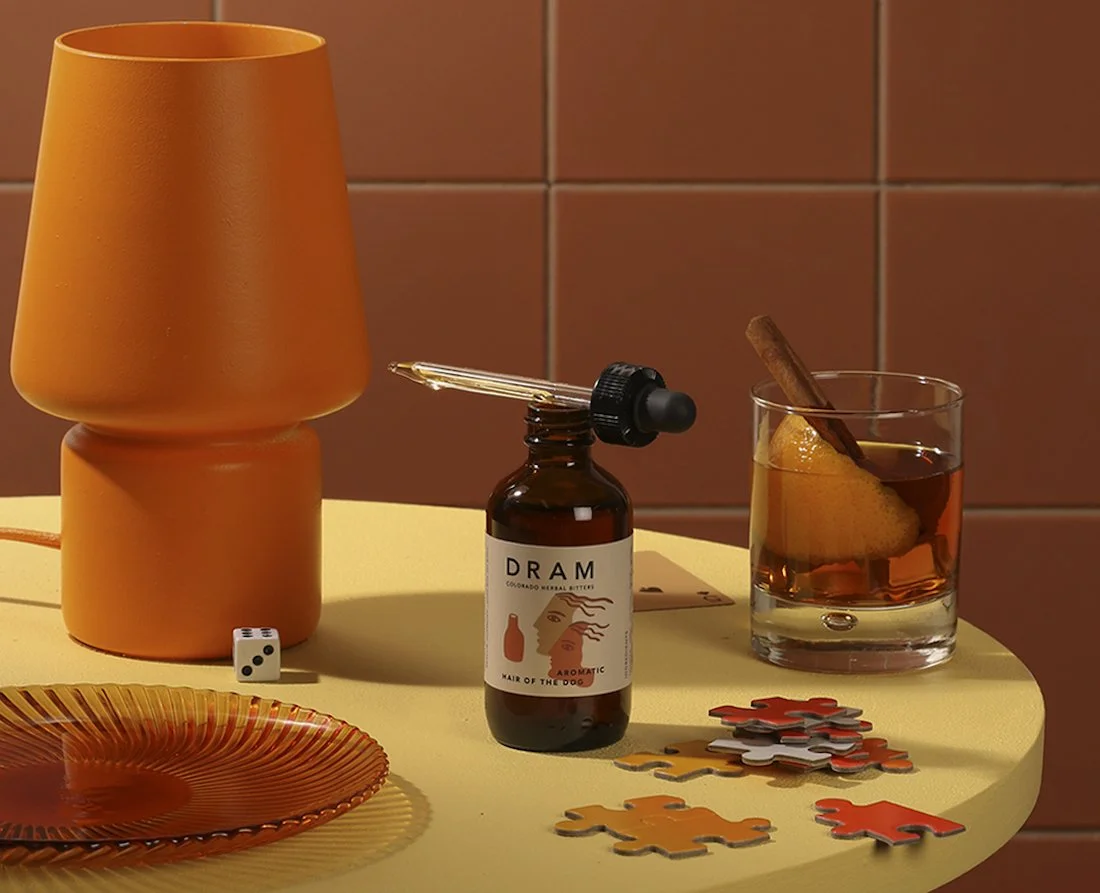
DRAM Apothecary’s Aromatic Hair of the Dog
Among the early contemporary craft bitters brands to launch was Milwaukee, Wis.-based Bittercube Bitters, which began production in 2009.
“At the time we launched, you could count the number of bitters companies on one hand,” says Director of Operations Brandon Reyes. “There was a significant gap in the market because the options available at the time didn't meet the needs of bartenders who were rediscovering classic recipes during the renaissance craft cocktail movement.”
Modern mixologists didn’t just want to revive 100-year-old drinks styles — they wanted to put their own spin on them, and for many, wanted to add in contemporary flavors inspired by their local flora and fauna as well as international food and drinks culture. As Director of Operations at Austin’s Allday Pizza and Co-Owner of Nice N Easy in Johnson City, Texas, Matt Piper says, “In the world of cocktails, where most things have been done, bitters give bartenders room to create new experiences while also utilizing their knowledge of the classics. Why try to reinvent the wheel when you can just put your own spin on it?”
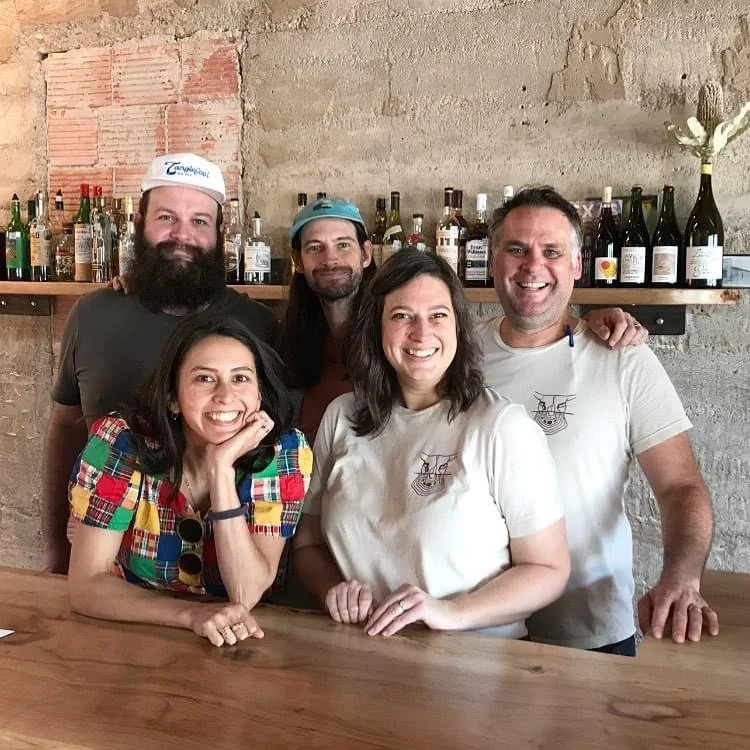
Matt Piper, far right, with the original team from Nice N Easy
In the Colorado mountains, Shae Whitney and Brady Becker launched DRAM Apothecary in 2011 with a goal of creating bitters that were locally, sustainably sourced and true to the tincture’s roots.
“I started making my recipes while I was bartending my way through college and I realized that the classics like Angostura and Peychaud's both had synthetic coloring and flavoring, and I thought this was silly, as bitters have been made with real botanicals since the 16th century,” explains Whitney. “In college, I studied agriculture, botany, and herbalism, so it felt like a very natural thing to pursue.”
What started as projects rooted in curiosity and experimentation for Bittercube’s bartender founders and DRAM’s nature-loving food scientist and botanist quickly grew as demand spread among in-the-know mixologists looking to meet the tastes of increasingly educated and adventurous drinkers.
“The popularity of the TV show Mad Men definitely revived an interest in classic cocktails like the Manhattan and Old Fashioned, both of which use bitter,” says Whitney. “From there came an interest in mixology, and cocktails being viewed as more of a culinary art.”
Bittercube has grown from producing bitters in one-gallon glass jars in 2009 to making 25 million cocktails’ worth in 2024, while DRAM, whose bitters are now non-alcoholic, has evolved into a full-time business for Whitney and Becker.
Reyes points to both the rise in new bar openings in this period and the need to draw in consumers with interesting, regularly updated menus as crucial to the rise in demand for craft bitters.
“Bartenders are constantly chasing new flavors to keep up, so this requires uniquely flavored bitters,” he says. “And education has skyrocketed in the beverage industry, with numerous publications, plus reprints of old books, and countless modern books providing education to bartenders and home consumers alike.”
Indeed, in this same period, as well as classic cocktail books such as Thomas’s and the 1937 Café Royale Cocktail Book becoming popular, numerous books on making bitters at home have hit the shelves, including DIY Bitters by Jovial King and Guido Masé, and Bitters by Brad Thomas Parsons. Bitters-making kits also became widely available on platforms like Etsy.
For intrepid consumers, this is a fun way to learn and explore different flavor profiles. Experimentation has led some to go pro, such as Kristin Wingfield and Missy Koefod of 18.21 Bitters, who launched the company with a Kickstarter campaign, and Eva Suter, Beverage Director at Austin’s L’Oca d’Oro, who makes all her own bitters for the restaurant. For craft bitters creators, bittering is as much an art as a science, and while an element of trial and error is essential, they look to their own culinary and outdoors experiences for inspiration.
Global Flavors and Botanical Innovation
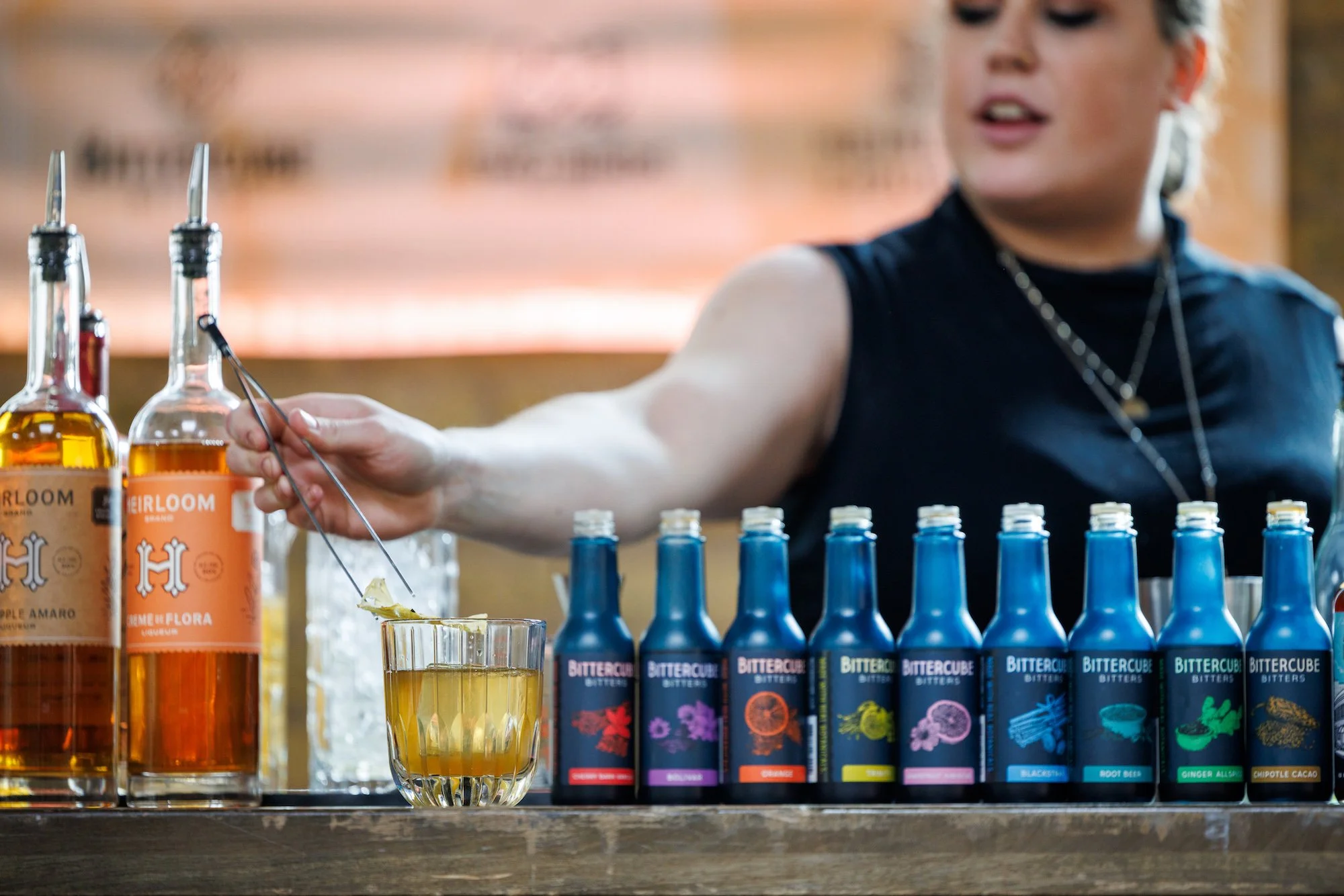
Some of Bittercube’s 11 different bitter flavors. Photo credit Bittercube
“When the business first started, I took the approach of global food pairings,” explains 18.21 Co-Founder and Chief Operating Officer Kristin Wingfield. “Our Tart Cherry and Saffron was based on Persian food, and Baltimore was based off of my hometown and pairs Old Bay and celery salt.” Suter has a similar approach. “Sometimes you're trying to imitate a product you've tried in the past (or the memory of something you tried), other times the inspiration is a unique or seasonal ingredient,” she says.
These bitters capture personality and are constructed with depth and complexity to add nuanced, well-calibrated essences to drinks, and are now often used in baking, sauces, and stews. Bittercube’s Bolivar layers notes of chamomile, cinnamon, and jasmine; its pairing recommendations include sparkling wine, banana bread, and a French 75 cocktail. DRAM’s Cardamom & Black Tea Bitters also proffers hints of sweet black currant and black pepper, making it suitable for Old Fashioneds and Margaritas, as well as spicy Asian dishes.
Sustainability in Craft Bitters
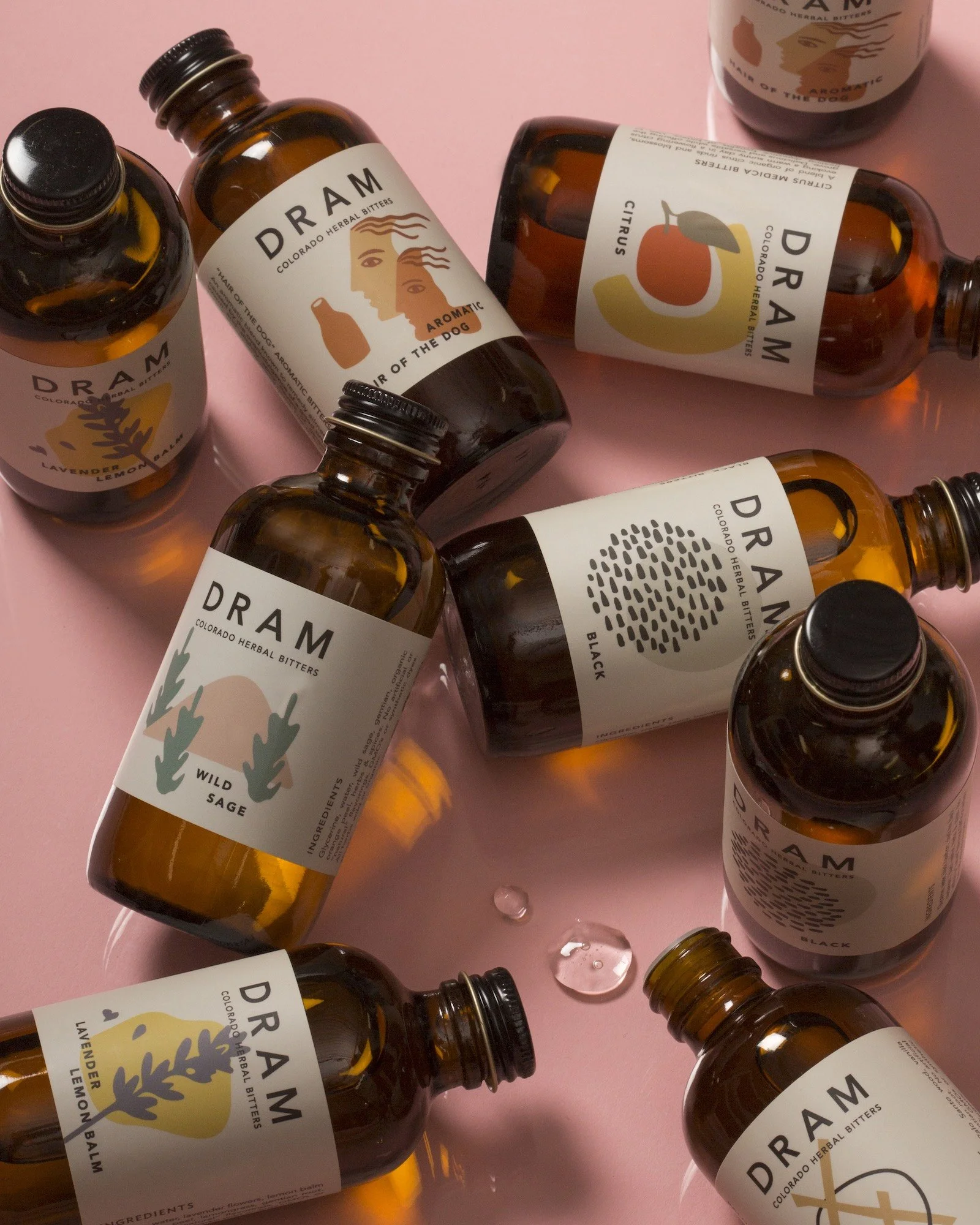
An assortment of DRAM bitters
While most craft bitters producers make their own versions of the classics, it is these creative, conceptual offerings that forge a direct link between maker and the drink that are most inspiring for both home and professional bartenders.
Demand is also driven by another major concern among contemporary producers and consumers: a product’s relationship to the environment. Local sourcing and sustainability are paramount to most new craft bitters producers, with foraging also a feature of many.
Bittercube has invested significantly in sustainability initiatives ranging from prioritizing local and organic ingredients to creative reuse, composting and upcycling.
“Our commitment to quality naturally aligns with our focus on sustainable and ethically sourced ingredients. While we've always prioritized quality, this focus has evolved significantly as we've grown,” says Reyes.
At DRAM, foraged ingredients are used seasonally to remain sustainable, while non-foraged ones are sourced from organic and fair-trade farms from around the world. Suter keeps her focus local.
“We use in-season plants and herbs whenever possible, generally sourced from small urban farms or foraged around Austin,” she says. “The variety of basils and mints is wild and fun! We collect redbud buds, jasmine flowers, and mimosa blossoms as the season dictates.”
Why Bartenders Love Craft Bitters
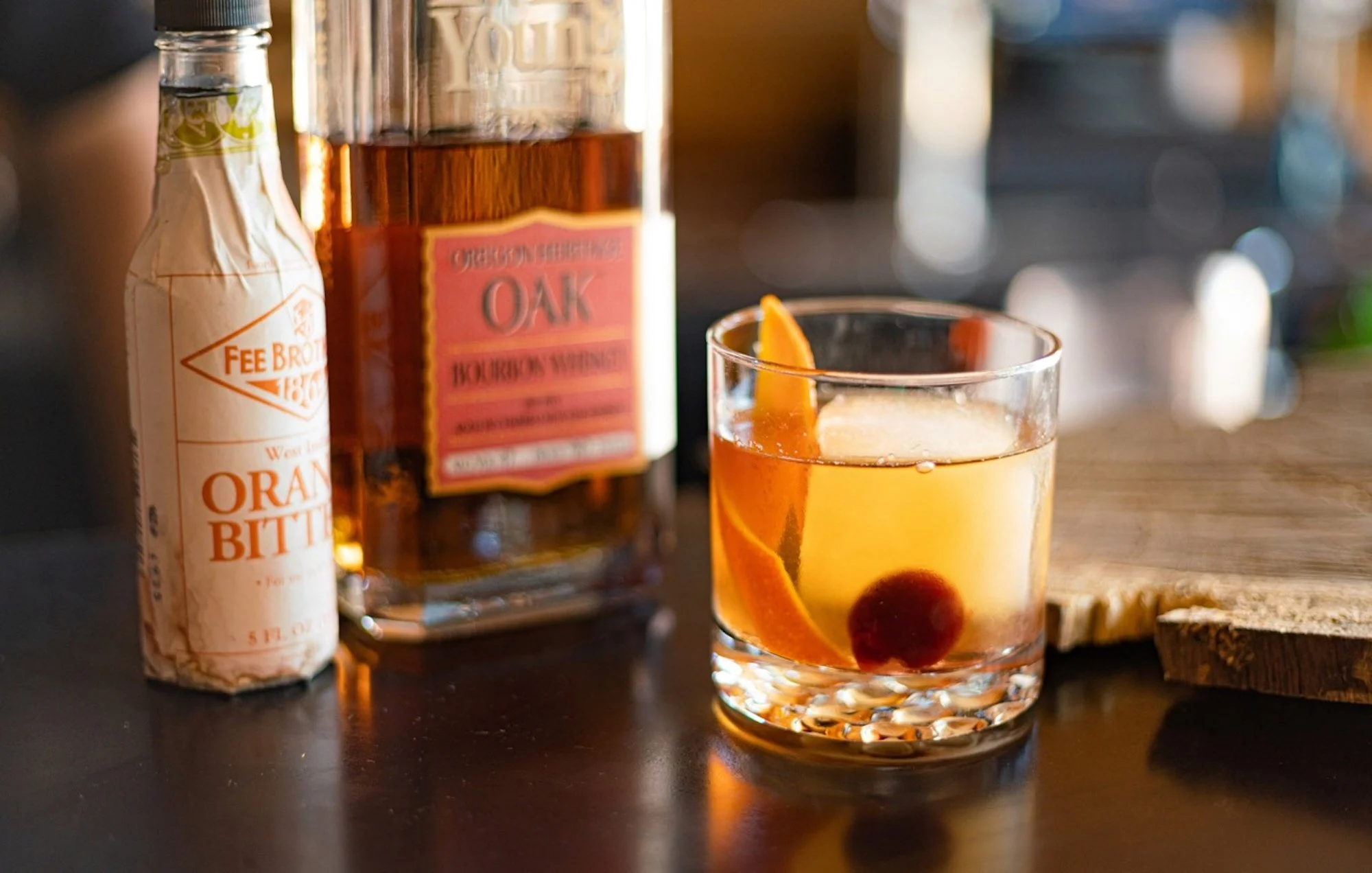
Fee Brothers orange bitters. Photo credit Daniel Herron
Unusual flavor profiles offer enormous potential for bartenders. Bittercube boasts 11 bitters plus numerous collaborations, while DRAM offers six and 18.21 offers eight. These are just a drop in the ocean among the many small-batch locally sourced brands who have entered the market such as Ms Betters, Bitter Queens, Napa Valley Bitters and Portland Bitters Project, many of which are owned by women, queer entrepreneurs, and BIPOC founders. Contemporary mixologists have an almost unlimited palette of bitters flavors at their disposal, from yuzu, bergamot, and cardamom to Japanese chili and saffron. By incorporating more international ingredients into their bitters, craft bitters brands are helping mixologists introduce more global flavors, which in turn can bring craft cocktails to a wider audience.
“When an industry is shaped by a wider range of backgrounds, cultures, and experiences, it naturally leads to new flavor profiles, new use cases, and new ways of thinking about cocktails and hospitality,” says Reyes. “Craft bitters in particular benefit from this because they are rooted in global botanical traditions, culinary history, and personal flavor perspectives. The more voices involved, the more interesting and approachable the category becomes.”
Piper says these possibilities are especially exciting for bartenders. “Bitters add a layer of complexity and nuance that some aren't familiar with. Bitters can be the thing that takes a cocktail into a new territory that blurs the lines of whether a traditional cocktail still deserves to be called that traditional name,” he says.
The Future of Craft Bitters
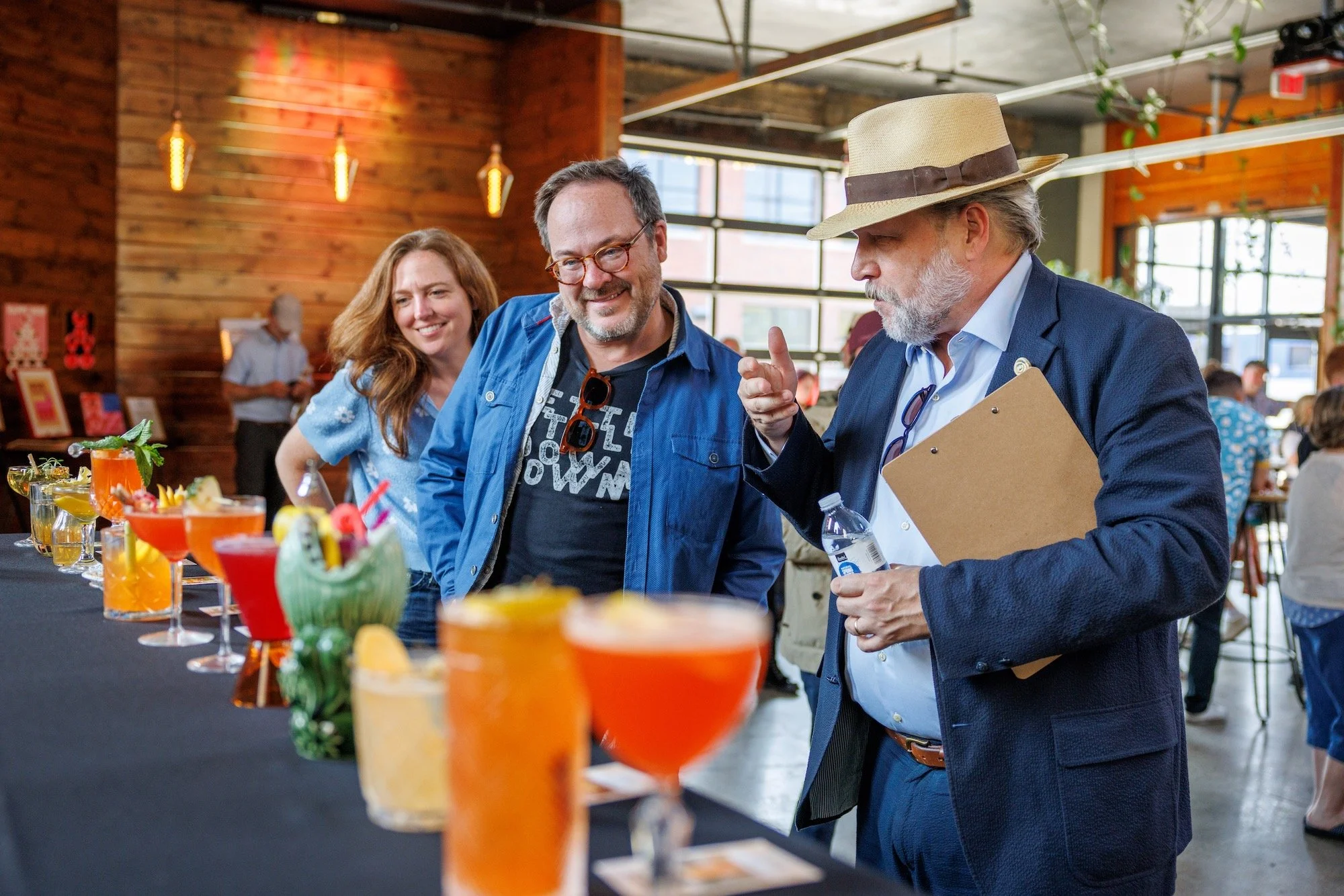
Evaluating cocktails at Bittercube’s Botanical Battle Royale. Photo credit Bittercube
Exploring what that new territory might be has been the focus of Bittercube’s Botanical Battle Royale event, now entering its third year. This immersive competition includes educational, community, and creative aspects, with Bittercube and its sibling business Heirloom Liqueurs hosting 12 top Wisconsin bars. Participating bars first receive a tour and tasting of Bittercube’s bitters and liqueurs before competing to create the cocktail displaying the greatest botanical ingenuity. Winners are judged by both a panel of professionals and a ticketed audience, who also receive recipe cards to recreate the drinks at home.
J.R. Mocanu, Co-Owner of the James Beard-nominated Public Parking Bar in Madison, Wis., was last year’s Judge’s Choice winner for its Post-Service Séance — a combination of Rooster Rojo Blanco, Heirloom Pineapple Amaro, Alchermes, citrus, and a hefty whack of bitters. “We work together to craft a special drink for each competition,” says Mocanu. “It's just a great team building exercise and we love bartending at other venues.” The event sold out last year, demonstrating the popular demand for botanical-forward beverages.
As demand for craft bitters and botanical-forward beverages continues to grow, producers are expanding offerings for both home drinkers and industry professionals. As well as hosting mixologist-curated recipes on their website, 18.21 also offers a bespoke cocktail and menu development program to bars and restaurants, while Bittercube sells cocktail kits to consumers and makes collaborative bitters with specific brands and producers.
DRAM has branched into CBD products and sparkling waters, and at L’Oca d’Oro, Suter makes her own amaro and vermouth for in-house beverages. While the craft bitters market shows no signs of slowing, this kind of future-proofing in the fickle, cyclical drinks industry may prevent bitters from ever coming close to obscurity again. “I believe history repeats itself — what was trendy before becomes trendy again,” Mocanu says. “Bitters were integral to the cocktail world in the early 1900s, and bitters received its boom with the modern cocktail resurgence.”