
Why Chartreuse is for Wine Lovers
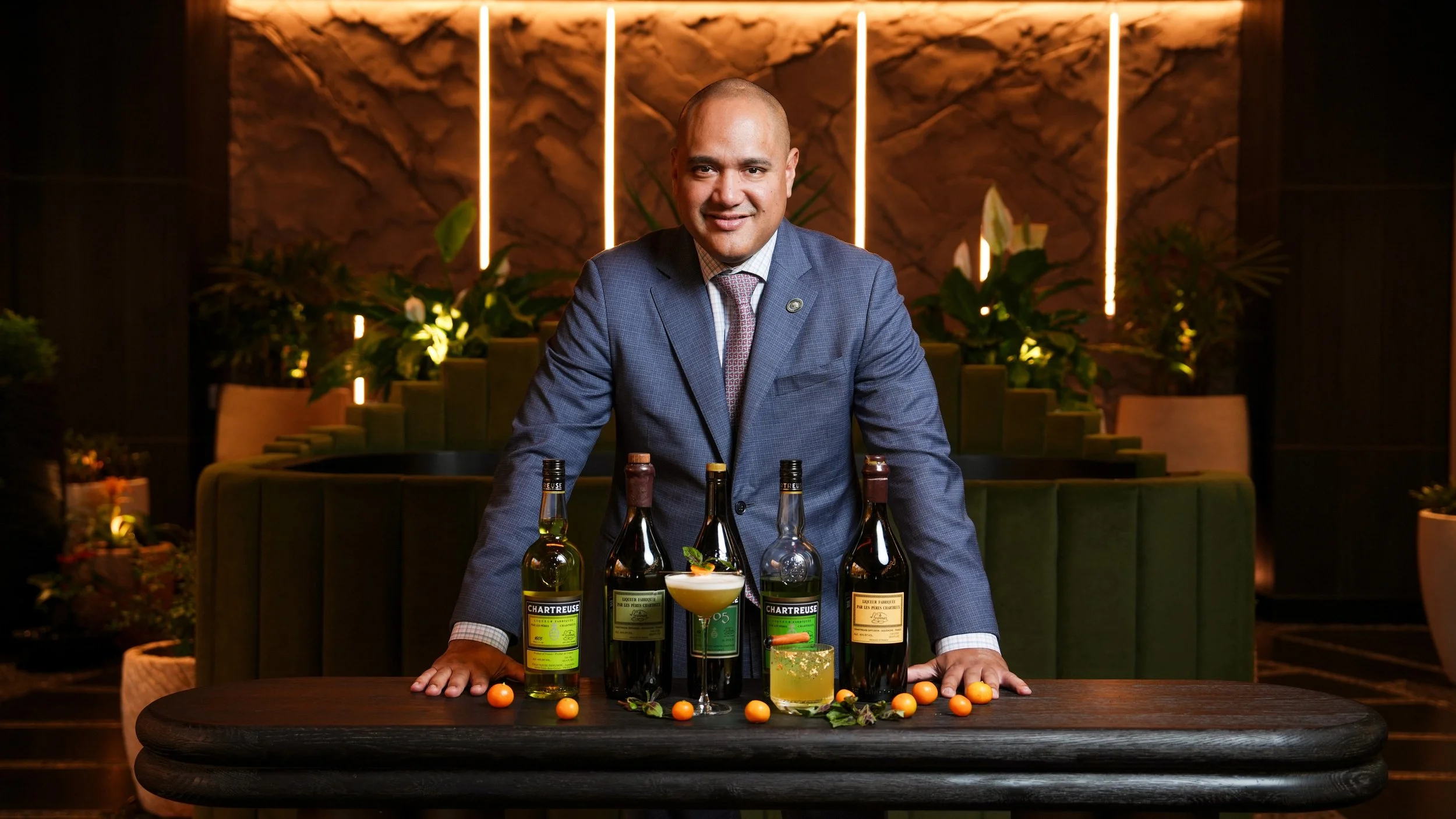
James Hernandez, sommelier with Chartreuse cocktails
James Hernandez has a secret passion. As the wine director at AYA, a stunning new 27,000-square-foot rooftop restaurant with sweeping vistas of California wine country, he provides insightful guidance to guests from around the world as they explore the hundreds of local treasures and international offerings on the restaurant’s Wine Spectator award-winning list.
But while Hernandez, a certified Advanced Sommerlier who also oversees the wine program at several other restaurants at Graton Resort and Casino, is a certified Advanced Sommelier and unabashed oenophile, he takes special pleasure in an altogether different elixir. “I am totally in love with Chartreuse,” says Hernandez, "It's my favorite spirit, because it’s so complex.”
Given the range of nuances and notes that terroir, the vintners’ craft, and a single ingredient– grapes –can bring to Hernandez’s palate when he’s enjoying a fine wine, there’s an exponential intellectual thrill to a nip of Chartreuse, each bottle of which incorporates over 130 ingredients. “People who love to taste and think about the subtleties of wine can get so much out of Chartreuse,” says Hernandez.
Sipping a Mystery
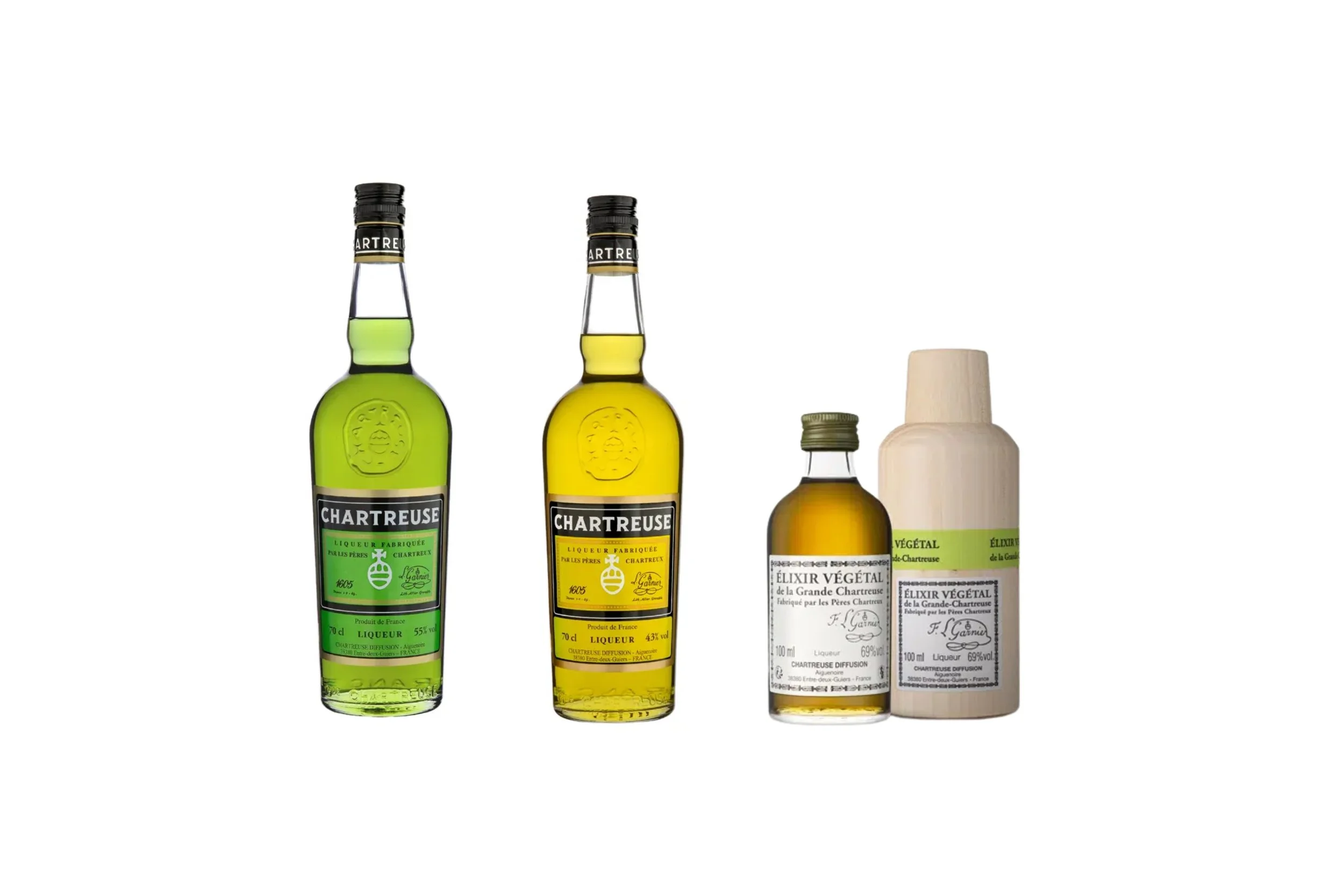
Green, yellow and herbal elixir of the grand Chartreuse
Like wine, Chartreuse offers adventurous tipplers not only a sophisticated sip, but a sort of potable puzzle. And where a wine may evoke berries, vanilla, or licorice, there’s also a more literal detective game afoot with Chartreuse.
That’s because other than sugar and a distilled base, which at some points over Chartreuse’s nearly three century history has originated with wine and at others with beets, the more than ten dozen other herbs, flowers, and other botanical ingredients in its formula are a closely held secret.
Distilled exclusively by Carthusian monks in France–and for a brief early 20th Century period in Spain, when their order was displaced–the original green Chartreuse (55% alcohol by volume) and its yellow younger sibling (introduced in 1840, and 43% ABV) ) incorporate a panoply of plant materials that have never been disclosed.
So, while a prized gewurtztraminer may bring to mind ginger and lychee, it’s understood that neither were actually used in the winemaking process.
But if the Chartreuse in your snifter suggests celery and dandelion leaves, you may just have an oenophile’s poetic sense of taste. Then again, the Carthusian monks may indeed have sprinkled some salad greens into the mix.
Unlike its verdant cousin, absinthe, Chartreuse has never been accused of inducing hallucination. But the heady mix of actual flavors and abstract evocations in each sip is inarguably mindbending.
Getting the Green Light
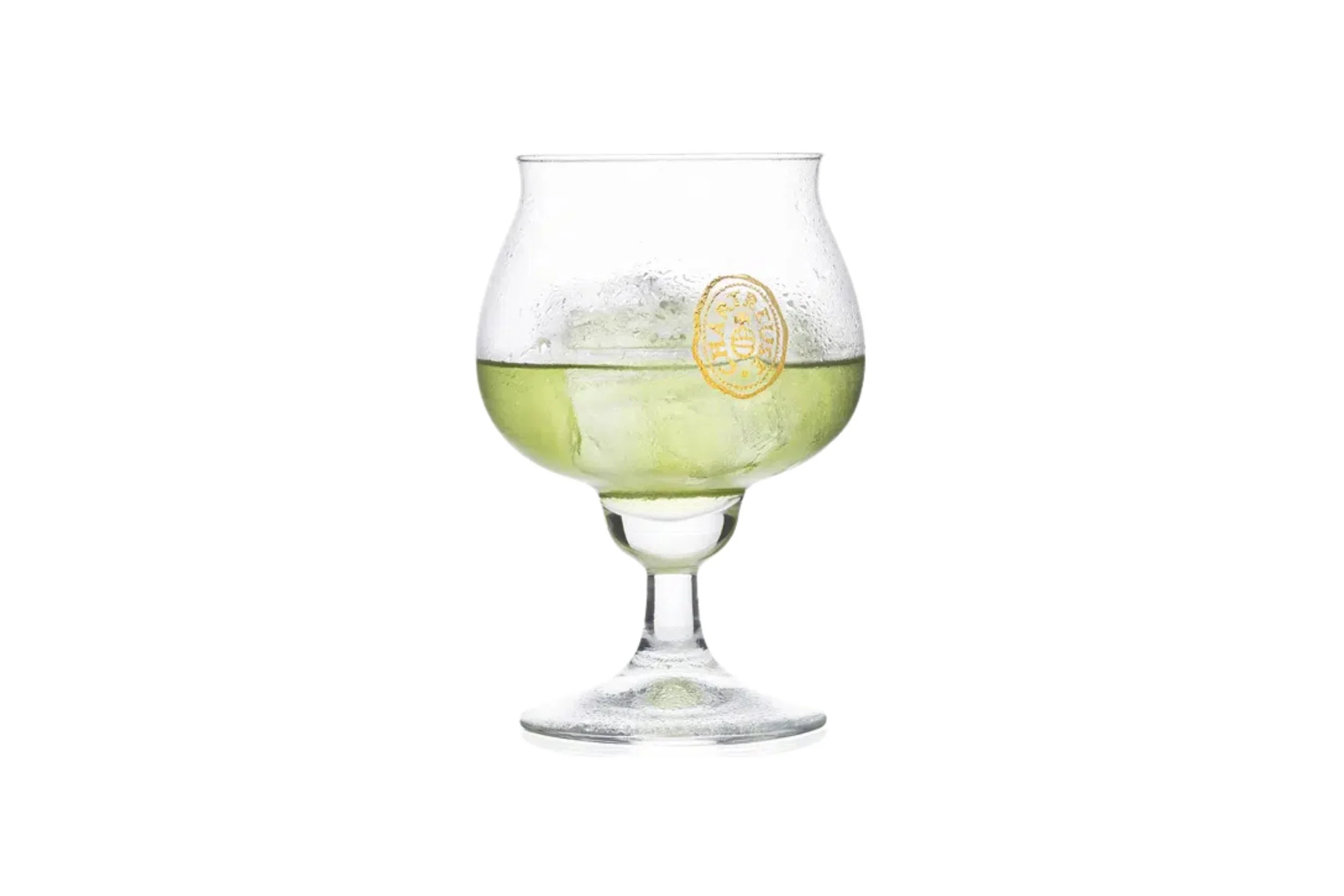
Chartreuse on the rocks
“My personal introduction to Chartreuse came at my first server job,” recalls Hernandez. “I’ll never forget it. This was at the Ritz-Carlton Bacara in Santa Barbara, back in 2004. We had green and yellow Chartreuse, but they always sort of sat in the corner of the shelf, and nobody really ordered them.
“Then a gentleman came in who I recognized, because he was a repeat guest. He ordered a yellow Chartreuse after his meal, and he told me ‘James, I know you’re just starting to learn about wine and liquor and I want to recommend that at the end of a good meal, you should have a Chartreuse. It’s the best digestif you’ll ever try.’ I appreciated his interest and when I took him up on his suggestion, I just fell in love with Chartreuse. Honestly, I love wine and I love dessert wines, but to finish off a great meal, I think Chartreuse is the perfect ending.”
Hernandez’s ardor grew more intense when he worked under the tutelage of Jaime Pinedo at San Francisco’s Michelin-recommended Spruce restaurant.
“They have one of the best Chartreuse selections in the world, with bottles dating back to the 1930s and 1940s. I came to understand that aging can have an incredible effect on Chartreuse as well as wine. It can develop such great flavors in the bottle over the years.”
Clearly, there’s an affinity between the local oenophile culture and Chartreuse fandom in the Bay Area. Another local somm, namechecked by Hernandez, is Paul Einbund, owner of The Morris and one of the world’s leading experts on the liqueur.
Hernandez says that analyzing the flavors in glasses of vintage Chartreuse on the rocks is a favorite (and none-too-frugal) after-work wind-down for himself and other wine and mixology professionals. “For me, with green Chartreuse,” says Hernandez, “I always get spearmint first. Then notes of lavender, fresh-cut grass. There’s fruit somewhere in there. Maybe elderberry. The yellow is sweeter, but it also has some spicy pepper on the nose, and a little bit of white flowers, daisies.”
Cocktails as stepping stones
Given its complexity, which includes a tinge of bitterness, Hernandez says that he takes baby steps in introducing Chartreuse to guests who are not serious wine aficionados. “It's a spirit that I really love and want more people to enjoy, but I realize I need to be careful. Much earlier in my career, I would recommend a straight Chartreuse to a guest who hadn’t really developed their palate and they would be struck by a licorice note or a bitter aspect and that was it. They might never try it again." He adds, “I’ve realized that the best way in for a newcomer is through cocktails. I’ve introduced my team here at Aya to Chartreuse and encouraged them to be creative.”
Classic Chartreuse cocktails like the Last Word and the Bijou feature gin as their primary spirit, but “I prefer a juniper-forward London dry gin–Beefeater, Bombay Sapphire,” says Hernandez. “But I’m always experimenting. The yellow Chartreuse has a honey note, so I’m looking to play with Barr Hill Gin, which is finished with honey.”
As a first move from cocktails to straight Chartreuse, Hernandez suggests pairing the yellow variety with a dessert with caramel notes: Crème brûlée is generally a go-to, but Aya strongly recommends chef Roy Ellamar’s brown butter banana bread.
But nearly three decades into his connoisseurship, after a long day serving wine, his perfect way to wind down is a nightcap of green Chartreuse, on the rocks. Preferably enjoyed with industry friends eager to parse its elusive flavors.
Chartreuse Cocktails
Here are recipes for a classic Last Word and Bijou as well as a more elaborate contemporary Chartreuse cocktails from Hernandez and the Aya mixology team:
The Last Word
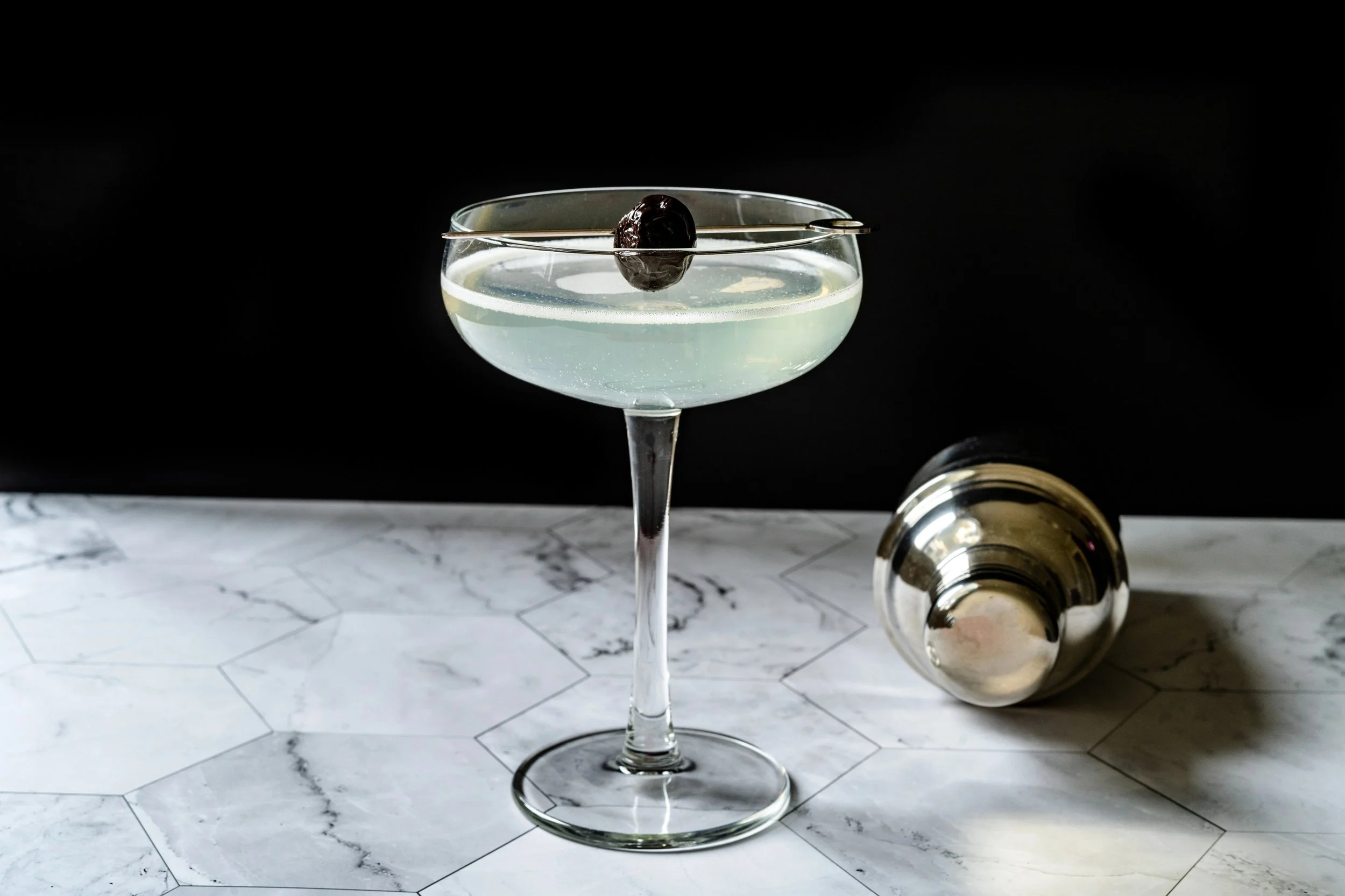
The Last Word cocktail photo credit depositphotos
¾ ounce gin (classic is London Dry)
¾ ounce fresh lime juice
¾ ounce Luxardo Maraschino Liqueur
¾ ounce green Chartreuse
Garnish: maraschino cherry
Fill a cocktail shaker with ice. Add the gin, green Chartreuse, maraschino liqueur, and lime juice. Shake hard for 10 to 15 seconds until very cold. Strain liquid into chilled coupe glass. Finish with a cherry garnish.
Bijou
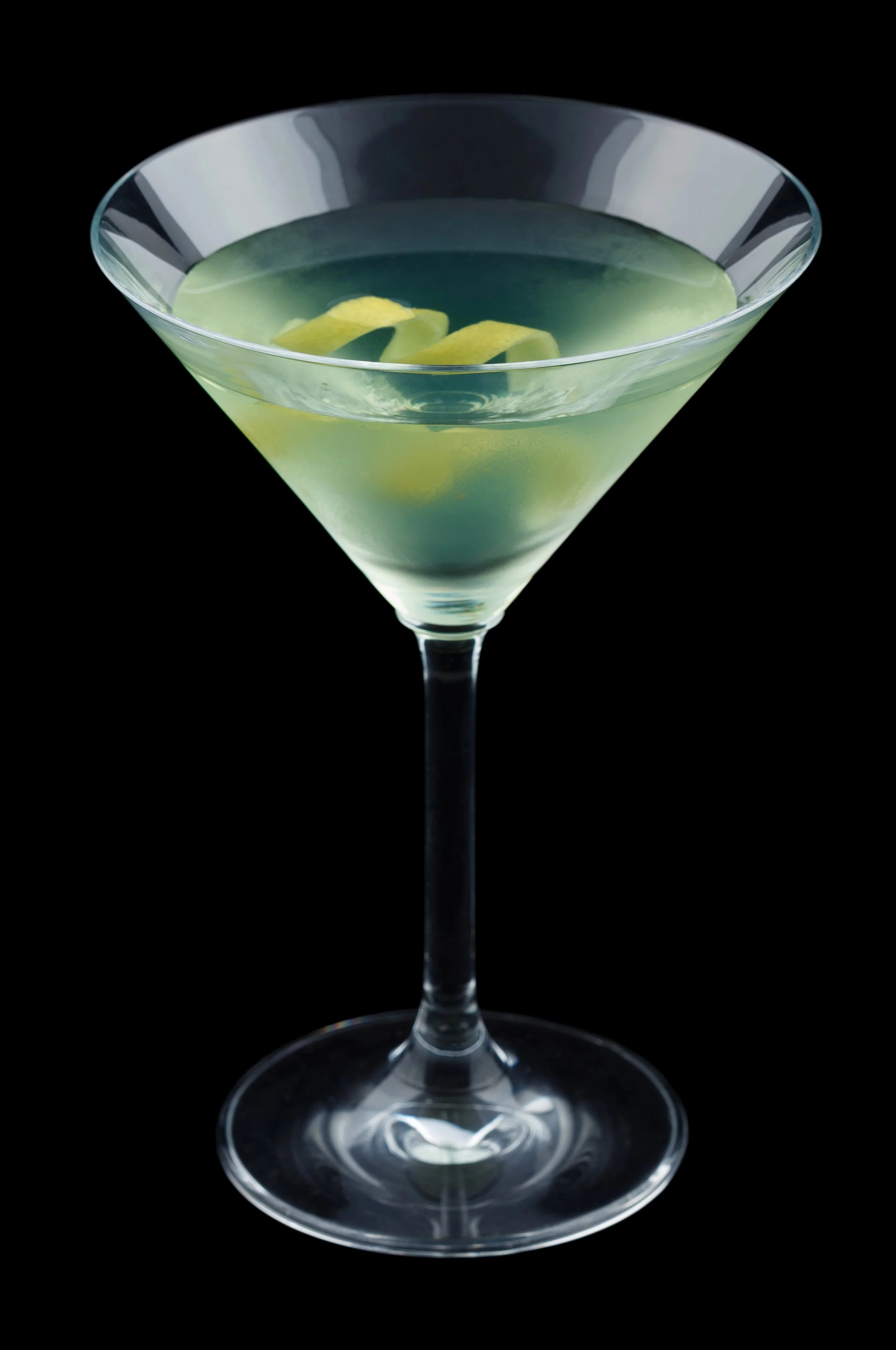
Bijou cocktail photo credit depositphotos
1 1/2 ounces gin
1 ounce sweet vermouth
3/4 ounce green Chartreuse
2 dashes orange bitters
Add all ingredients into a mixing glass with ice and stir until well-chilled. Strain into a chilled Nick & Nora or coupe glass. Garnish with a maraschino cherry, if desired.
The Green Chapter
1 ounce green Chartreuse
1 ounce yellow Chartreuse
¾ ounce fresh Filipino calamansi (or lime) juice
½ ounce Thai basil honey
1 ounce fresh egg white
To make Thai basil honey: Make a simple syrup by folding 1 cup honey and 1 cup hot water into a jar, shake vigorously to combine. Add 10 fresh Thai basil leaves, let cool, then steep the mixture, refrigerated, overnight.
Add the green and yellow Chartreuse, calamansi (or lime) juice, Thai basil honey and egg white to a cocktail shaker without ice. Shake hard for 10 to 15 seconds until the egg emulsifies. Fine strain the cocktail into a chilled coupe glass.
Swampwater
And here is perhaps the simplest and most popular American cocktail made with Chartreuse; the unfortunately named Swampwater, which had a major moment in the late 1970s.
The sweet acidic notes of pineapple work remarkably well in tandem with Chartreuse’s herbaceousness.
1 1/2 oz Green Chartreuse
5 to 6 oz Unsweetened pineapple juice
1/4 oz Freshly squeezed lime juice
Fill a tall glass (like a Collins glass or Mason jar) with ice cubes. Pour in the Green Chartreuse, pineapple juice, and lime juice.
Stir well to combine. Garnish with a lime wedge or wheel.