
Cappadocia: Where Balloons Rise & Wines Flourish

Ballooning over Cappadocia
In the heartland of Turkiye there is a magical area called Cappadocia. Its moonlike landscapes, punctuated with fairy chimney stone cones and mushroom-like formations, make it unique. It is famous for hot air balloons rising above the hills and valleys. Now, Cappadocia is also fast becoming known for its high-quality wines.
Winemaking in this region is thousands of years old. Around 2000 B.C., the Hittites used wine in their rituals to the gods and during festivals and celebrations. Under the Persian and Roman empires winemaking flourished. During the Byzantine era, Christian monks furthered winemaking techniques, using wine for both religious and secular purposes. Although under the Ottoman Empire alcohol was forbidden, several ethnic and religious populations continued making wine, especially in the Armenian and Greek Orthodox Christian communities. The mid-twentieth century introduced the modern era of winemaking in the area.
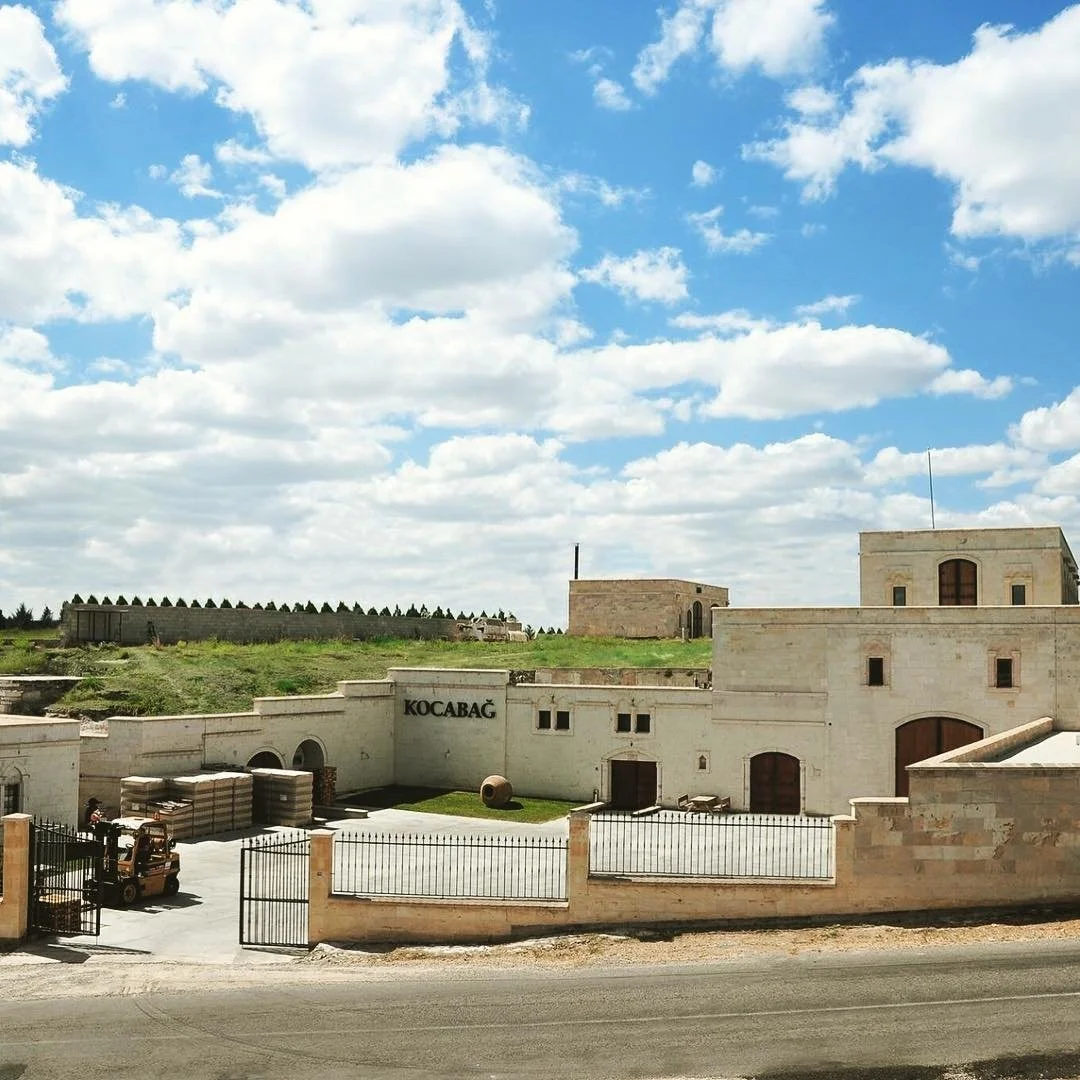
Kocabağ Winery
In Uchisar village, I visited Kocabağ (pronounced Kojabah) Winery, a pioneer in producing commercial wines in Cappadocia. Starting out in the mid-1950s, the original wines were stored in hollowed-out stone barrels in an ancient cave where fermentation took place over several months. In 1974, Kocabağ introduced modern winemaking equipment and techniques producing high quality Cappadocia wines. Kocabağ wines are now distributed in nine other counties including Canada and the United States. Several of their wines have won international awards. The winery provide tastings in Uchisar and visits to their vineyards in the area.
Turasan
Turasan is another large producer of high quality wine in Urgup. It was also a pioneer in modern winemaking and has been family owned since 1943. Several newer boutique producers are also adding to the Cappadocian wine scene. Wine tours are available through travel agencies and a few wine stores also provide tastings.
In Goreme village, I walked into a cozy room carved out of a cave at the Aza Hotel for a winetasting. Aza is part of the Kelebek Group of specialty hotels, restaurants, and travel services. Their wine program is led by Suleyman Örlü. Suleyman studied at the Wine and Spirits Educational Fund in Istanbul where he received his İWSA certification as a professional sommelier. I asked him what made him interested in wine especially in a Muslim country. His face lit up when he replied:
“Working in the restaurant and hospitality field, I wanted to understand the wines I loved so deeply and learn how to communicate my passion for wine. I found it a privilege to follow closely some senior professionals who devoted their lives to this field. I also attended and conducted private tastings. To be certified, I took formal courses and am constantly continuing my education. I recently took a sponsored trip to Italy to deepen my knowledge of wine.”
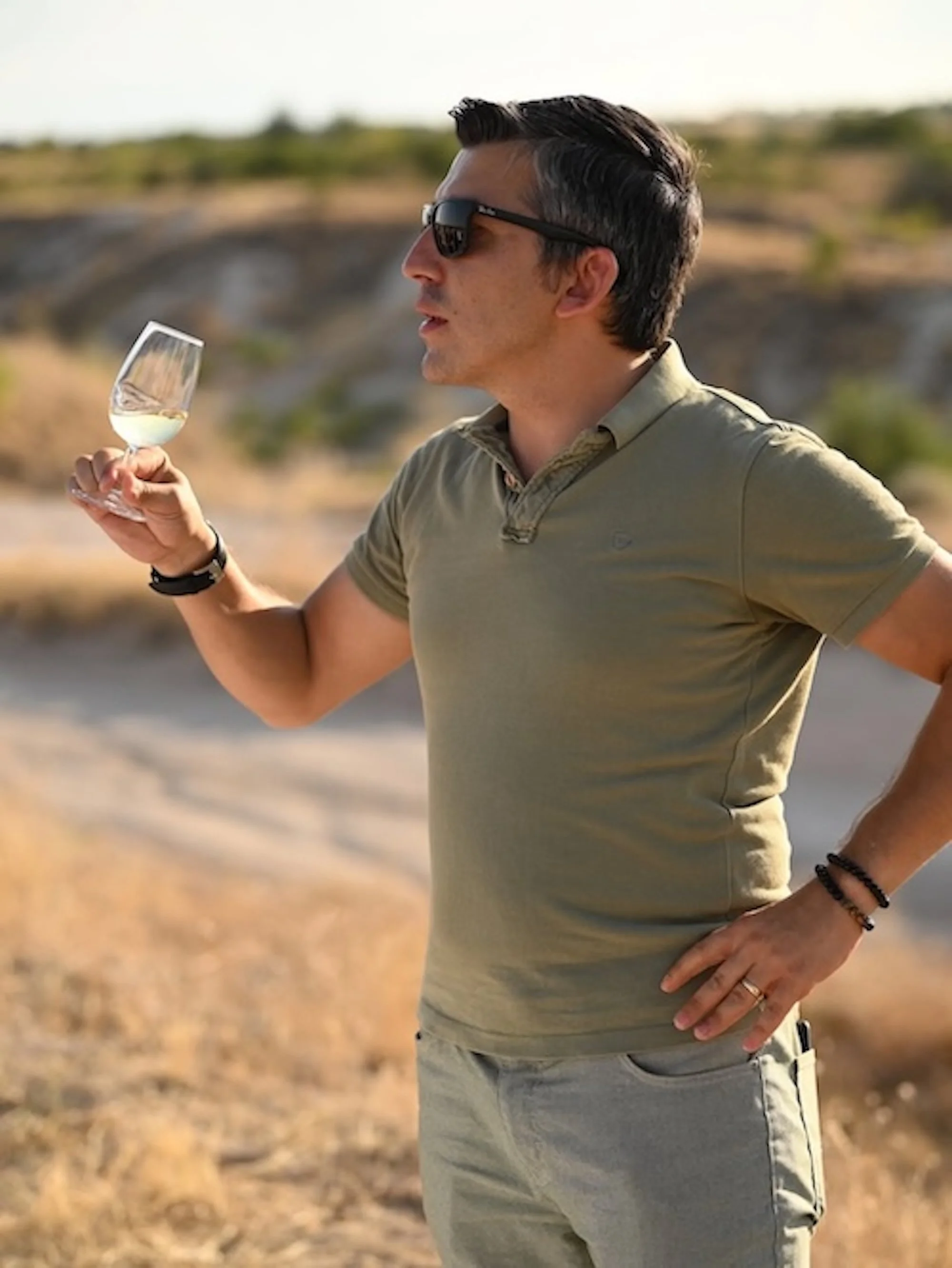
Suleyman Örlü drinking Emir
Suleyman said there were only a handful of professional sommeliers working in Cappadocia. In many parts of Turkey people have never heard of the profession. From a religious perspective some people don’t view it positively, but many people especially in the big cities and tourist areas see the need to better understand wine. He added, “in my own circle, it feels natural, partly because I grew up in the food and wine industry and partly because I live in Cappadocia which prides itself in winemaking.”
As the winetasting began, Suleyman explained that the sandstone and volcanic tufa combine to make rich soil for grape cultivation. From small gardens to large producers for commercial purposes the area is full of vineyards. Although sixteen varieties are grown in the region, the four varieties of wines we would be tasting were Emir, Kalecik Karasi (pronounced Kalajek Karasa), Narince (pronounced Narınjeh), and an Öküzgözü Boğazkere blend (pronounced Okuzozu Boazkarey). Each wine was paired with a delicious cheese, dried fruit and locally made crackers and a spicy sweet jam.
Emir grapes are indigenous and grown only in Cappadocia. The grape is yellowish green, and the wine is a pale yellow. Emir produces a light to medium bodied white wine and sparkling win. Its high acidity comes from the minerals in the Cappadocia soil. Emir wines are hometown favorites in Cappadocia.
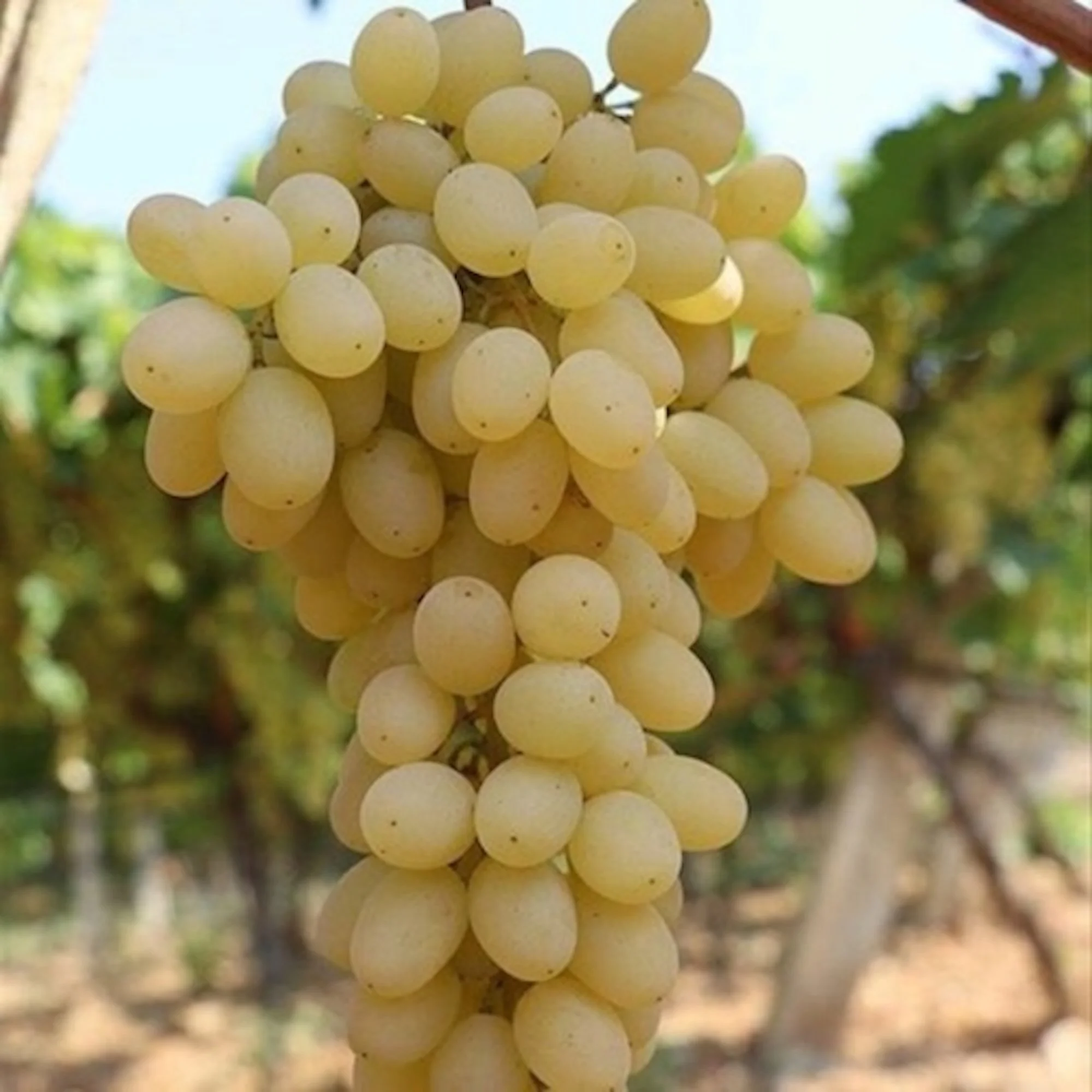
Emir Grapes photo credit Yana Vydrenkova
Suleyman described the Emir wine beautifully as “as a crisp whisper of Cappadocia-lemon, green apple and volcanic minerality.” Suleyman’s favorite is Kocacağ Emir. It has won international awards for its Series K Emir wines. Emir pairs well with cheeses, salads and tomato-based foods.
Grown close to The Ankara region near the Red River, kalecik karası grapes produce some of Turkiye’s best wines. The grape is purple and yields a cherry red wine similar to pinot noir. The berry aroma and taste are accented with hints of chocolate that add to its depth. It has a smooth texture and a medium level of acidity. It pairs nicely with pizza, pasta, lamb kebabs and aged cheeses.
Kalecik karası grapes also make both an elegant still rose and sparkling blush wine. Pale pink, almost peach in color, these wines have the refreshing aroma and taste of citrus, orange and a berry finish. The lively acidity keeps it fresh. Kalicek Karası is best paired with appetizers such as baba ghanoush, dolmas and yogurt based dips. Suleyman described it as: “Silky and bright, red berries lifted by cool nights and a touch of volcanic finesse.”
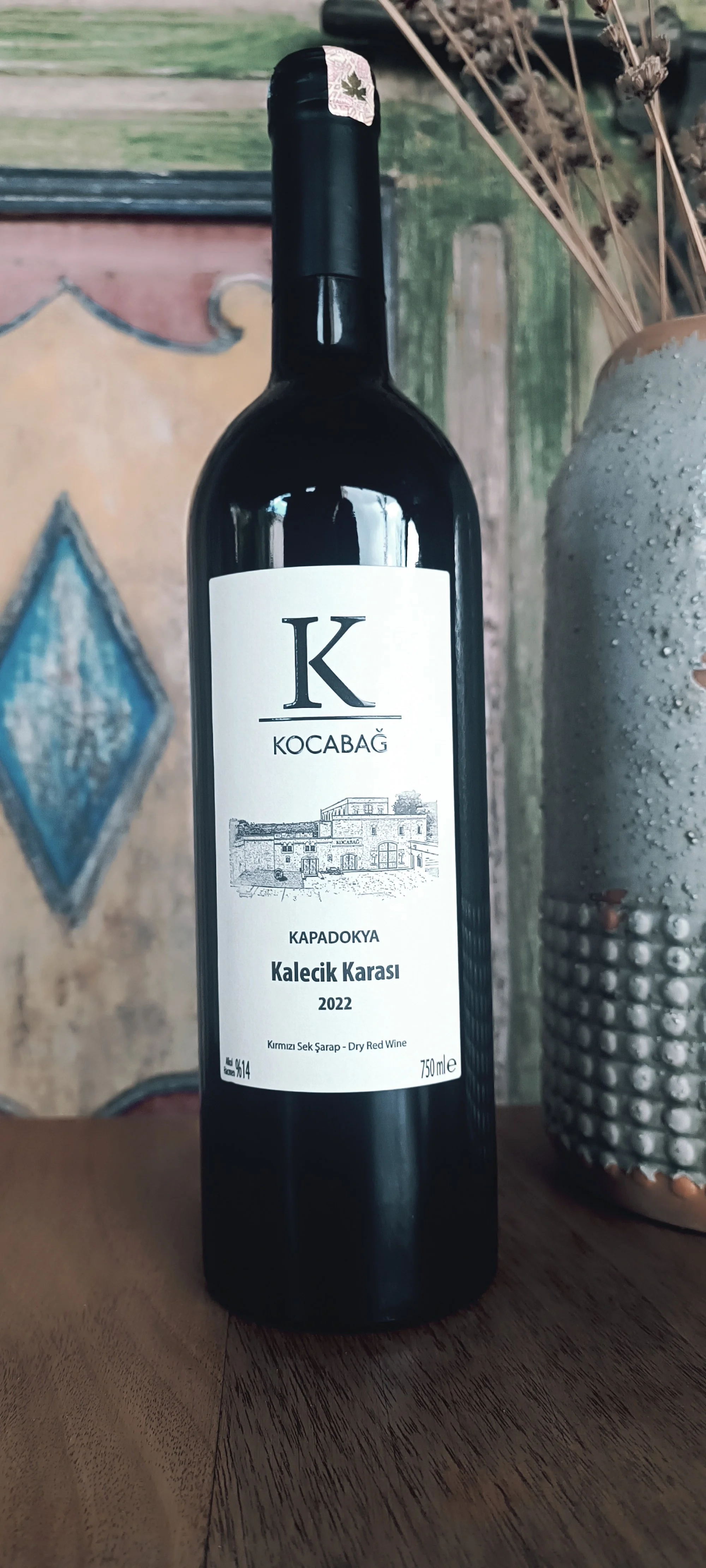
Kalecik Karasi wine photo credit Suleyman Örlü
Indigenous to the Tokay region of Cappadocia, narince grapes when fully ripened turn an amber color. They produce both dry and semi-dry wines the color of yellow straw. They have a high acidity which tends to make the wines dry. It is often associated with the taste of chardonnay and has hints of lime and other citrus flavors. Narince wines are medium to full-bodied and develop a rich floral aroma as they age. They are great paired with chicken, fish or vegetarian foods. Suleyman especially recommended Turasan’s Narince Seneler.
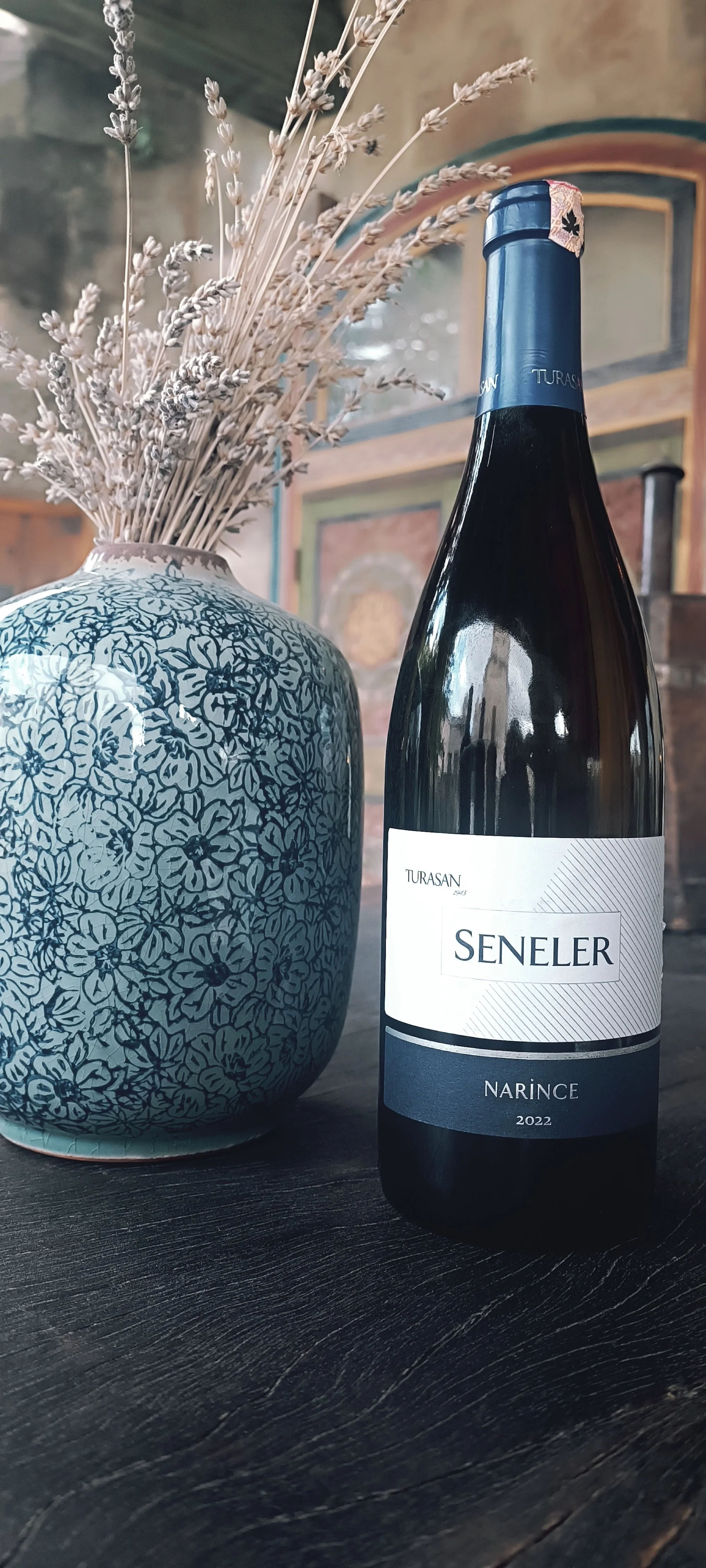
Narince Wine photo credit Suleyman Suleyman Örlü
Öküzgözü is native to Eastern Turkey near the Taurus Mountains, but is also grown in Cappadocia. The grapes are large, dark skinned and produce vibrant ruby-colored wines. The name translates to “ox eye” due to its size and color. Aromas often include red cherry, cranberry, pomegranate, and sometimes floral notes remain on the palate. The wines are medium-bodied with lively acidity and gentle tannins. It is somewhat comparable to merlot. This wine is best paired with grilled meats and tomato-based dishes. Suleyman described Öküzgözü wines as “deep-colored with lively tastes of plum, red fruits, spices and aging promise.”
Öküzgözü is often blended with another varietal of grape boğazkere, a dark red, almost black, thick-skinned grape. Boğazkere balances Öküzgözü wine’s tannins and fruit. The wine’s name means “throat burner” due to its harsh and tannic nature. Suleyman describes Boğazkere as “bold, yet balanced-hints of black fruit, tobacco, and firm tannins shaped by our mineral-rich soil.” Aged 5-10 years, the wine develops smoky flavors. This blend is one of the most popular Cappadocia wines. Pair it with grilled meats such as chicken, cold cuts, eggplant dishes and lamb kebabs.
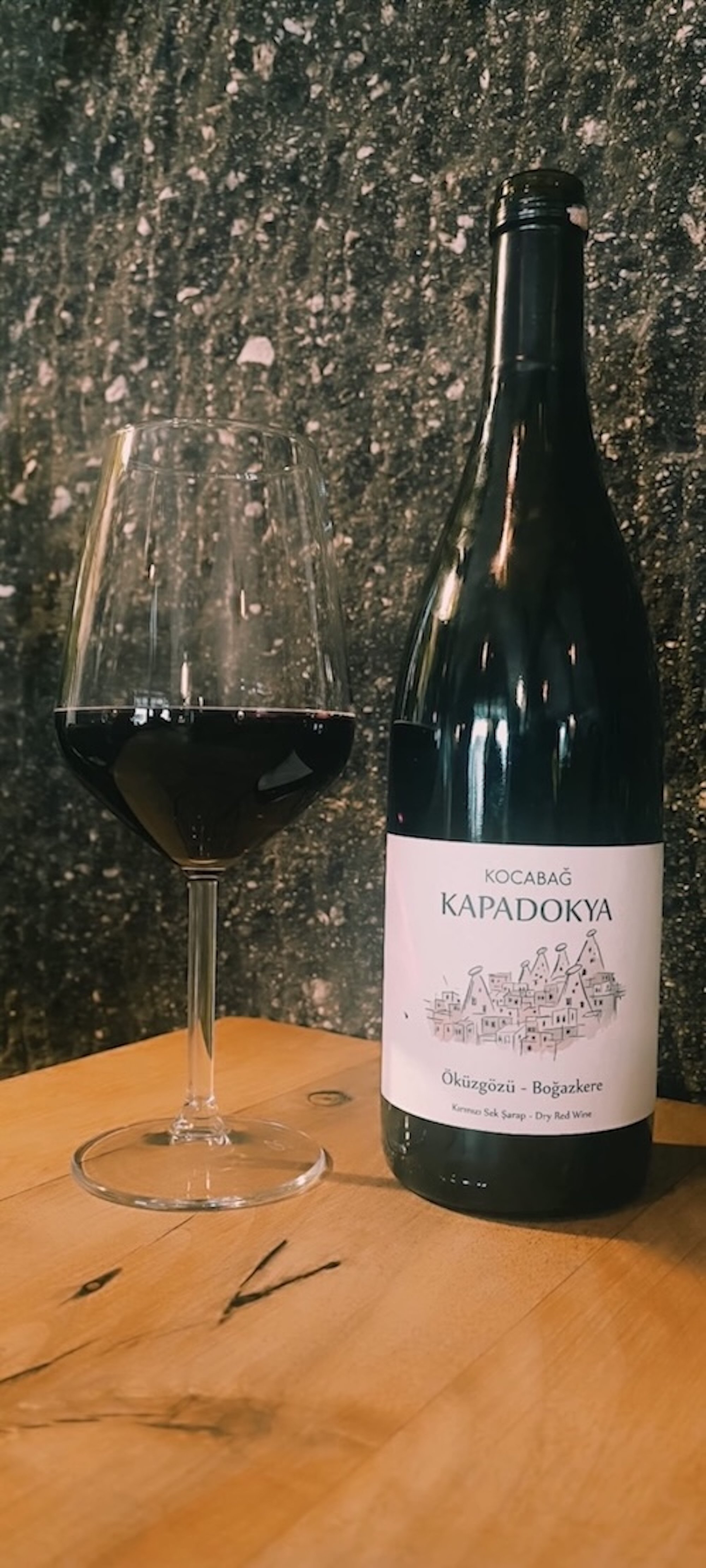
Okuzgozu Bogazkere photo credit Suleyman Örlü
Cappadocia wines are popular in Turkiye but not very well known outside of Turkiye due to limited production and the demands of the domestic market. İn Cappadocia alone there are over 700 restaurants and hotels using these wines. Yet, several producers such as Kocabağ and Turasan are breaking into the global market.
It would be worth the effort to seek out a Cappadocian wine. When you find one raise your glass and say the Turkish toast: “Şerefe” (pronounced sherafay), which means “in your honor.’’