
The Art and Science of Riddling Sparkling Wine
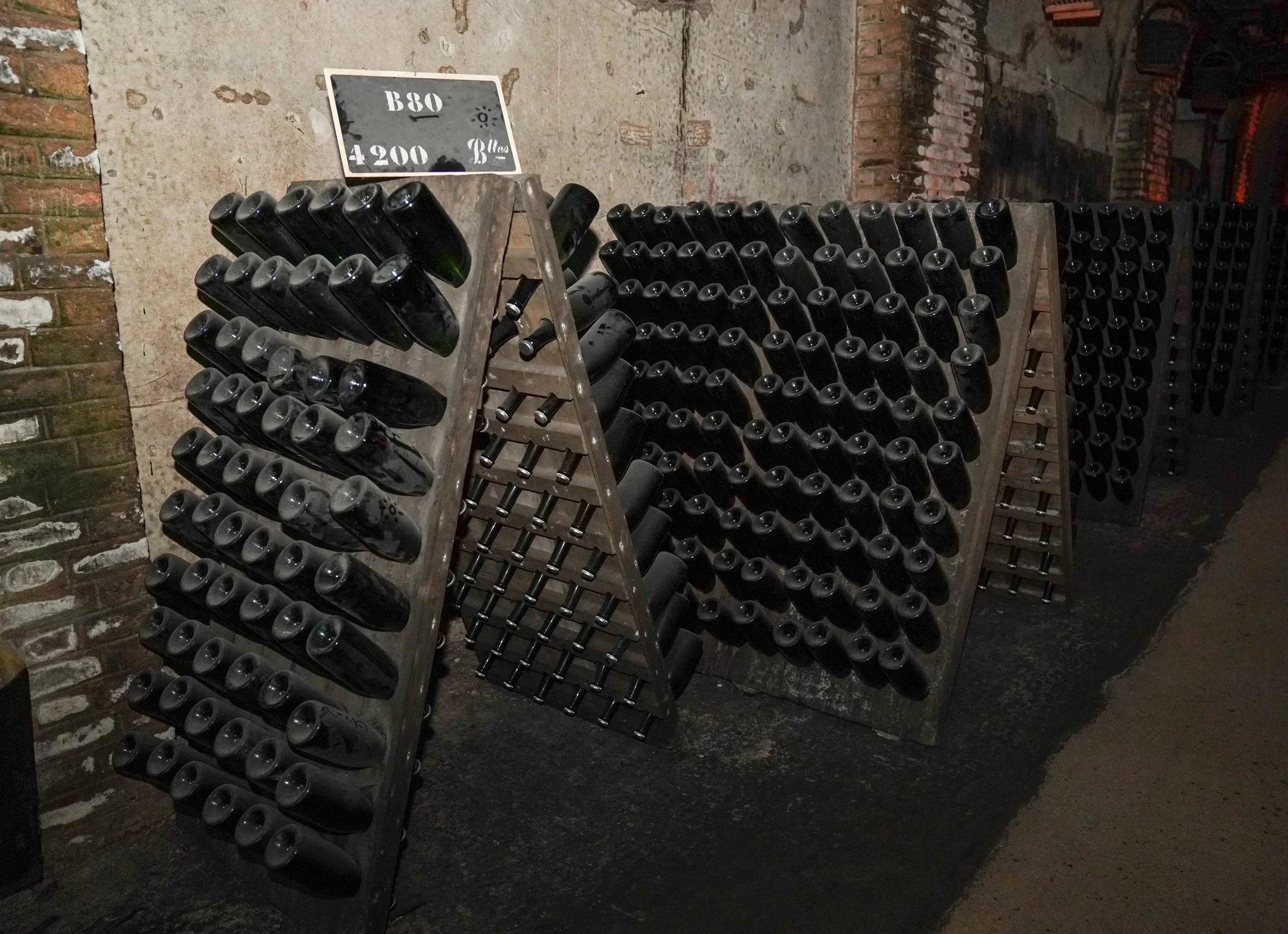
Bottles on riddling racks photo credit depositphotos
In 1865, Carlo Gancia brought the winemaking techniques he learned in Champagne, France, to the town of Canelli, Italy, and the Metodo Classico, or the Traditional Method, was born. "This method can only be used for sparkling wines that undergo a second fermentation in the bottle, " explains Flavio Scagliola, wine technician from Winery SCAGLIOLA GIACOMO & FIGLI and past Vice President of the Consorzio Tutela dell’Asti. "The Metodo Classico is used to enhance the overall structure and complexity of the sparkling wine through extended aging on the lees, typically lasting between two and three years," says Scagliola. The wine evolves during this time from primary floral aromas to more mineral and complex tertiary characteristics, he adds. A key step in the Metodo Classico is riddling.
What is Riddling, Anyway?

Elisa Musso Contratto
Riddling or remuage is the art of turning sparkling wine bottles at an incline. The goal is for sediment to accumulate in the neck of the bottle. This technique moves sediment, including dead yeast cells, known as lees, into the neck of the bottle. "Riddling is the technique that allows us to gradually collect the sediment in the neck of the bottle, so that it can later be expelled during disgorgement," says Elisa Musso, Export Manager for Contratto Winery. Riddling is necessary for appearance and for a quality finished product. "Without riddling, the wine would remain hazy and with visible sediment particles, negatively affecting both its appearance and its sensory quality, leading to a less refined and less elegant final product," says Scagliola.
How Italian Asti Spumante Differs from French Champagne
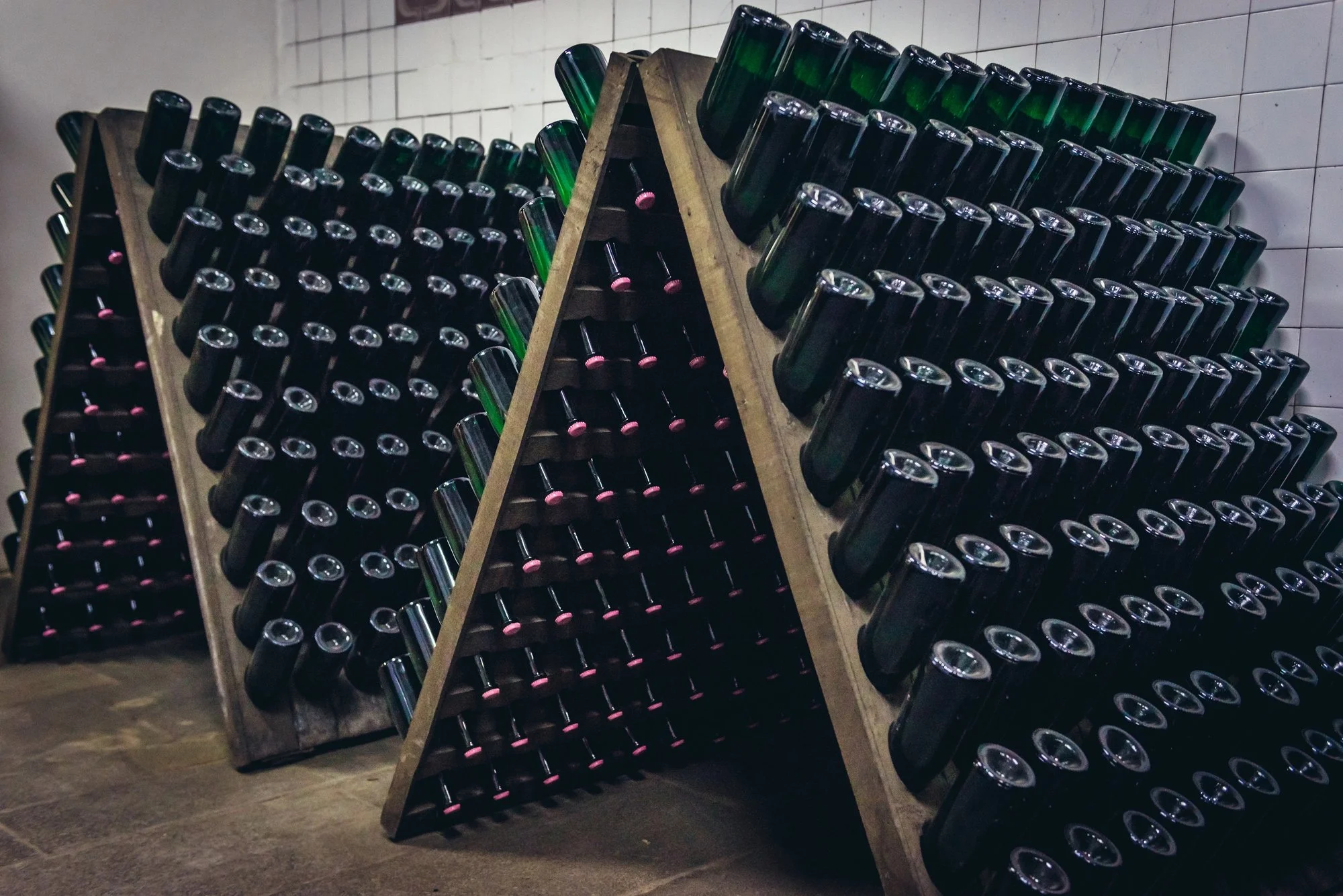
Bottles in traditional riddling racks photo credit depositphotos
The traditional method process is the same for making Champagne and Asti Spumante. "The main differences are in the grape varieties and in how the second fermentation is managed," explains Musso. "Champagne is made from grapes such as chardonnay, pinot noir, and pinot meunier, and a measured amount of sugar and yeast is added to trigger the second fermentation." When it comes to the moscato grape, it acts a bit differently since there is more sugar in the grapes. "The base wine already contains enough natural residual sugar from the [moscato] grapes themselves," says Musso. "There's no need to add sugar to start the second fermentation, and it also allows the wine to retain a natural residual sweetness at the end of the process."

Flavio Scagliola, wine technician from Winery Scagliola Giacomo & Figli and past Vice President of the Consorzio Tutela dell’Asti
Asti Spumante, a sparkling wine made with moscato bianco grapes grown in the Piedmont region of Italy, was traditionally produced using the traditional method. These days, most winemakers don't use the traditional method for Asti Spumante and instead rely on the Charmat method. "Riddling is not a key step in the production of Asti Spumante, as the vast majority of it, around 95%, is produced using the Martinotti method or Charmat," says Scagliola. "Fermentation takes place in pressurized tanks (autoclaves) rather than in individual bottles."
History of Machine Riddling

Gyropalette photo credit depositphotos
Machine riddling is often done using a gyropalette, an automated machine that rotates and tilts hundreds of bottles simultaneously. The concept of a machine riddling was born in 1968. Two wine growers, Jacques Ducoin and Claude Cazals, came up with the idea. Five years later, a prototype would debut on the market. Machine riddling doesn't require a skilled riddler to hand-turn bottles and reduces the riddling time. Some gyropalettes can hold and riddle 504 bottles at a time, depending on the cage size. Most Champagne and Asti Spumante is riddled by machine because it's faster and easier. Today, the vast majority of riddling is performed using automated systems, such as gyropalettes, shares the Comité Champagne. These technologies allow for greater efficiency and consistency across large volumes.
Which is Best: Hand Riddling or Machine Riddling?

Manual riddling of champage bottles as part of traditional method of sparkling wine production photo credit depositphotos
Today, many winemakers in Champagne and Asti Spumante choose to machine-riddle since the technology is available and it saves time and labor. Manual riddling is now limited to a small number of cases, typically associated with specific production choices, explains the Comité Champagne. Some producers may continue to use hand riddling for particular cuvées, often at the higher end of their range, where they wish to maintain a traditional approach. Data on the exact number of Champagne producers who hand riddle are not available.
However, hand riddling offers more control and nuance. "Choosing manual riddling instead of a mechanical process allows us to control each bottle individually and, above all, to dedicate even more time to the wine’s aging on the lees," says Musso. Although the process takes longer and requires a knowledgeable person to hand-riddle, winemakers can achieve a more refined and carefully crafted wine profile. "This slower and more attentive approach helps us achieve greater finesse and complexity while respecting the elegance of Moscato," says Musso.