
How Cognac Became a Black Cultural Icon
Photo credit Jim Nyamao
When Sullivan Doh was growing up in France, the grape brandy called Cognac wasn’t cool. “In France, you talk about Cognac, that’s what my grandma used to drink.”
So when Black American hip-hop artists and rappers embraced Cognac in the 1990s and turned it into a symbol of success, he was both surprised and fascinated. The rebranding of this brandy as a modern prestige spirit inspired Doh to co-found Le Syndicat, a Paris bar that introduced Cognac and other French heritage spirits to a new generation. Today, he shares Cognac’s story with an international audience as the first Global Brand Ambassador for D'USSÉ, a brand founded by Shawn “Jay-Z” Carter, in collaboration with Bacardi and cellar master Michel Casavecchia.
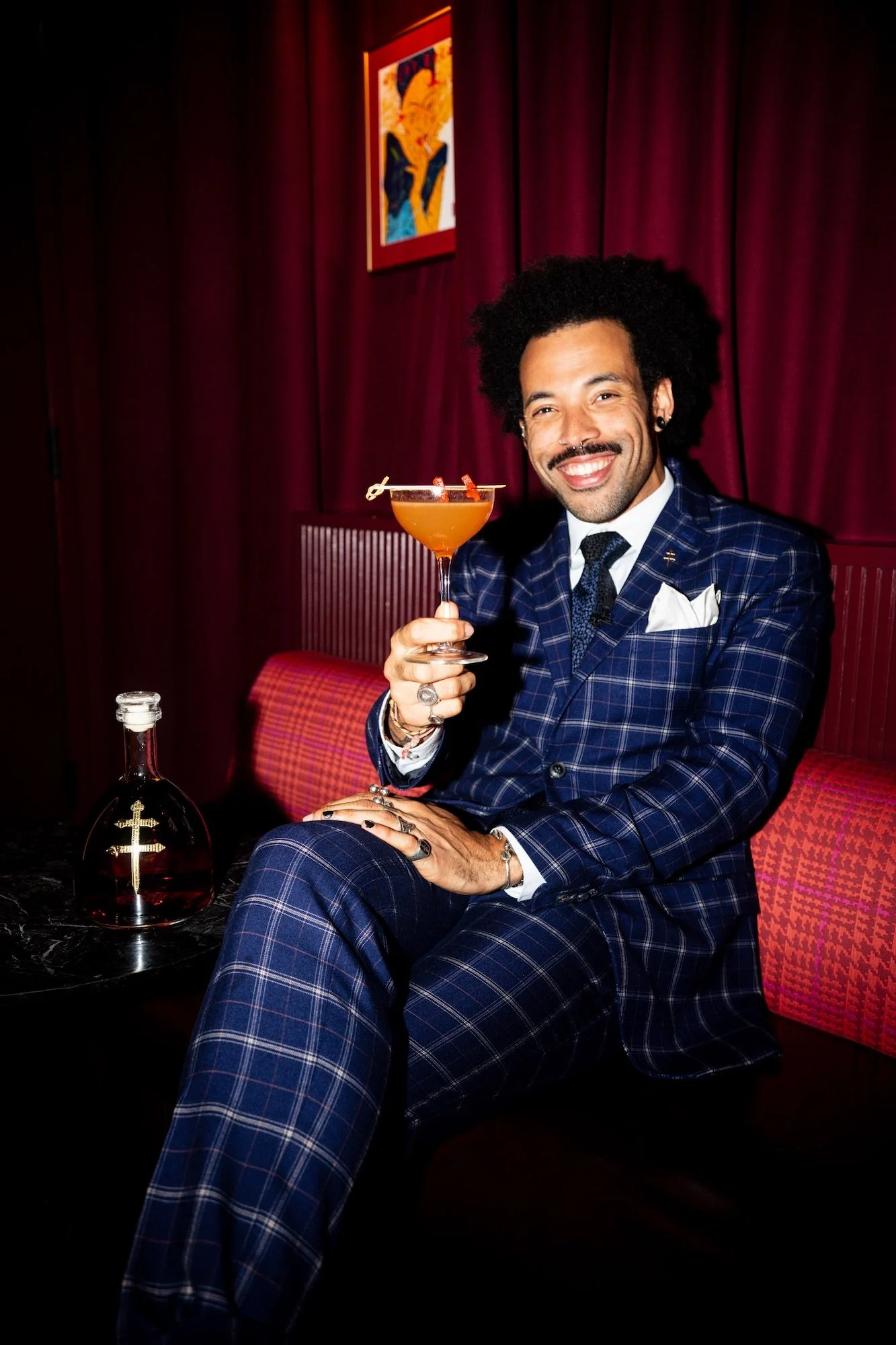
D'USSÉ Global Brand Ambassador Suliivan Doh. Photo credit D'USSÉ
A sippable symbol in Black culture
For generations, Cognac has loomed large in Black culture as a sippable symbol of sophistication, luxury and wealth. And it’s still popular today: In 2024, NielsenIQ reported that 21 percent of Black consumers said they were Cognac drinkers.
But how did a 300-year-old spirit from southwestern France become so embedded in Black American culture? The oft-repeated story goes that Black servicemen who served in France during World Wars I and II developed a fondness for Cognac. The narrative says that Black servicemen from the 369th Division in World War I and the 761st in World War II developed an appreciation for French culture while serving in a country with comparatively less racism, and brought those tastes back home with them.
But historians and cocktail experts believe that Cognac may have seeped into American drinking culture much earlier.
The origins of Cognac
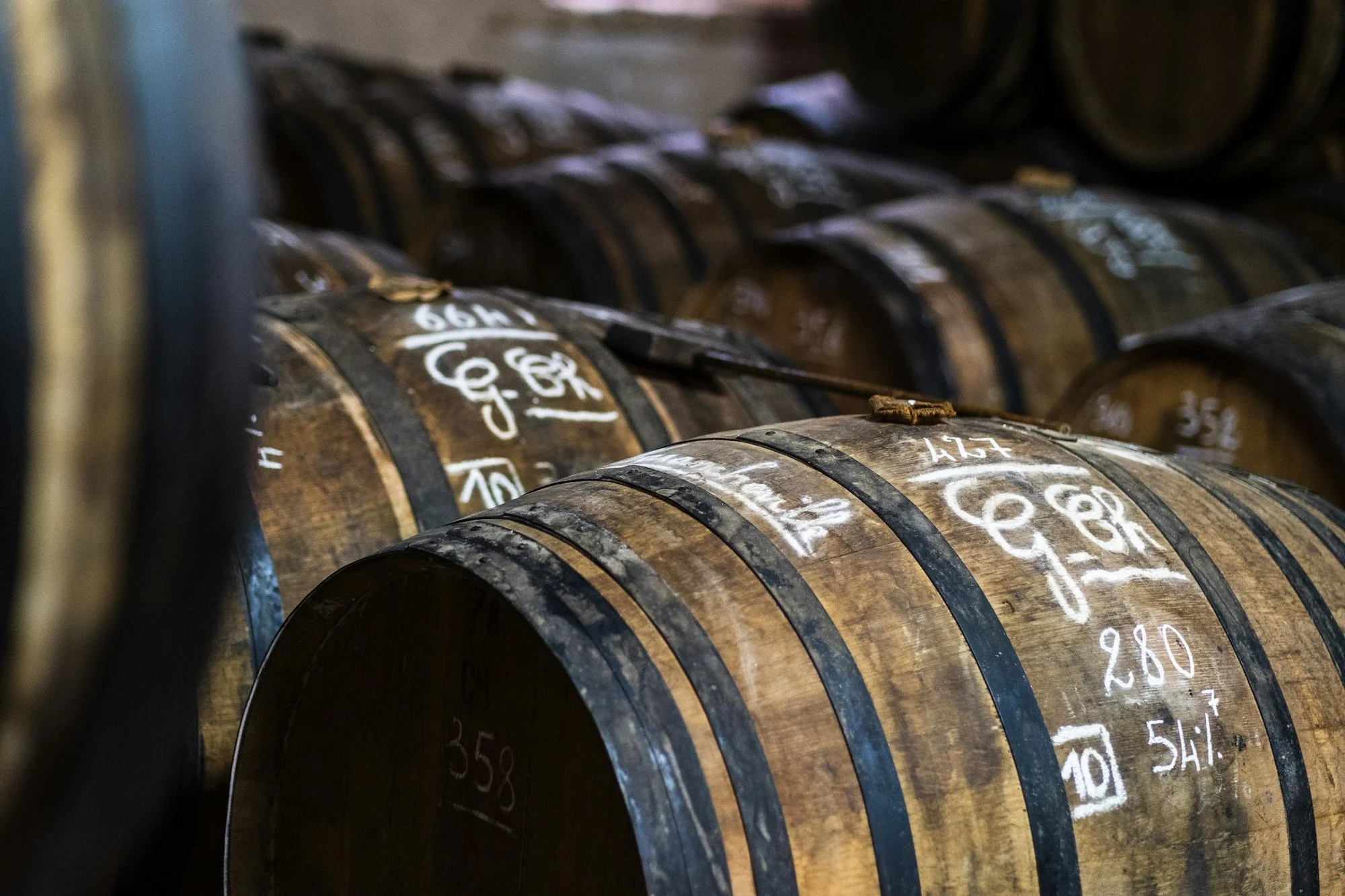
Barrels aging in the Delamain cellars. Photo credit Timothé Durand
The grape brandy known as Cognac takes its name from a town in the Charente department in the larger Nouvelle-Aquitaine region of southwestern France. The town is just north of Bordeaux, so wine grapes also thrive in the Charente. At first, the local grapes were made into tart white wine that was an everyday beverage in the region
The game changer was when those tart white wines were distilled, a process that heats liquid to produce a vapor that condenses into a spirit once cooled. Many historians believe that alembic still distillation — which was practiced by North African Moors in Spain since the 8th century — made its way to France’s Gascony region. There, it was used to produce Armagnac, a grape eau de vie that’s France’s oldest spirit that was first documented in 1310.
Gascony isn’t far from the Charente, so historians believe that’s where locals learned how to make the brandy that came to be called Cognac. The final step was aging the spirit in toasted oak barrels, an invention acquired from Celtic peoples, until it was amber with deep flavors of candied citrus, dried apricots, nuts and tobacco. The oldest Cognac house on record is Augier, which dates to 1643. Leading Cognac brands of today came soon after: Martell in 1715, Rémy Martin in 1724, and Hennessy in 1765.
French Brandy in the New World

Cocktail historian David Wondrich
Though Cognac is the dominant term today, that wasn’t true in the 1700s and 1800s. This brandy went by several names: French eau de vie, meaning “water of life,” French brandy; Rochelle brandy or La Rochelle, after the port that much of it traveled through. And brandy made in the town Jarnac might be called Jarnac brandy, or Jarnac eau de vie. The most common name, however, was just brandy.
In the Caribbean, and in cities like Charleston, Baltimore, Philadelphia, New York, regular folks drank rum, gin or whiskey, but French brandy was the preferred drink of the wealthy merchant and planter class.
In New Orleans, which was established by France in 1718, this French brandy became the backbone of the city’s cocktail culture. By 1790, the diverse city was nearly half Black, with many residents arriving through Caribbean migration or descended from free people of color and enslaved Africans. Many would have been familiar with the spirit.
After all, it starred in the Sazerac, often considered the very first cocktail. Creole apothecary Antoine Peychaud mixed a mostly medicinal blend of Cognac, Peychaud’s bitters, and water in 1838. The next important drink was the Brandy Crusta (1850s), a blend of Cognac, citrus, Maraschino liqueur, and bitters, which created the model for the Sidecar, the French brandy drink that was the toast of the 1920s.
“We were a whiskey-drinking country, but at the high end ... if you look through any cocktail guide, white or Black, there’s brandy cocktails galore,” says David Wondrich, a cocktail historian and author of Imbibe! and The Comic Book History of the Cocktail.
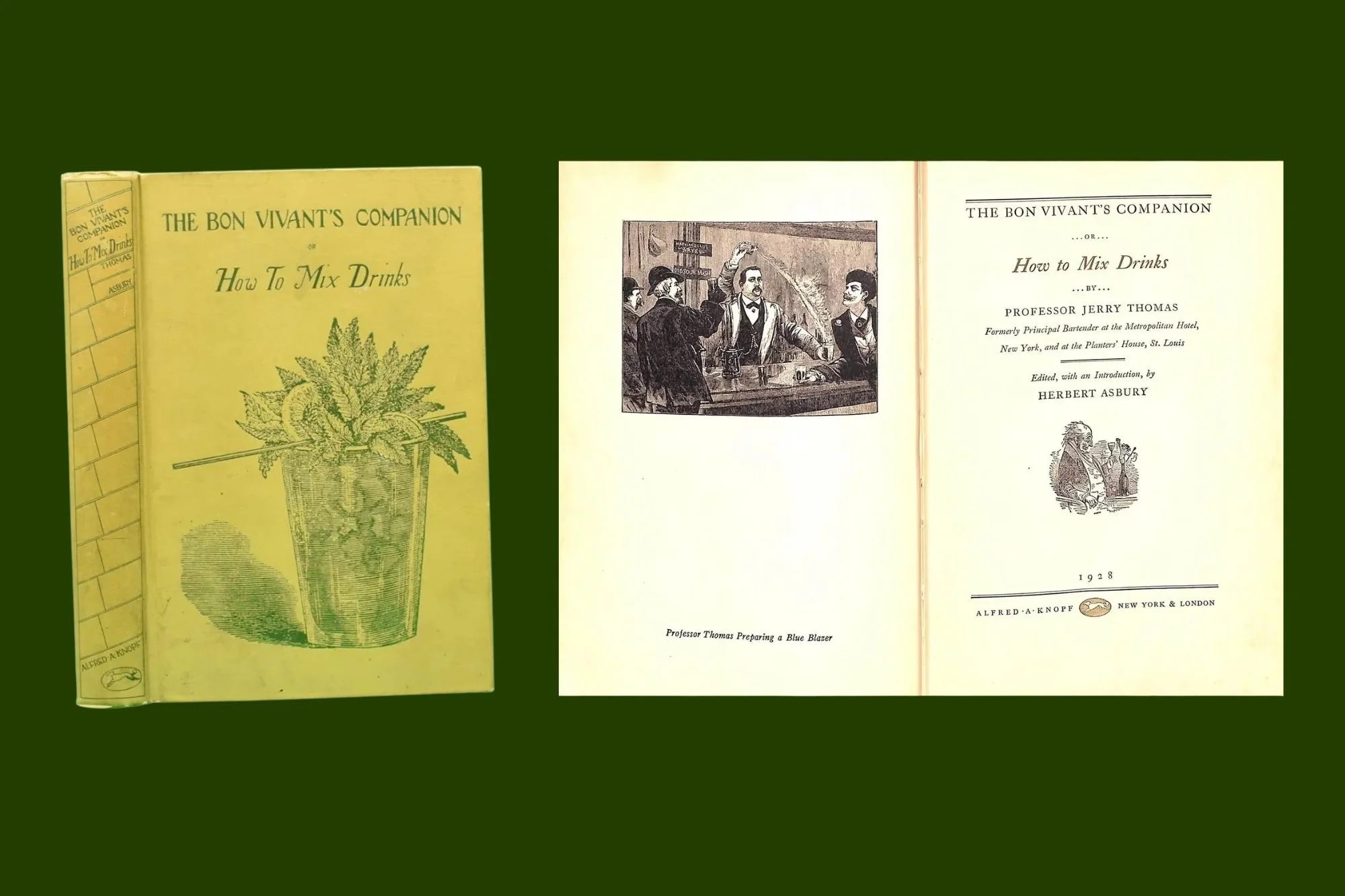
The Bon Vivant’s Companion or How to Mix Drinks by Jerry Thomas
Historic books like 1862’s The Bon Vivant’s Companion or How to Mix Drinks by Jerry Thomas reveal cups, flips, slings, sours and punches made with brandy. Same with Tom Bullock’s 1917 book The Ideal Bartender. And that includes classic cocktail recipes like eggnog, Pousse l’Amour, and Bullock’s renowned Mint Juleps at the St. Louis Country Club. “Back then, the brandy of choice was Cognac,” Doh says.
Along with Champagne and fine rum, Cognac was favored by the “sporting fraternity,” a diverse collection of athletes like boxers, musicians, bar owners and rakes who rejected Victorian values and Puritan work ethics of the late 1800s. Instead, they preferred gambling, drinking, donning dandy clothes and having adventures. Think of the characters in the Guy Ritchie film The Gentlemen or the Daniel Craig film Layer Cake as modern equivalents.
“Cognac was the thing you drank if you were successful,” Wondrich says. “It was the thing you drank if you were a gambler. You always tried to have the best.”
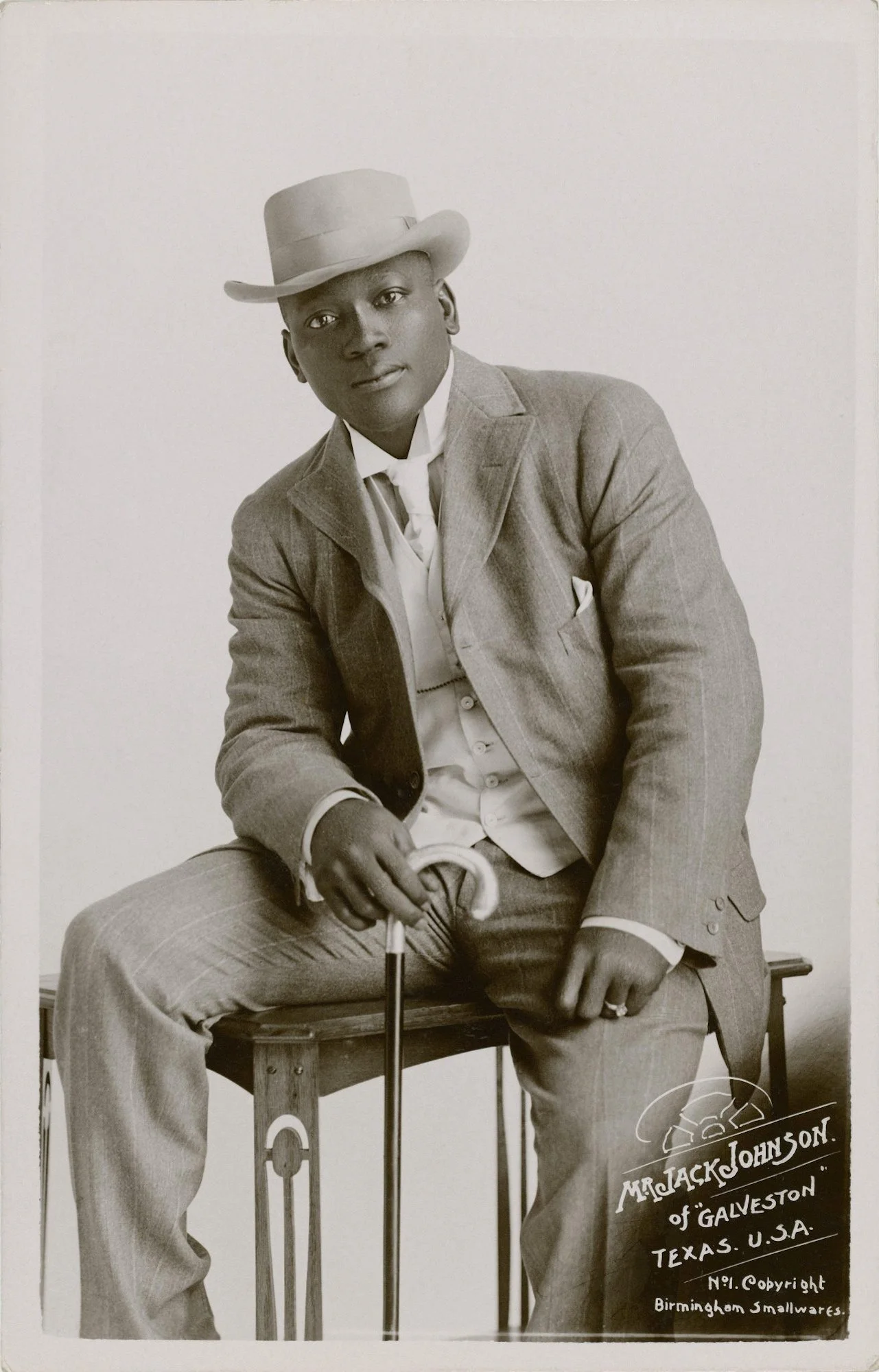
Boxer Jack Johnson, a hero to many Black Americans.
Boxer Jack Johnson was a flamboyant embodiment of the sporting life: a Black man who defied the times and lived life on his terms, and in close alignment with the opulence of Cognac. He became world famous in 1908 after beating Tommy Burns to become the first Black heavyweight champion, and retaining his title for seven years. Theresa Runstedtler, a historian at American University, has noted that Johnson’s interracial prizefights were seen as metaphors for U.S. race relations. “If a Black man won, then it would upend ideas of white supremacy,” Runstedtler says.
Johnson was a hero to many Black Americans, and press reports documented his audacious lifestyle. According to Ken Burns’ PBS documentary Unforgivable Blackness: The Rise and Fall of Jack Johnson, he lived by the motto “I always take a chance on my pleasures.
Johnson bounced between the U.S. and Europe, wore furs and bespoke clothes, and ran mixed-race nightclubs called “black-and-tans,” like Café de Champion in Chicago and Club Deluxe in New York, which later became the Cotton Club. He also flaunted his relationships with white women. Johnson sold his Harlem club after he was convicted of violating the Mann Act in 1913, which is now seen as a racially motivated prosecution. (President Donald Trump pardoned Johnson in 2018.) No menus from Johnson’s clubs exist, but the Cotton Club had an extensive menu of Cognac brandies.
Black Soldiers in France
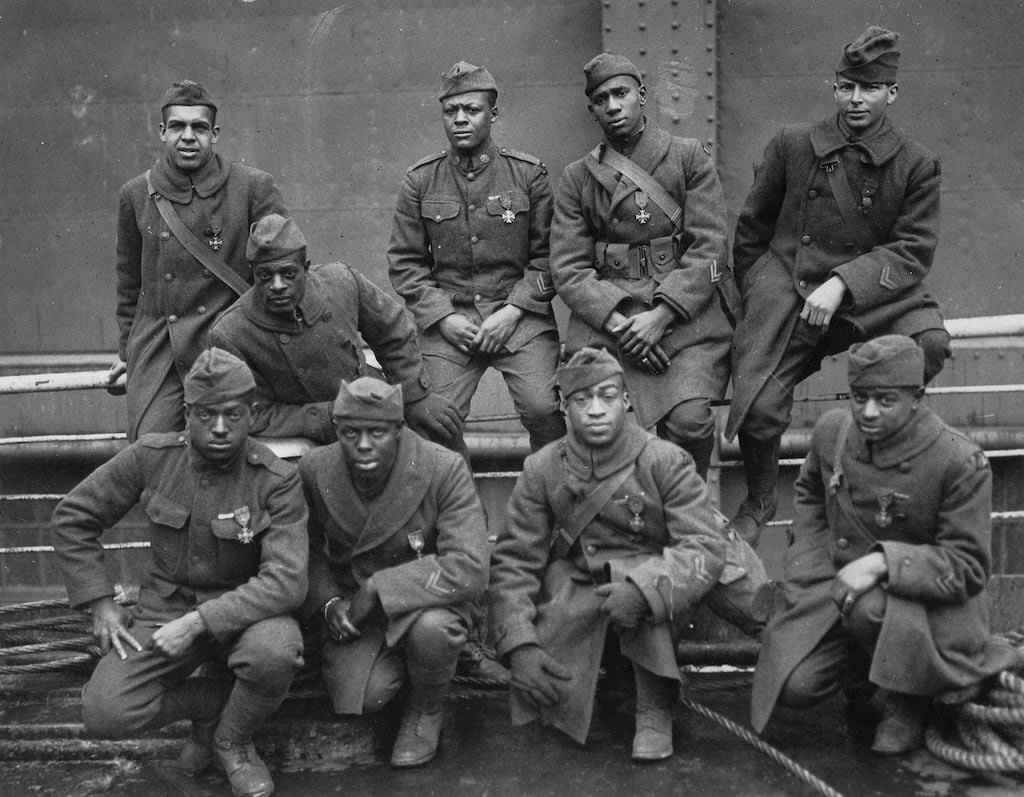
The men of the 369th Infantry, better known as the Harlem Hellfighters. Photo credit U.S. Army
By the time World War I broke out, many Black Americans would have been familiar with French brandy, even if it wasn't their drink. When World War I erupted, an estimated 380,000 Black Americans served in the army during World War I, according to the U.S. National Archives. Of those, 200,000 served in Europe.
During the Jim Crow era, which spanned the 1870s to 1964, Black American newspapers like The Chicago Defender, The Pittsburgh Courier and the NAACP’s The Crisis echoed the French revolutionary rallying cry of “liberté, egalité and fraternité.” They hoped that fighting for their country would win rights for Black Americans at home.
Service abroad also allowed these men and women to expand their cultural and social lives, notes historian Chad L. Williams, Professor of History and African American Studies and Black Diaspora Studies at Boston University.
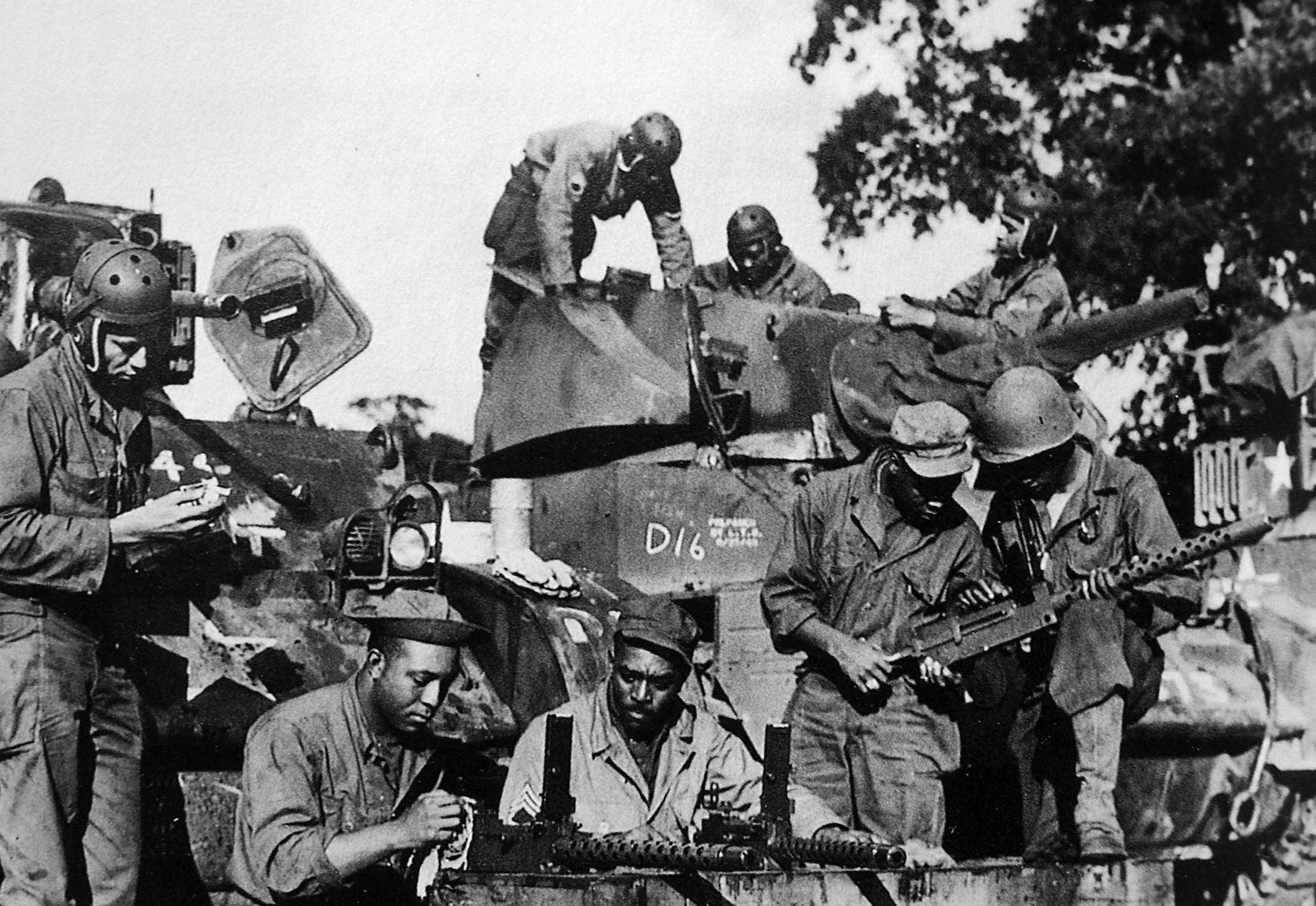
Soldiers from Dog Company of the 761st Tank Battalion, checking equipment before leaving England for combat in France in the fall of 1944. Photo credit U.S. Army
One Black division that made a name for itself was the 369th Infantry, also known as the Harlem Hellfighters. Besides their fighting prowess, they had a notable band led by composer James Reese Europe that introduced ragtime and jazz to French audiences.
In the book, a soldier named Arthur George Gaston shared that he was a Francophile who dreamed of visiting Paris, so he was excited to serve as a supply sergeant in the larger 92nd Division. He loved going to the homes of French families for dinner and wine, because overseas he was “accepted as an equal, as a friend.” He wrote, “I could feel it surge in me ... this new sense of confidence, of being equal.”
American military leadership sought to quench that feeling by extending Jim Crow policies to France. “For every moment of affection, cordiality, and intimacy African American soldiers experienced with French officers and civilians, the U.S. Army provided a counterbalance and reminder of how a broadened international consciousness would have to be forged through discriminatory military policy and violence,” Williams writes in his book Torchbearers of Democracy.
Black soldiers were forbidden to fraternize with townspeople — especially the women. The American military leadership hesitated to integrate the troops, so Black soldiers were loaned out to French army units. Others were relegated to menial duties, received substandard housing, and barred from businesses where white soldiers could relax. White Americans told French townspeople that Black men had tails and were rapists. The soldiers’ polite demeanor overcame these rumors, and many were treated with kindness and respect.
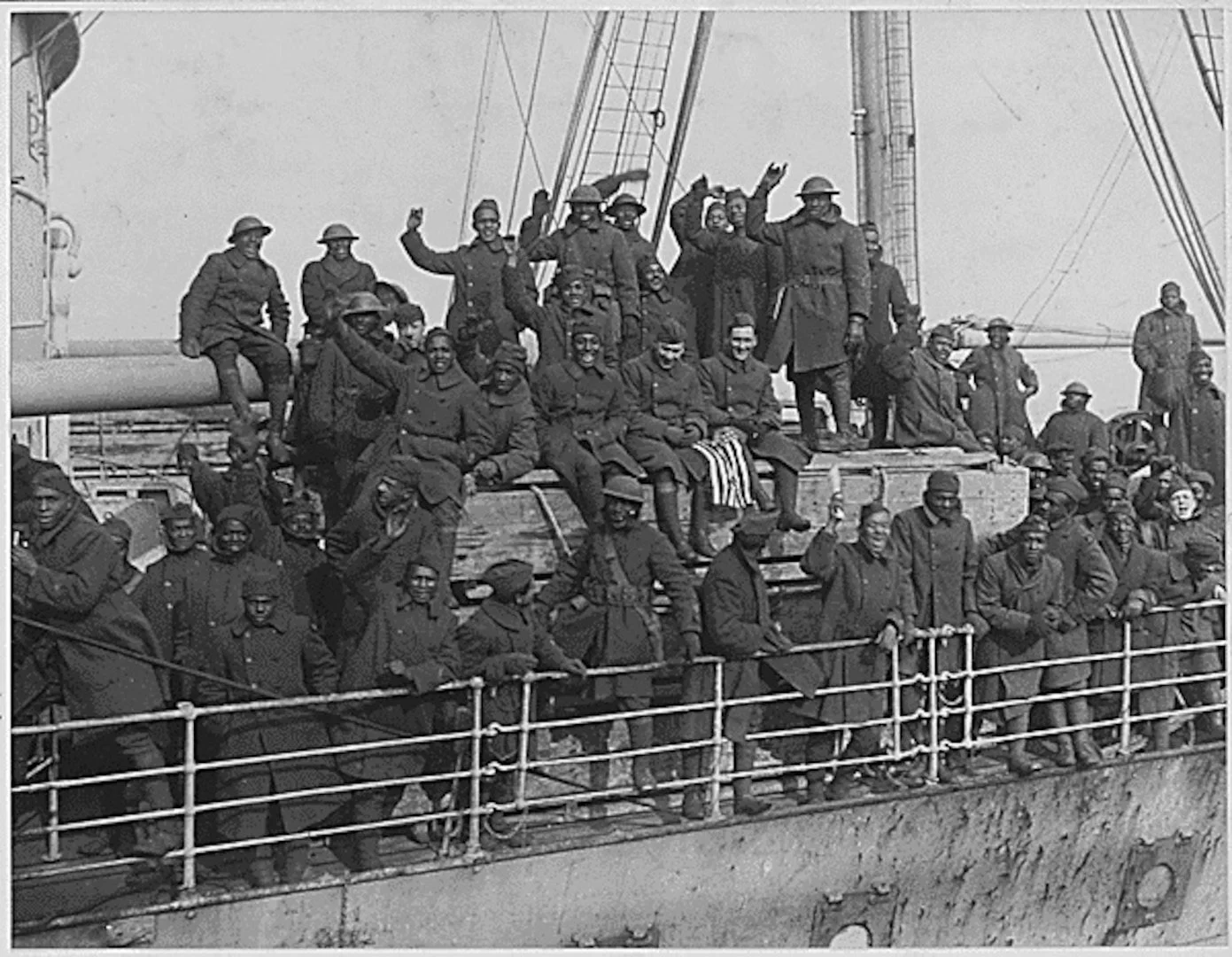
The 761st Tank Battalion, known better as the Black Panthers, arriving home from the war. Photo credit U.S. Army
But it wasn’t easy. The Black Americans who fought in World War II, such as the decorated 761st Tank Battalion known as the Black Panthers, also faced challenges. Still, many soldiers who served in France returned to the U.S. with an affinity for French luxuries, especially Cognac. “Black Americans were feeling respected for the first time,” says Tiffanie Barriere, a cocktail educator called The Drinking Coach.
After fighting for their country, Black veterans returned to racist Jim Crow policies, especially in the South, that limited their ability to prosper. They rejected those, as well as the popular bourbon, a relatively rough-tasting whiskey that lacked the smoothness and sophistication of Cognac.
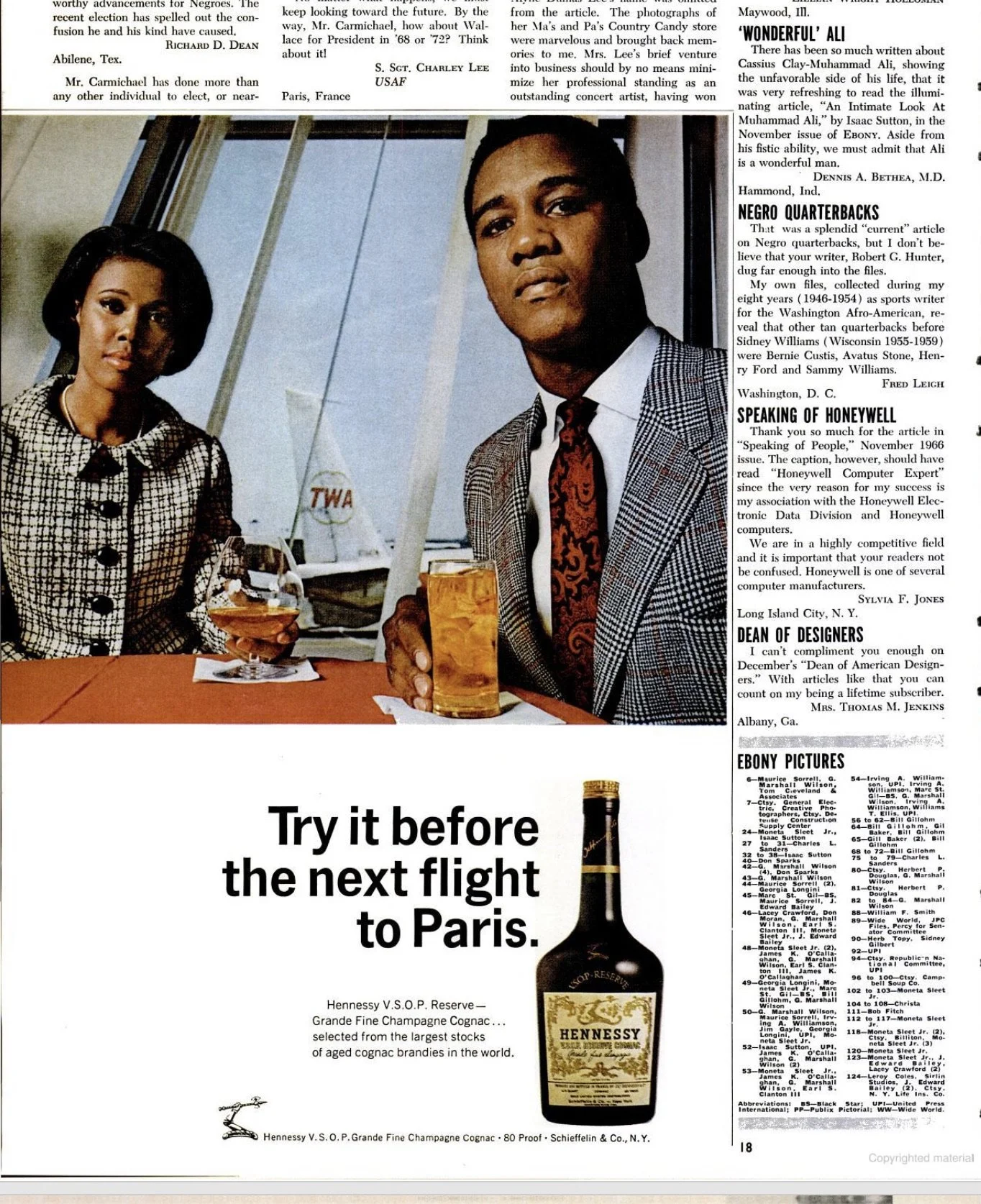
A vintage Hennessy ad from Ebony magazine.
Cognac was for Black bon vivants, or those who aspired to be. Eartha Kitt trilled in French about a lake of Cognac in a cabaret song of the era. That association deepened in the 1950s, when Hennessy became the first major Cognac brand to market to Black audiences via ads in Ebony magazine, and later its sister publication, Jet.
The December 1959 issue of Ebony overflowed with Scotch ads; by contrast, a colorful shot of a bottle on a silver tray with snifters championed “Hennessy Supremacy.” By the late ‘60s, the ads evolved to feature Black models. A February 1967 Hennessy ad shows a serious Black couple in suits about to enjoy drinks in a TWA lounge. The caption: “Try it before the next flight to Paris.” In the same issue, an ad showing a smiling couple touts Coronet VSQ as the choice “when you want things to go right.”
Pass the Courvoisier
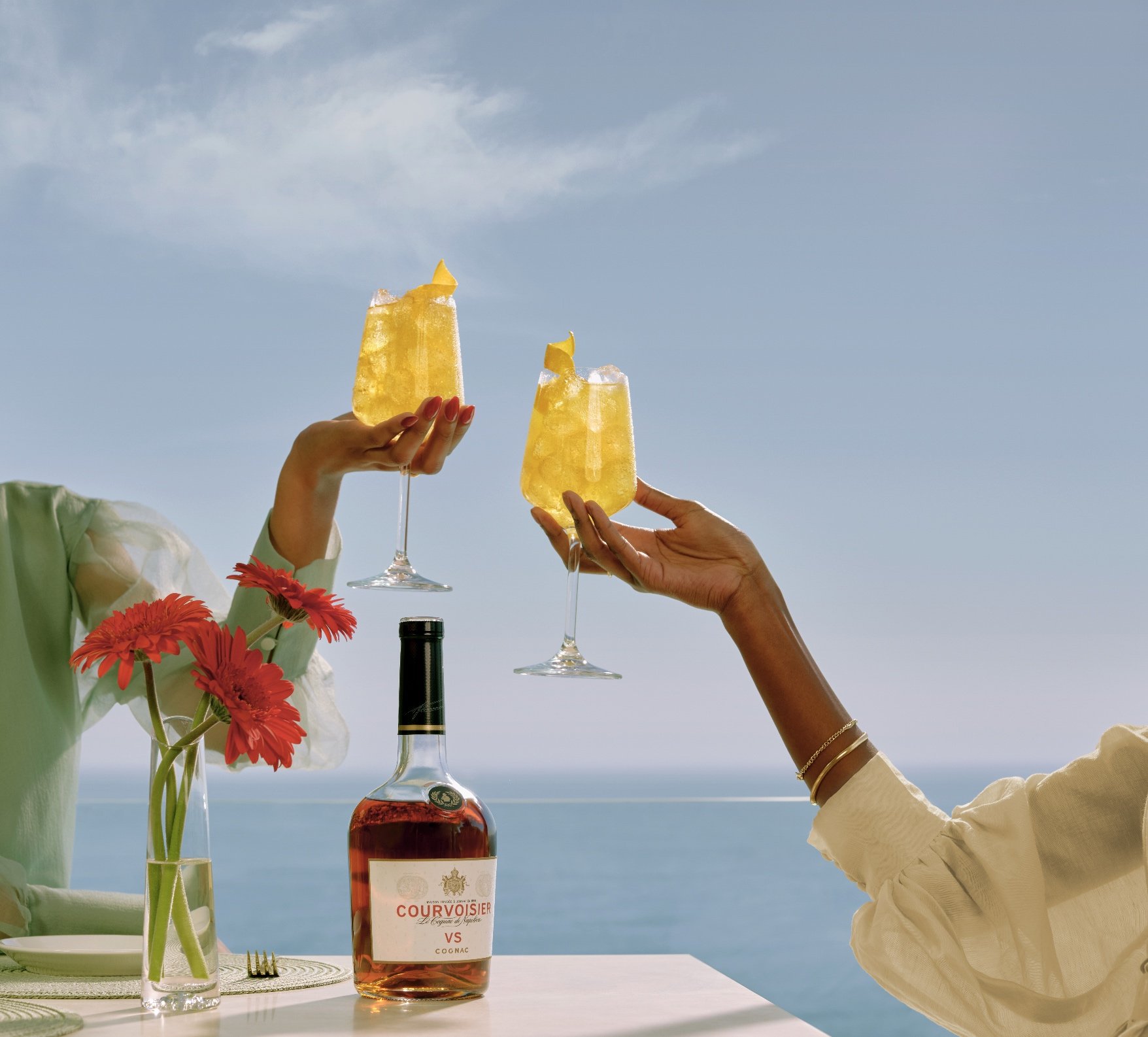
A vintage Courvoisier advertisement
By the 1980s, when hard liquor sales were falling in the U.S., Cognac was a bright spot, thanks to Black consumers. A 1987 Los Angeles Times article cited a MarketWatch figure that Black consumers were just 12% of the population — but they accounted for half of the 2.3 million cases of Cognac sold in the U.S. By this time, wooing Black consumers had been part of Hennessy’s growth strategy for more than three decades. That same strategy, which continued in the late 1980s, started to look like exploitation amid growing concern about alcohol abuse and addiction in Black communities.
Given the overwhelming market popularity of Cognac, it’s little surprise that this 300-plus-year-old French spirit spilled into hip-hop and rap lyrics by the 1990s, solidifying its cachet as an attainable luxury for a whole new generation.
So when Nas said “take this Hennessy” on 1994’s “The Genesis” or Jay-Z mentioned “Remy on the rocks” in 1996’s “Can’t Knock the Hustle,” it felt natural. We laughed when the gangster-entrepreneur Pinky chewed out his chauffeur for nearly making him spill “yack” on his $200 suit in the 2000 movie Next Friday, then the driver downed his glass.
And when Busta Rhymes’ “Pass the Courvoisier Part II” dropped in 2002 with Mr. T as the guest celebrity bartender, we were all ready to join the party. Cognac was the ultimate pleasure: better than women or weed, Cristal or cars, money or marijuana. A spokesman for Allied Domecq told the New York Times that the platinum track boosted sales by double digits the following year. By 2018, Courvoisier, which launched in 1828, reported its best sales year ever.
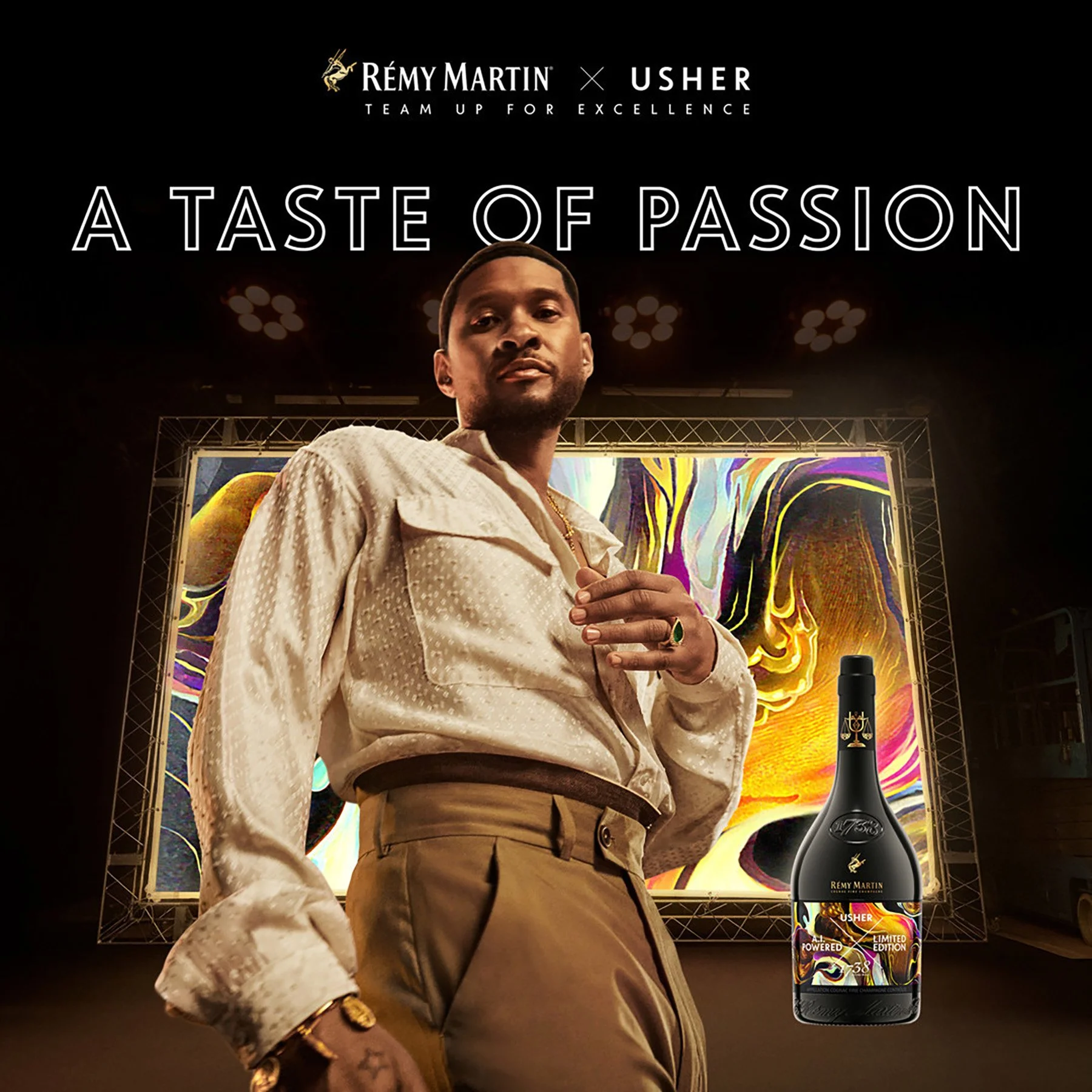
A Rémy Martin ad featuring R&B artist Usher. Photo credit Rémy Martin
Though the styles and symbols have changed, the appeal of the sporting life, YOLO-ing your days away and indulging in luxuries like Cognac endures. One difference: today Black celebrities aren’t just marketing the spirit; they have skin in the game. Never one to miss a marketing opportunity, Jay-Z spiced up the Grammys in 2013 and 2024 by drinking D'USSÉ from his gramophone-shaped award. Ludacris dreamed up Conjure in 2009 (with Birkedal Hartmann), while Idris Elba recently launched Porte Noire with Maison Ferrand in 2024.
With a handful of Black folks now benefiting financially from Cognac sales, drinking Cognac can feel, for some, like supporting Black entrepreneurship and empowerment. When people have been oppressed and live surrounded by reminders of the disparities between Black and white experience in the U.S., clothes, cars and even drinks take on outsized importance.
From its American origins as a colonial luxury drink and its celebration by Jack Johnson to the discovery by American veterans and the presence in pop culture since the 1950s, Cognac has offered a smooth, potent escape for close to 250 years. By now, it tastes like an expression of Black American culture.